
Short Answer
Definition of the Dirac Medal and Its Significance in Biophysics
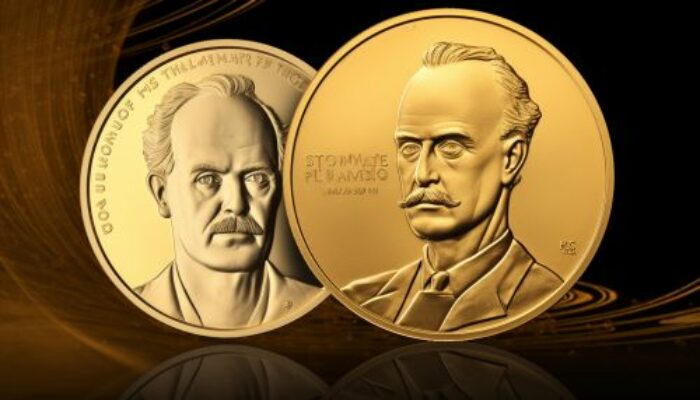
The Dirac Medal is a prestigious accolade named in honor of Paul Dirac, a pioneering figure in theoretical physics. Traditionally awarded to individuals who have made groundbreaking contributions to the field of physics, the medal’s conferment upon a biophysicist marks a significant intersection between the life sciences and theoretical physics. This recognition highlights the growing appreciation of how physical principles underpin biological phenomena, suggesting that life itself might be viewed as a complex, natural experiment in physics.
Interdisciplinary Nature of Biophysics
Biophysics inherently bridges the gap between biology and physics, integrating the detailed complexity of living systems with the quantitative rigor of physical laws. This interdisciplinary field operates on the premise that biological processes can be analyzed and modeled using mathematical and physical frameworks typically applied to non-living systems. The awarding of the Dirac Medal to a biophysicist signals a call to the scientific community to explore the deep connections between these disciplines, potentially unlocking new insights into both.
Core Research Areas in Biophysics
- Molecular Dynamics:
Investigating the movements and interactions of molecules within biological systems to understand their behavior at an atomic level. - Statistical Mechanics:
Applying probabilistic methods to predict the collective behavior of complex biological assemblies. - Quantum Mechanics in Biology:
Exploring how quantum phenomena influence biological functions, such as enzyme activity and energy transfer.
Mechanisms Underlying Biological Processes Through Physics
One of the quintessential examples of biophysics is the study of protein folding, a process essential to cellular function. Protein folding is not solely a biological event but also a physical problem governed by thermodynamics and kinetics. Understanding how proteins achieve their functional three-dimensional structures involves applying principles from physics to decipher the energy landscapes and dynamic pathways involved.
Advancements in computational biophysics have enabled detailed simulations of biological systems under various physical constraints, providing insights into how biological membranes and molecular complexes operate. These studies raise profound questions about whether the physical laws that govern macroscopic phenomena, such as planetary motion, also apply universally to the microscopic scale of living organisms.
Quantum Biology: A Frontier of Biophysical Research
Quantum biology investigates the potential role of quantum mechanics in biological systems, challenging classical interpretations of life processes. Phenomena such as photosynthesis and avian magnetoreception may rely on quantum coherence and entanglement, suggesting that life exploits quantum effects to achieve remarkable efficiency. This emerging field prompts a reevaluation of how fundamental quantum principles might be integral to biological function, bridging the gap between subatomic physics and complex living systems.
Implications of the Dirac Medal for Scientific Collaboration
The recognition of a biophysicist with the Dirac Medal underscores a paradigm shift toward interdisciplinary research. It highlights the necessity of collaborative efforts between biologists and physicists to address complex scientific questions that neither discipline can fully resolve alone. This convergence fosters innovative methodologies and opens new avenues for exploration, from genetic engineering to the development of advanced drug delivery technologies.
Applications Emerging from Biophysics and Physics Synergy
- Genetic Engineering:
Utilizing physical models to manipulate genetic material with precision and predictability. - Drug Delivery Systems:
Designing nanoscale carriers informed by physical principles to improve therapeutic efficacy. - Medical Imaging and Diagnostics:
Enhancing techniques through a deeper understanding of biological and physical interactions.
Future Directions and Challenges
The awarding of the Dirac Medal to a biophysicist not only celebrates individual achievement but also signals a broader transformation in scientific inquiry. It encourages the allocation of resources toward interdisciplinary projects and inspires emerging researchers to explore the fundamental questions at the nexus of biology and physics. As academic institutions adapt curricula and funding priorities, equipping scientists with the skills to navigate these complex fields becomes increasingly vital.
Common Misconceptions About Biophysics and Its Relation to Physics
Biophysics is merely biology with some physics terminology.
Biophysics rigorously applies physical laws and quantitative methods to understand biological systems, often revealing new principles that transcend traditional biology.
Quantum mechanics has no relevance to biological processes.
Quantum biology is an emerging discipline demonstrating that quantum effects can play critical roles in certain biological functions.
Why the Intersection of Biology and Physics Is Crucial
The fusion of biological sciences with theoretical physics is pivotal for advancing our comprehension of life’s fundamental mechanisms. This interdisciplinary approach not only deepens scientific knowledge but also drives technological innovation with far-reaching implications for medicine, biotechnology, and environmental science. The Dirac Medal’s recognition of biophysics exemplifies the importance of transcending traditional academic boundaries to address the complex challenges of understanding life and the universe.
FAQ
What is the Dirac Medal?
The Dirac Medal honors exceptional contributions to theoretical physics and related disciplines, commemorating physicist Paul Dirac.
Why is this award to a biophysicist notable?
It signifies the merging of biology and physics, emphasizing that biological systems can be studied through physical theories.
What does quantum biology study?
Quantum biology explores the role of quantum mechanics in biological processes like photosynthesis and animal navigation.
How does this recognition impact science?
It promotes interdisciplinary dialogue, potential funding increases, and inspires new research at the interface of physics and life sciences.



Leave a Reply