
Short Answer
Definition of Axions
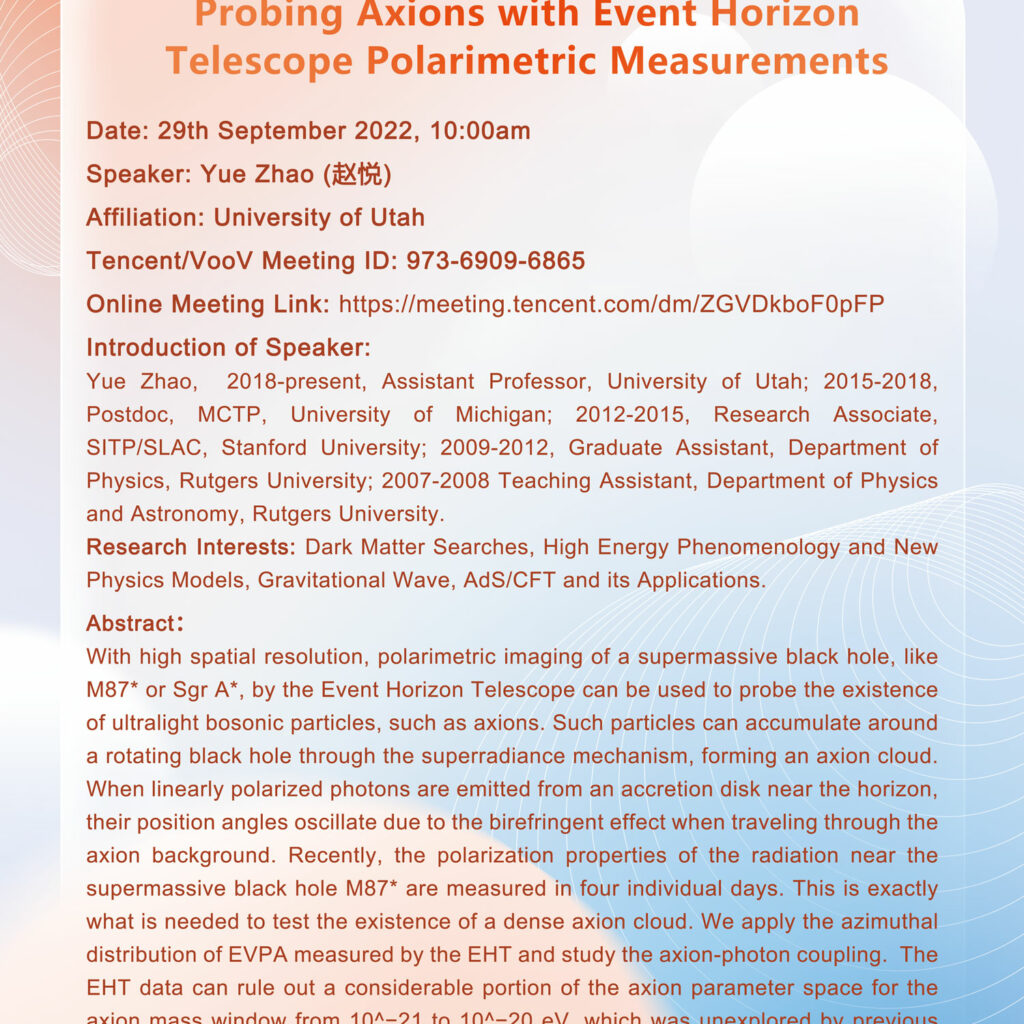
Axions are theoretical elementary particles proposed within the framework of particle physics to resolve inconsistencies in the Standard Model and to shed light on some of the most profound mysteries in cosmology. Initially introduced in the late 1970s, axions were conceived as a solution to the strong CP (Charge Parity) problem, which questions why certain expected symmetry violations are not observed in strong interactions. Beyond this, axions have gained prominence as promising candidates for dark matter, the unseen substance that constitutes roughly 27% of the universe’s total energy density.
- Strong CP Problem:
Axions provide a natural mechanism to suppress CP violation in quantum chromodynamics (QCD), explaining the absence of observed strong CP violation. - Dark Matter Candidate:
Due to their extremely weak interactions with ordinary matter and light, axions are considered viable constituents of dark matter.
Mechanism of Axion Detection
The detection of axions relies on their predicted interaction with photons in the presence of strong magnetic fields, a process known as photon-axion conversion. This phenomenon suggests that photons can transform into axion-like particles and vice versa when subjected to intense magnetic environments. Experimental setups exploit this property by analyzing changes in the polarization of light passing through magnetized regions, searching for subtle signals indicative of axion presence.
The PVLAS Experiment: Methodology and Objectives
Located at the Istituto Nazionale di Fisica Nucleare in Italy, the PVLAS (Polarizzazione del Vuoto con LASer) experiment employs laser-based techniques to investigate axion-photon interactions. The experiment directs polarized laser light through a strong magnetic field, monitoring any alterations in the light’s polarization state that could signal photon-axion conversion. This indirect detection method aims to identify axions by measuring minute changes in optical properties induced by their hypothetical existence.
Recent Findings and Their Implications
Recent results from the PVLAS collaboration have sparked renewed debate within the scientific community. The data indicate an absence of definitive evidence supporting axion detection, challenging their candidacy as dark matter constituents. However, these findings do not conclusively negate the existence of axions; instead, they highlight the possibility of systematic errors or alternative explanations for observed phenomena. This ambiguity underscores the necessity for further experimental refinement and investigation.
Comparative Analysis with Other Experiments
Discrepancies between PVLAS results and those from other experimental efforts, such as the Axion Dark Matter Experiment (ADMX), complicate the interpretation of axion searches. While ADMX has reported tentative signals consistent with axion properties, PVLAS’s null results suggest either differences in experimental sensitivity or the need to consider alternative theoretical models. These conflicting outcomes have led to the exploration of other exotic particles and modifications to gravitational theories as potential explanations for dark matter.
Challenges in Axion Research: Sensitivity and Technology
Detecting axions is inherently challenging due to their predicted extremely low mass and weak coupling to ordinary matter. The sensitivity thresholds required to observe such particles push the limits of current technology. Advances in quantum optics, sensor design, and experimental methodologies are crucial to enhancing detection capabilities. The PVLAS experiment operates near these technological frontiers, indicating that its results may reflect current limitations rather than definitive conclusions about axion existence.
Philosophical and Scientific Significance
The ongoing investigation into axions exemplifies the iterative nature of scientific progress. Hypotheses are continually tested, refined, or replaced as new data emerge. The current PVLAS findings, while casting doubt on axions, may eventually lead to revised theories or novel paradigms in particle physics. This dynamic process highlights the evolving landscape of scientific understanding and the importance of maintaining open inquiry in the face of uncertainty.
Why Axion Research Matters
Understanding axions is pivotal for multiple reasons. They offer a potential resolution to the strong CP problem, a fundamental question in particle physics, and provide a compelling candidate for dark matter, which remains one of the greatest enigmas in cosmology. Confirming or refuting the existence of axions will significantly influence theoretical models and guide future research directions in both quantum mechanics and astrophysics, shaping our comprehension of the universe’s fundamental structure.
Summary and Future Directions
The PVLAS experiment’s recent outcomes have intensified the discourse surrounding axions, emphasizing both the challenges and opportunities in this field. While current evidence does not definitively confirm axions, it also does not close the door on their existence. Continued experimental innovation, cross-validation with other research efforts, and theoretical advancements are essential to unraveling the mysteries of axions and their role in the cosmos. The pursuit of these elusive particles remains a critical endeavor at the intersection of particle physics and cosmology.
FAQ
What are axions?
Axions are hypothetical elementary particles proposed to solve the strong CP problem in particle physics and are considered potential candidates for dark matter.
What is the PVLAS experiment?
The PVLAS experiment is a laser-based physics experiment designed to detect axions by observing their possible interaction with photons in a strong magnetic field.
Why is detecting axions difficult?
Axions are expected to interact very weakly with normal matter and light, making them challenging to detect with current experimental techniques.
What do the recent PVLAS results mean for axion research?
The PVLAS results cast doubt on the existence of axions but do not conclusively disprove them, indicating the need for further research and improved experimental sensitivity.
What are alternative dark matter candidates if axions are ruled out?
Alternatives include Weakly Interacting Massive Particles (WIMPs) and sterile neutrinos, among others.




Leave a Reply