If atoms were alive would it be easier to explain evolution?

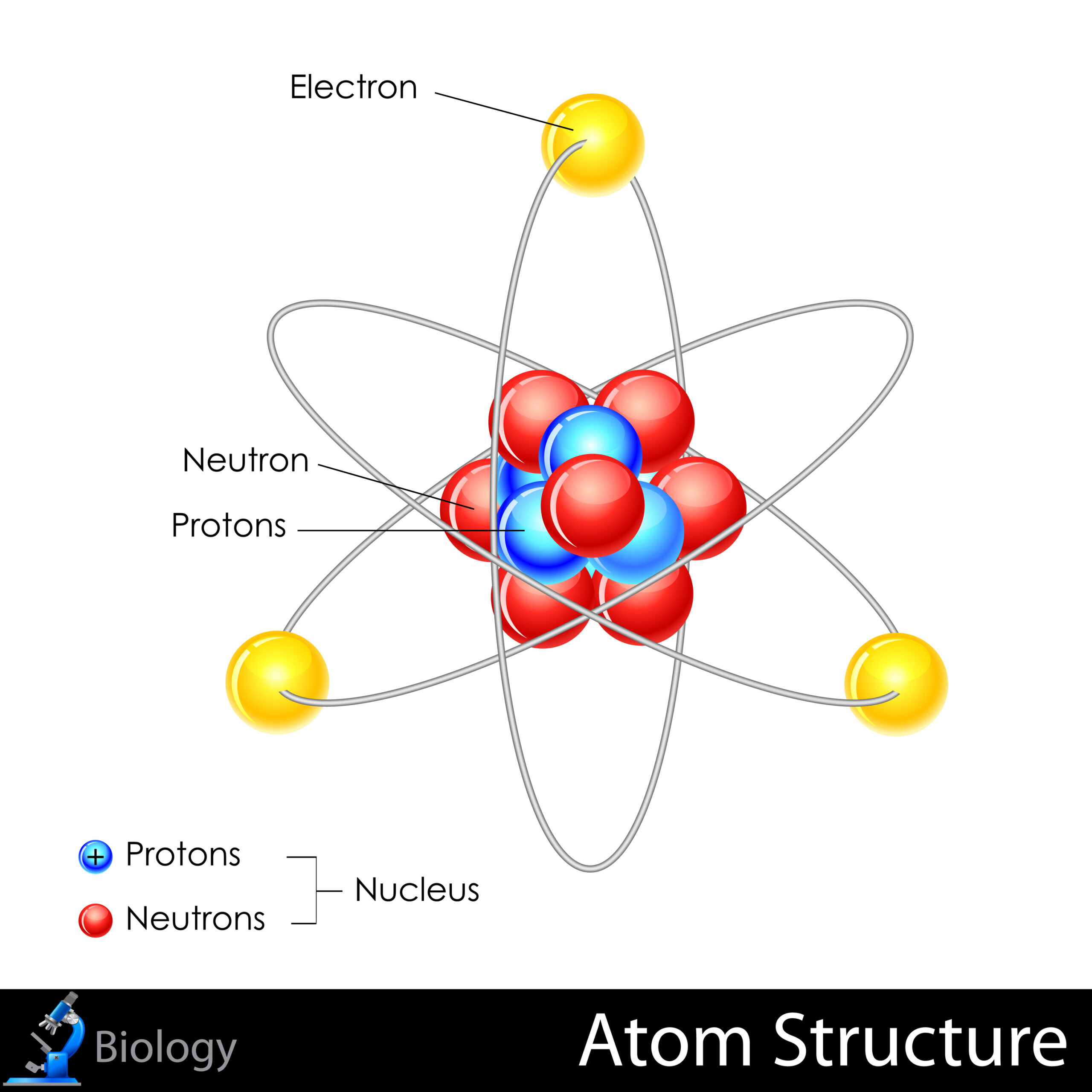
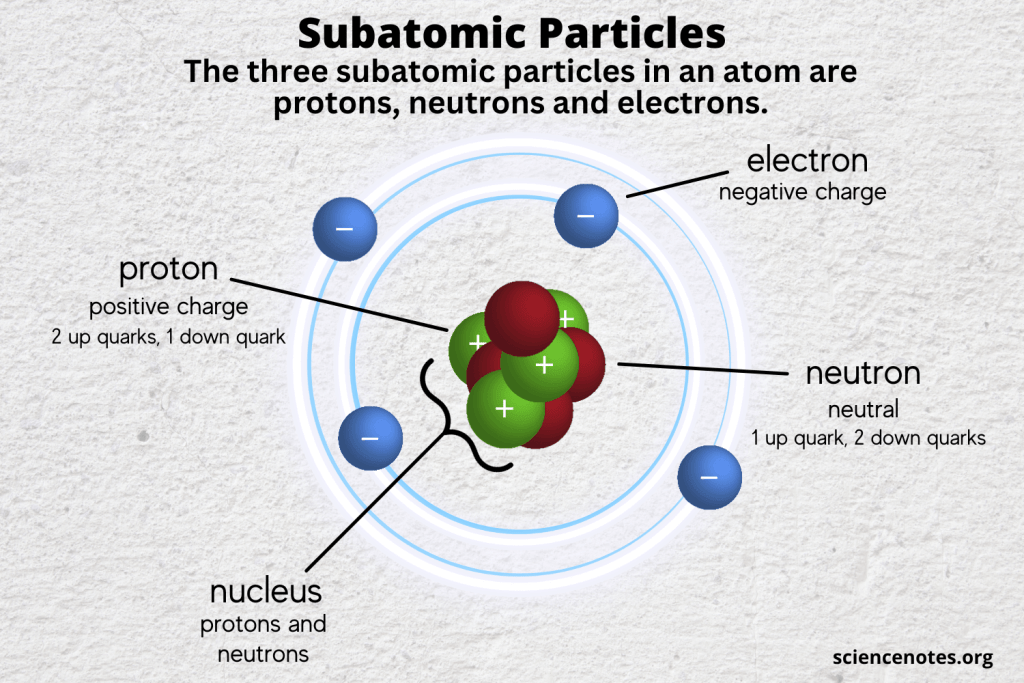
Understanding the Concept of Life at the Atomic Scale The idea of life existing at the level of atoms invites profound contemplation about the fundamental nature of existence, especially when examined through the lens of evolutionary biology. If atoms were endowed with consciousness or sentience, this could revolutionize our interpretation of evolutionary dynamics. Exploring this […]

Read More →

Is ForeignPolicy.com Credible? A Data-Driven Review of Global Journalism

Understanding ForeignPolicy.com ForeignPolicy.com is a leading digital platform dedicated to delivering in-depth coverage of international affairs. It has attracted significant attention from academics, media critics, and global audiences due to its comprehensive reporting on complex geopolitical topics. In an era marked by rampant misinformation, assessing the trustworthiness of such a source is crucial for readers […]

Read More →

Bosons Bossed into Condensates: Quantum Herding at Its Finest

Definition of Bose-Einstein Condensates Bose-Einstein condensates (BECs) represent a unique state of matter formed when a group of bosons-particles with integer spin-occupy the same quantum state at extremely low temperatures. This phenomenon, first predicted by physicists Satyendra Nath Bose and Albert Einstein in the early 20th century, results in the particles behaving collectively as a […]

Read More →

Is molar mass the same as atomic mass?

Definition of Atomic Mass and Molar Mass Atomic mass and molar mass are fundamental concepts in chemistry and physics that describe the mass of substances at different scales. Although they are closely related, each term has a distinct meaning and application. Atomic Mass: The atomic mass refers to the average mass of a single atom […]

Read More →

How to calculate the molar mass of iron?

Definition of Molar Mass Molar mass is a fundamental chemical property that represents the mass of one mole of a given substance, typically measured in grams per mole (g/mol). A mole corresponds to approximately 6.022 × 10²³ particles, which can be atoms, molecules, or ions. This measurement serves as a bridge between the microscopic world […]

Read More →

What is the most powerful man-made light source?

Understanding Powerful Artificial Light Sources The pursuit of increasingly efficient and intense artificial light sources has captivated scientists and engineers for decades, akin to a modern quest for the “gold” of illumination-photons. As technology advances, the question arises: which man-made light source holds the title of the most powerful? This article explores the defining features, […]

Read More →

Optics and Lasers: Where Light Meets Power

Definition of Optics and Lasers Optics is a specialized branch of physics focused on the study of light-its behavior, properties, and interactions with matter. This field investigates various phenomena including reflection, refraction, diffraction, and polarization. Lasers, an acronym for Light Amplification by Stimulated Emission of Radiation, represent a pinnacle of optical innovation. They combine theoretical […]

Read More →

Is there an 18th elementary particle?

Definition of Elementary Particles Elementary particles are the most fundamental constituents of matter and forces, indivisible into smaller components. They form the foundation of particle physics and are categorized within the Standard Model, which currently identifies 17 such particles. These include six types of quarks, six leptons, gauge bosons responsible for mediating forces, and the […]

Read More →

Barrow Wins Religion Prize: Where Physics Meets Philosophy

Definition The intersection of physics and philosophy represents a rich domain where scientific inquiry meets metaphysical reflection. This convergence explores not only the empirical aspects of the universe but also the deeper existential and ontological questions that arise from scientific discoveries. The work of physicist John D. Barrow, notably recognized with the Religion Prize, exemplifies […]

Read More →

Black Hole Eclipse Sheds Light on X-Ray Source Size

Definition of Black Hole Eclipses A black hole eclipse is an astronomical event where the X-ray emissions from a black hole’s accretion disk are temporarily obscured by another celestial object. This natural phenomenon offers a rare observational window into the structure and behavior of black holes and their surrounding environments, particularly the regions emitting high-energy […]

Read More →