
Short Answer
Definition and Overview of Boron Nitride Membranes
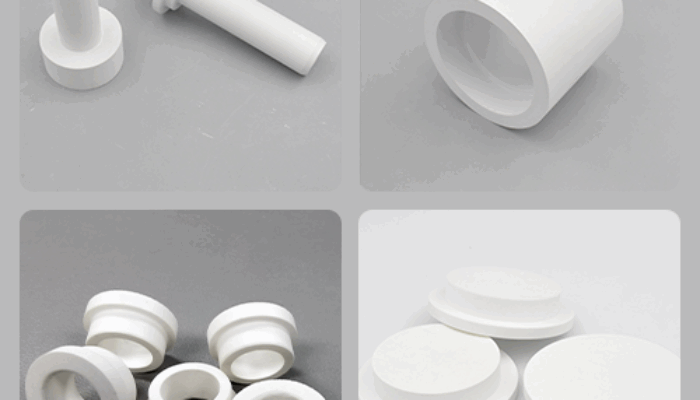
Boron nitride (BN) membranes are advanced materials that have attracted considerable interest in modern materials science due to their exceptional properties and wide-ranging applications. Often referred to as “white graphite,” these membranes differ significantly from conventional boride powders in both structure and functionality. This article explores the synthesis methods, structural characteristics, and diverse uses of boron nitride membranes, highlighting their potential as a viable alternative to traditional ceramic materials.
Allotropic Forms and Chemical Composition
Boron nitride is a compound consisting of boron and nitrogen atoms, existing in multiple allotropes, each with unique structural arrangements and properties. The two primary allotropes are cubic boron nitride (c-BN) and hexagonal boron nitride (h-BN). Hexagonal boron nitride, in particular, mimics the layered structure of graphite, resulting in anisotropic properties that make it suitable for various high-performance applications. Understanding these allotropes provides insight into BN’s mechanical strength, thermal stability, and electrical behavior.
Synthesis Techniques for Boron Nitride Membranes
The production of boron nitride membranes involves several sophisticated methods, each influencing the final material’s quality and characteristics. Key synthesis approaches include:
- Chemical Vapor Deposition (CVD):
This technique enables precise control over growth parameters, producing high-purity, uniform h-BN films with excellent crystallinity. - Plasma-Enhanced CVD:
An advanced variant of CVD that uses plasma to enhance reaction rates and film quality. - Liquid-Phase Exfoliation:
This method exfoliates bulk BN into nanosheets, facilitating applications in nanotechnology by producing thin, flexible membranes.
The choice of synthesis method directly affects membrane morphology, crystallinity, and surface properties, which in turn determine their suitability for specific applications.
Structural Properties and Thermal Stability
The structural robustness of boron nitride membranes is a critical factor in their performance. Hexagonal BN exhibits remarkable thermal stability, maintaining integrity at temperatures up to approximately 900°C in air. Its layered structure, held together by van der Waals forces, imparts flexibility and mechanical resilience. These features make h-BN an excellent candidate for use in structural composites, thermal management systems, and electrical insulation.
Thermal Conductivity and Electrical Insulation
Boron nitride membranes are distinguished by their superior thermal conductivity, which surpasses many conventional ceramics. Unlike other materials that suffer from phonon scattering, h-BN efficiently conducts heat, making it invaluable in electronic devices where heat dissipation is crucial. For example, high-power transistors benefit from BN’s ability to manage thermal loads, enhancing device reliability and lifespan.
In addition to thermal properties, h-BN exhibits outstanding electrical insulation capabilities. Its dielectric strength exceeds that of many traditional insulators, characterized by a high breakdown voltage and low dielectric loss. These attributes make BN membranes ideal for use in capacitors, insulators, and other advanced electronic components, bridging the gap between materials science and electronic engineering.
Biomedical Applications and Biocompatibility
The biocompatible nature of boron nitride membranes has opened new avenues in biomedical engineering. BN’s chemical inertness and non-toxic profile make it suitable for drug delivery systems and tissue engineering scaffolds. Studies have demonstrated that h-BN supports cellular growth while exhibiting minimal cytotoxic effects, promoting tissue regeneration. This intersection of materials science and biomedicine highlights BN’s potential in developing innovative healthcare solutions.
Environmental and Sustainable Uses
With increasing emphasis on sustainability, boron nitride membranes have gained attention as eco-friendly materials. Their chemical stability and inertness make them suitable for environmental applications such as catalysis and filtration. BN membranes can function as adsorbents in waste management and as catalysts in chemical reactions, contributing to greener industrial processes. The development of BN-based composites further enhances material performance while aligning with environmental sustainability goals.
Comparison with Boride Powders
When evaluating boron nitride membranes as alternatives to boride powders, it is essential to consider the specific application requirements. Boride powders are known for their high hardness and wear resistance, making them ideal for abrasive environments. In contrast, BN membranes offer a balanced combination of thermal, mechanical, and electrical properties, which may be more advantageous in applications demanding multifunctionality, such as thermal management and electrical insulation.
Future Prospects and Emerging Applications
The ongoing advancements in nanotechnology and synthesis techniques continue to expand the horizons for boron nitride membranes. Emerging fields such as quantum computing, nanomedicine, and sustainable technologies stand to benefit from BN’s unique properties. The material’s versatility promises to push the boundaries of conventional ceramics, fostering innovation across multiple scientific and industrial domains.
Conclusion: The Significance of Boron Nitride Membranes
Boron nitride membranes represent a significant leap forward in materials science, challenging traditional ceramic materials with their distinctive properties. Their exceptional thermal conductivity, electrical insulation, mechanical strength, and biocompatibility position them as key players in future technological advancements. As research continues to unlock their full potential, BN membranes are poised to redefine material applications across diverse fields, driving progress toward innovative and sustainable solutions.
FAQ
What are boron nitride membranes?
Boron nitride membranes are thin films or nanosheets made from boron nitride, notable for their ceramic-like properties such as high thermal stability, electrical insulation, and mechanical strength.
How are boron nitride membranes synthesized?
They are commonly synthesized using methods like chemical vapor deposition (CVD), plasma-enhanced CVD, and liquid-phase exfoliation, which influence their morphology and quality.
What are the main types of boron nitride relevant to membranes?
The primary allotropes are hexagonal boron nitride (h-BN), which resembles graphite, and cubic boron nitride (c-BN), each with distinct structural and functional properties.
What applications do boron nitride membranes have?
They are used in electronics for thermal management and insulation, biomedical fields for drug delivery and tissue engineering, and environmental technologies for catalysis and filtration.
Can boron nitride membranes replace boride powders?
While boride powders excel in hardness and wear resistance, boron nitride membranes offer superior thermal, electrical, and biocompatible properties, making them suitable alternatives in specific applications.





Leave a Reply