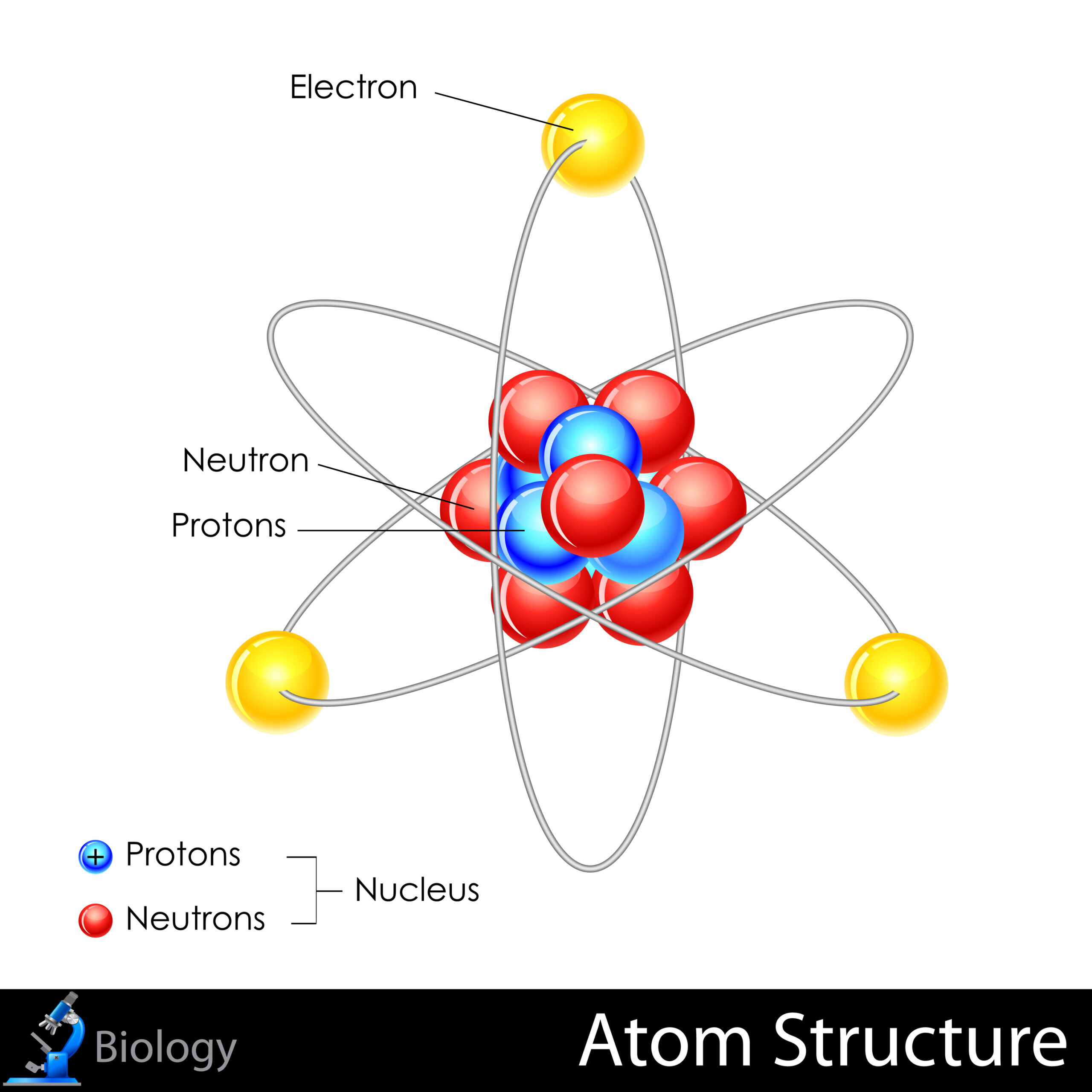
What is the reason behind graphite’s layered structure?

Definition and Atomic Structure of Graphite Graphite is a crystalline allotrope of carbon distinguished by its distinctive layered arrangement. This structure plays a crucial role in determining graphite’s physical characteristics and its wide-ranging applications, from industrial lubricants to energy storage devices. At the atomic scale, graphite consists of carbon atoms organized in a two-dimensional hexagonal […]

Read More →

Jason Kang: Where Engineering and Oncology Converge

Definition The intersection of engineering and oncology represents a multidisciplinary approach that combines the principles of engineering with cancer research and treatment. This fusion aims to innovate and improve therapeutic strategies by applying technological advancements to understand tumor behavior and enhance treatment precision. Engineering: A field focused on applying scientific knowledge to design, develop, and […]

Read More →

Would magnets still work if there was no electromagnetic field?

Understanding Magnetism Magnets are fascinating objects capable of attracting and repelling materials without any visible interaction. Their behavior is often accepted without question, yet it raises an intriguing inquiry: would magnets still function if electromagnetic fields did not exist? This question touches on the fundamental principles of physics that govern magnetic phenomena. To address it, […]

Read More →

How Quantum computer works – TechnoGlobal?

Definition of Quantum Computing Quantum computing is an innovative computational approach that harnesses the principles of quantum mechanics to process information in ways fundamentally distinct from classical computing. By utilizing quantum phenomena such as superposition and entanglement, quantum computers can perform complex calculations more efficiently, potentially transforming various scientific and technological fields. Fundamental Concepts of […]

Read More →

Radiology and medical imaging physics made easy?

Overview of Radiology and Medical Imaging Physics Radiology and medical imaging represent essential branches within healthcare, enabling the visualization, diagnosis, and management of numerous medical conditions. The integration of physics principles into these disciplines provides a foundation for understanding how imaging technologies function, driving innovations that enhance patient care and diagnostic accuracy. This article delves […]

Read More →

Bismuth Breaks Half-Life Record: Radioactive Patience at Its Peak

Definition of Radioactive Decay and Bismuth’s Role Radioactive decay is a natural process where unstable atomic nuclei lose energy by emitting radiation, gradually transforming into more stable forms. Among the elements exhibiting this phenomenon, bismuth stands out due to its exceptional stability despite being radioactive. Unlike many isotopes that decay rapidly, bismuth-209, the most abundant […]

Read More →

Why was the CERN particle characterized as Higgs Boson?

Definition and Significance of the Higgs Boson The Higgs boson, a particle identified at CERN, holds a pivotal position in contemporary physics, sparking extensive curiosity both within scientific circles and the general public. This particle is integral to understanding how fundamental particles acquire mass, a concept central to the Standard Model of particle physics. The […]

Read More →

What is the future of super computers?

Understanding Supercomputers Supercomputers represent the pinnacle of computational power, designed to execute extraordinarily complex calculations at unprecedented speeds. These machines are essential tools in tackling scientific, engineering, and data-intensive challenges that exceed the capabilities of conventional computers. Definition: Highly advanced computing systems optimized for large-scale, high-speed processing tasks. Primary Uses: Scientific simulations, climate modeling, protein […]

Read More →

What is standard model? Explain in simple words?

Definition of the Standard Model The Standard Model of particle physics is a comprehensive theoretical framework that describes the fundamental particles constituting matter and the forces that govern their interactions. It serves as the foundation for understanding the microscopic components of the universe, categorizing particles into distinct groups and explaining how they interact through fundamental […]

Read More →