

Short Answer
Definition and Scope of Medical and Non-Medical Physics
Physics, as a broad scientific discipline, encompasses various specialized branches, including medical and non-medical physics. While these areas may initially appear distinct, they share foundational principles that interconnect their fields of study.
- Medical Physics:
This branch applies physical concepts and techniques to medicine, focusing on areas such as diagnostic imaging, radiation therapy, and the physics underlying biological systems. - Non-Medical Physics:
Encompasses a wide range of traditional physics topics including classical mechanics, electromagnetism, thermodynamics, and quantum mechanics, often without direct medical application.
Core Physical Principles Shared Across Both Fields
At the heart of both medical and non-medical physics lie fundamental concepts such as energy, forces, and wave phenomena. These principles form a common language that bridges the two disciplines despite their differing applications.
- Wave Mechanics:
Essential for understanding sound and light, wave mechanics is pivotal in medical technologies like ultrasound imaging and also in classical physics studies of interference and diffraction. - Energy Conservation:
The principle of energy conservation governs processes in both fields, from thermal energy transformations in engines to the energy dynamics involved in radiation therapy targeting cancer cells.
Technological Innovations Linking Medical and Non-Medical Physics
Advancements in technology often blur the boundaries between medical and non-medical physics, with many medical devices relying on fundamental physical phenomena.
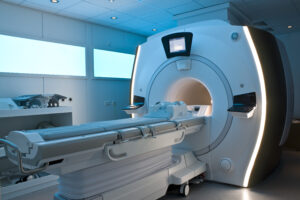
- Magnetic Resonance Imaging (MRI):
Utilizes nuclear magnetic resonance, a principle rooted in fundamental physics, to produce detailed images for medical diagnostics. - Positron Emission Tomography (PET):
Employs nuclear decay processes studied extensively in non-medical physics to visualize metabolic activity within the body.
Distinct Challenges and Methodologies in Each Discipline
Despite shared principles, medical and non-medical physics diverge in their approaches, challenges, and ethical considerations.
- Medical Physics:
Requires careful consideration of biological systems, patient safety, and ethical standards, especially when dealing with radiation exposure and clinical applications. - Non-Medical Physics:
Often involves theoretical modeling and experimental research without immediate safety constraints, allowing for broader exploratory freedom.
Research Approaches and Educational Pathways
The focus of research and training in medical versus non-medical physics reflects their differing goals and methodologies.
- Research:
Medical physics emphasizes clinical trials and biophysical experiments aimed at practical healthcare improvements, whereas non-medical physics often pursues theoretical and computational studies to expand fundamental knowledge. - Education:
Medical physicists typically undergo specialized training incorporating radiobiology and clinical practice, while non-medical physicists focus on rigorous mathematical and theoretical coursework.
Funding and Institutional Support
Financial backing and institutional priorities further distinguish the two fields.
- Medical Physics Funding:
Primarily supported by healthcare organizations and government agencies focused on patient care advancements. - Non-Medical Physics Funding:
Often sourced from scientific foundations, academic institutions, and industry partnerships aimed at technological innovation and fundamental research.
Interdisciplinary Collaboration and Its Impact
The intersection of medical and non-medical physics fosters collaborative efforts that drive innovation and deepen scientific understanding.
- Joint Innovations:
Collaborative development of advanced imaging and therapeutic technologies exemplifies how combining expertise from both fields leads to significant breakthroughs. - Scientific Synergy:
Interdisciplinary dialogue enhances both theoretical insights and practical applications, benefiting science and medicine alike.
Why Understanding the Relationship Between Medical and Non-Medical Physics Matters
Recognizing the interplay between these branches is crucial for advancing technology, improving healthcare, and expanding our comprehension of physical laws.
The shared foundation of energy, forces, and waves underscores a unified scientific framework, while the distinct applications highlight the importance of specialized knowledge. This duality not only enriches each field but also promotes innovation through interdisciplinary collaboration, ultimately contributing to both scientific progress and human well-being.
FAQ
What is the focus of medical physics?
Medical physics focuses on applying physics to healthcare, including imaging and radiation treatments.
What are common areas of non-medical physics?
Non-medical physics includes classical mechanics, electromagnetism, thermodynamics, and quantum mechanics.
Why is collaboration between the two fields important?
Interdisciplinary collaboration fosters innovation and advances understanding in both medical and scientific contexts.



Leave a Reply