
Short Answer
Definition of Neutron Stars
Neutron stars are incredibly dense remnants of massive stars that have ended their life cycles through supernova explosions. These compact objects, typically about 20 kilometers in diameter but with masses surpassing that of the Sun, are composed predominantly of neutrons. They represent one of the most extreme states of matter in the universe, where gravitational forces compress matter to densities far beyond those found on Earth.
Common Misconceptions About Neutron Star Composition
A widespread but inaccurate belief is that neutron stars are simply enormous spheres of iron or dense metallic matter. This misconception arises from the fact that iron is the most stable element produced in stellar nucleosynthesis and marks the endpoint of exothermic fusion in massive stars. Consequently, it might seem logical to assume that after a star’s collapse, its core would be primarily iron. However, this oversimplification fails to capture the true complexity of neutron star interiors.
Formation and Internal Structure
When a massive star exhausts its nuclear fuel, its core collapses under immense gravitational pressure during a supernova event. This collapse triggers inverse beta decay, a process where protons and electrons combine to form neutrons, transforming the core into an ultra-dense neutron-rich matter. The star’s structure is layered:
- Crust:
The outermost layer consists of a crystalline lattice of neutron-rich nuclei immersed in a sea of degenerate electrons. - Inner Layers:
Moving inward, the density increases, and the boundaries between nuclei dissolve, creating a fluid of free neutrons. - Core:
The innermost region may reach densities so extreme that neutrons themselves break down into their fundamental quark constituents, potentially forming quark-gluon plasma or strange matter.
Exotic States of Matter Within Neutron Stars
Neutron stars are not merely dense metal balls but hosts to exotic quantum states of matter. Theoretical physics suggests that the core might harbor quark matter, where quarks and gluons exist in a free, unconfined state. This exotic phase challenges our understanding of quantum chromodynamics and the behavior of matter under extreme pressure and density conditions.
Electromagnetic Phenomena and Magnetic Fields
Neutron stars generate extraordinarily strong magnetic fields, often trillions of times more intense than Earth’s magnetic field. These fields give rise to unique astrophysical phenomena such as pulsars-rapidly rotating neutron stars emitting beams of electromagnetic radiation that sweep across space like cosmic lighthouses. The intense magnetism also induces exotic magnetic states in the star’s matter, which have no terrestrial analogues.
Relativistic Jets and Energetic Emissions
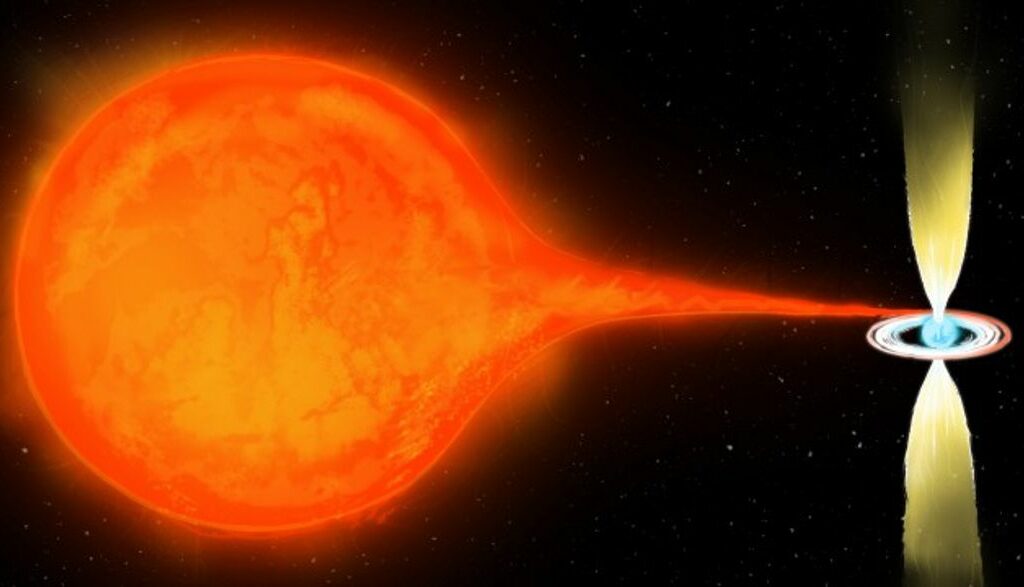
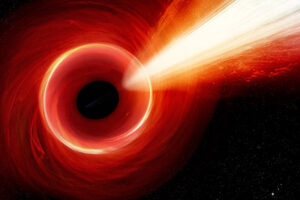
Recent observations have revealed that neutron stars can produce relativistic jets-narrow, high-speed streams of charged particles moving close to the speed of light. These jets exhibit energy outputs comparable to those traditionally associated only with black holes, highlighting the dynamic and energetic nature of neutron stars beyond static metallic spheres.
Neutron Stars as Laboratories for Extreme Physics
Due to their extraordinary densities, magnetic fields, and gravitational forces, neutron stars serve as natural laboratories for testing the limits of physics. They provide insights into nuclear interactions, quantum mechanics, and general relativity under conditions unattainable in Earth-based experiments. Studying neutron stars helps bridge the gap between microscopic particle physics and macroscopic gravitational phenomena.
Gravitational Effects and Spacetime Distortion
The immense density of neutron stars causes significant warping of spacetime, influencing the paths of nearby particles and light. This gravitational distortion leads to observable effects such as gravitational redshift and lensing. Such phenomena underscore that neutron stars’ gravitational influence far exceeds what could be expected from a mere dense iron sphere.
Thermal Characteristics and Cooling Processes
Neutron stars possess extremely hot surfaces, with temperatures reaching millions of degrees Kelvin. Over time, they cool by emitting X-rays and gamma rays. The cooling rate and thermal evolution depend on the internal composition and the superfluid behavior of neutrons in the core, which differ fundamentally from the thermal properties of metallic iron.
Significance in Astrophysics and Cosmology
Neutron stars are pivotal in advancing our understanding of the universe. They challenge existing models of matter under extreme conditions and provide clues about the fundamental forces shaping cosmic evolution. Far from being static relics, neutron stars are dynamic entities that reveal the interplay of nuclear physics, quantum mechanics, and gravitation, enriching our comprehension of the cosmos.
Summary: Beyond the Iron Ball Analogy
In essence, neutron stars transcend the simplistic image of giant iron spheres. They embody a unique state of matter, showcasing the extremes of physics and serving as cosmic puzzles that drive scientific inquiry. Unlocking their mysteries brings us closer to answering profound questions about the universe’s origins, the behavior of matter at nuclear densities, and the extraordinary processes governing celestial phenomena.
FAQ
What are neutron stars?
Neutron stars are incredibly dense remnants of massive stars, primarily composed of neutrons, formed after a supernova explosion.
Are neutron stars made of iron?
No, although they may contain some iron, neutron stars are primarily composed of neutrons and host a variety of exotic states of matter.


Leave a Reply