
Short Answer
Definition of Atomic Structure
Atoms are the essential units that constitute all matter in the universe. These minuscule particles, invisible to the naked eye, form everything from the air we inhale to the distant stars illuminating the night sky. Understanding the forces that maintain the integrity of atoms is fundamental to grasping the nature of matter itself.
Components of an Atom
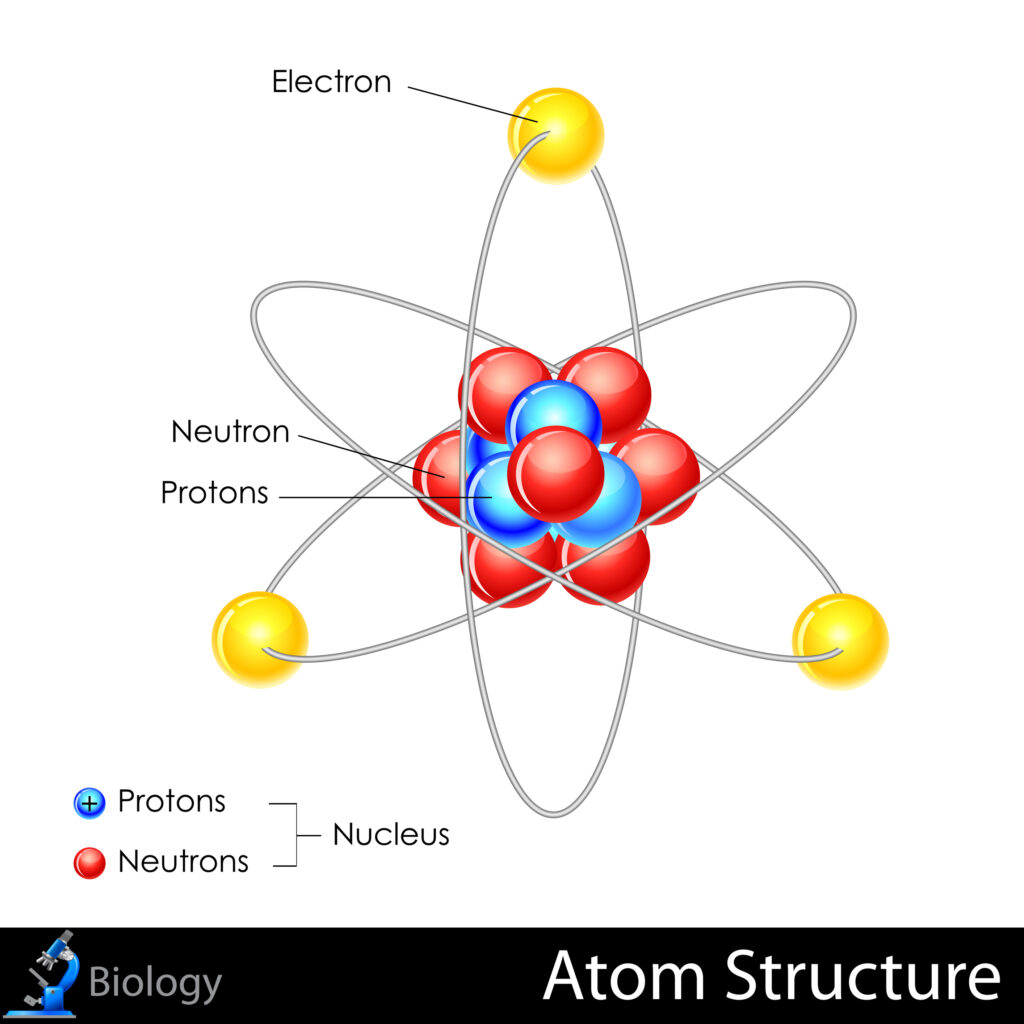
An atom consists of a central nucleus surrounded by electrons. The nucleus contains positively charged protons and neutral neutrons, while negatively charged electrons orbit this nucleus in specific energy levels. These electron orbits are governed by the principles of quantum mechanics, which differ significantly from classical physics that describe planetary orbits.
Forces Within the Atom
At the core of atomic cohesion are several fundamental forces, each playing a distinct role:
- Electromagnetic Force:
This force attracts electrons to protons due to their opposite charges, providing the primary mechanism that holds electrons in orbit around the nucleus. - Strong Nuclear Force:
Acting within the nucleus, this powerful force binds protons and neutrons together, overcoming the repulsive electromagnetic force between positively charged protons. It operates over extremely short distances but is crucial for nuclear stability. - Magnetism:
Unlike the electromagnetic and strong nuclear forces, magnetism arises from the alignment and movement of charged particles, particularly electron spins, but it does not directly contribute to atomic cohesion.
Distinguishing Magnetism from Electromagnetic Forces
While magnetism is a well-known physical phenomenon, it is important to differentiate it from the electromagnetic force that holds atoms together. Electromagnetic force refers to the attraction between charged particles, such as electrons and protons, which stabilizes the atom. Magnetism, on the other hand, emerges from the collective behavior of electron spins and magnetic dipoles in materials, influencing properties at a macroscopic scale rather than at the atomic level.
Quantum Mechanics and Electron Configuration
Electrons occupy discrete orbitals defined by quantum mechanics, each with specific energy levels. The Pauli Exclusion Principle restricts electrons from sharing identical quantum states, leading to complex electron arrangements. These configurations influence magnetic properties when unpaired electrons exist, but such magnetism is a result of collective atomic behavior rather than a force binding individual atoms.
Role of Magnetism in Materials
Magnetism manifests prominently in materials through phenomena such as ferromagnetism, diamagnetism, and paramagnetism. These effects arise from the alignment or opposition of electron spins across many atoms, producing observable magnetic fields. However, this collective magnetism does not equate to the forces that maintain atomic structure.
Why Atoms Are Not Held Together by Magnetism
The cohesion of atoms is primarily due to the electromagnetic attraction between electrons and protons and the strong nuclear force within the nucleus. Magnetism, while related to electron behavior, does not serve as a binding force at the atomic scale. Instead, it influences how groups of atoms interact and exhibit magnetic properties.
Real-World Implications of Atomic Forces
Understanding the forces that govern atomic stability is vital in fields such as chemistry, physics, and materials science. The electromagnetic and strong nuclear forces explain chemical bonding, nuclear reactions, and the behavior of matter under various conditions. Magnetism, although not a binding force at the atomic level, plays a crucial role in technologies like magnetic storage, electric motors, and medical imaging.
Common Misconceptions About Atomic Forces
Atoms are held together by magnetism.
Atoms are primarily stabilized by electromagnetic forces between electrons and protons and the strong nuclear force within the nucleus; magnetism does not bind atoms.
Magnetism and electromagnetic force are the same.
Electromagnetic force refers to the attraction or repulsion between charged particles, while magnetism arises from the alignment of electron spins and magnetic dipoles in materials.
Conclusion: The Significance of Atomic Forces
The intricate balance of forces within atoms reveals the complexity of matter’s foundation. Electromagnetic and strong nuclear forces are indispensable for atomic stability, whereas magnetism influences the collective behavior of atoms in materials. Recognizing these distinctions enriches our understanding of the physical world and inspires ongoing exploration into the fundamental principles that govern the universe.
FAQ
Are atoms held together by magnetism?
No, atoms are primarily held together by electromagnetic forces between electrons and protons, and the strong nuclear force that binds the nucleus. Magnetism does not hold atoms together but influences the magnetic properties of materials at larger scales.
What forces keep the atomic nucleus intact?
The strong nuclear force is responsible for holding protons and neutrons together within the atomic nucleus, overcoming electromagnetic repulsion among protons.
How does magnetism relate to atoms?
Magnetism arises from the alignment of electron spins and magnetic dipoles in collections of atoms and affects material properties but does not directly maintain atomic cohesion.
What role does quantum mechanics play in atomic structure?
Quantum mechanics governs the behavior and configuration of electrons in atoms, including their energy levels and spin, which influence atomic and magnetic properties.






Leave a Reply