
Short Answer
Definition of Astronauts’ Weightlessness
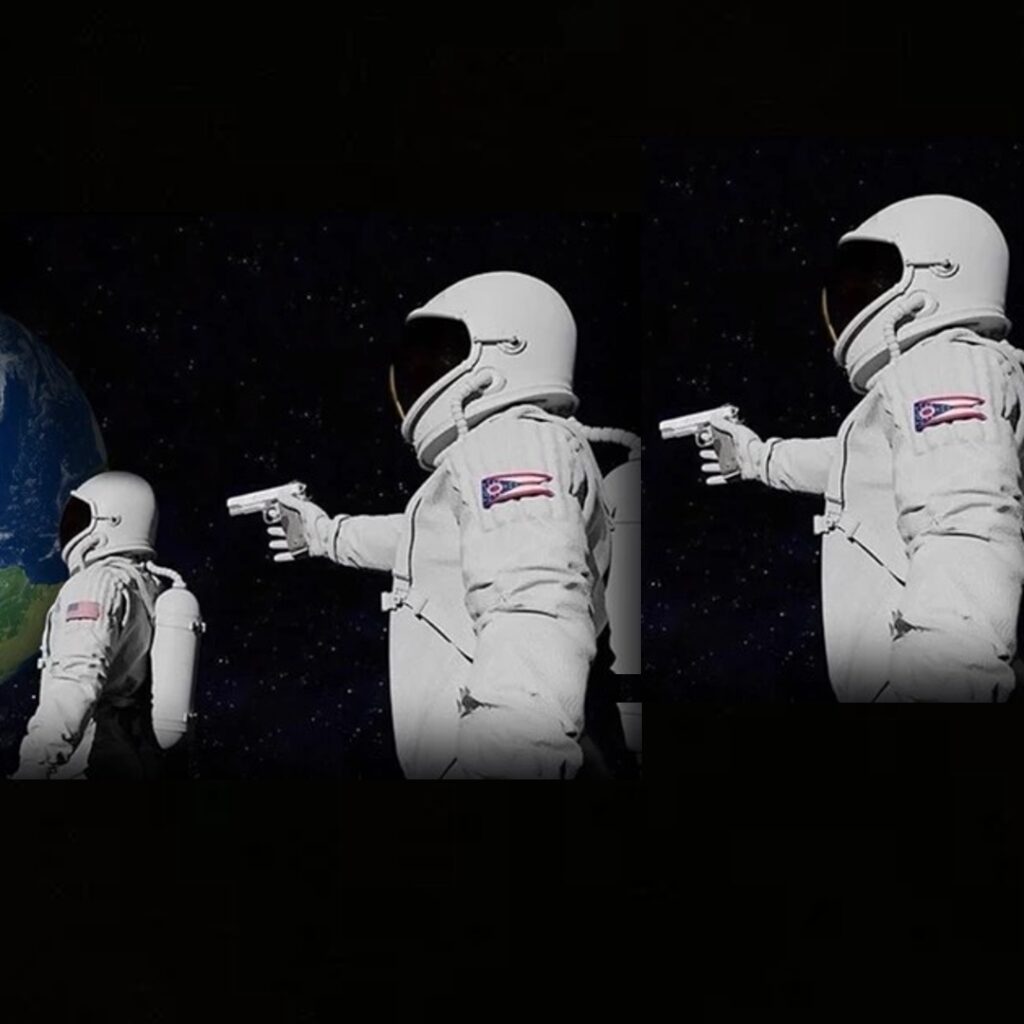
The iconic image of astronauts floating effortlessly inside spacecraft or drifting outside the International Space Station (ISS) is often described as “weightlessness.” This term refers to the sensation experienced by astronauts as if gravity has vanished. However, the reality is more intricate: astronauts are not free from gravity but are instead in a continuous state of free fall around Earth. This phenomenon reveals fascinating aspects of physics and our planet’s gravitational influence.
Orbital Free Fall Explained
When a spacecraft leaves Earth’s atmosphere, it enters a unique state known as orbital free fall. Unlike the common idea of free fall as a simple drop toward the ground, orbital free fall involves a delicate balance between gravitational pull and forward velocity. The ISS orbits approximately 420 kilometers above Earth, traveling at about 28,000 kilometers per hour (17,500 miles per hour). This tremendous speed causes the station and its occupants to fall toward Earth but simultaneously move forward fast enough to continuously miss the surface.
The Baseball Analogy
Imagine throwing a baseball horizontally. On Earth, gravity pulls it down quickly, causing it to land nearby. Now, if you could throw the ball fast enough and at the right angle, the curvature of Earth would cause the ground to “fall away” beneath it at the same rate the ball falls. The ball would then orbit Earth, perpetually falling around the planet rather than hitting it. This analogy captures the essence of how astronauts and their spacecraft remain in orbit.
Microgravity: The True Nature of Weightlessness
Despite the common phrase “zero gravity,” astronauts experience microgravity-a condition where gravitational forces are still present but greatly diminished in effect. At the ISS’s altitude, gravity is about 90% as strong as on Earth’s surface. The sensation of weightlessness arises because everything inside the spacecraft, including the astronauts, is falling together at the same rate. Without a surface pushing back against their bodies, astronauts float freely, creating the illusion that gravity has been turned off.
Scientific and Physiological Implications of Free Fall
The microgravity environment of orbital free fall offers a unique laboratory for scientific research. Experiments conducted in space provide insights impossible to achieve on Earth, such as studying fluid behavior without convection or observing crystal growth in pure conditions. Additionally, the human body undergoes significant changes in microgravity, including muscle atrophy, bone density loss, and cardiovascular adjustments. These physiological effects highlight the challenges of long-term space missions and the need for countermeasures to maintain astronaut health.
Cultural Impact and Public Fascination
The sight of astronauts floating weightlessly captivates the public imagination and symbolizes humanity’s quest to explore beyond our planet. The image of a suited astronaut suspended in space evokes a sense of wonder and the desire to transcend earthly limitations. This powerful visual metaphor enhances interest in space exploration and inspires generations to dream about the cosmos.
Common Misunderstandings About Weightlessness
- Misconception: Gravity disappears in orbit.
Correction: Gravity remains strong in orbit; astronauts are in free fall, not free from gravity. - Misconception: Spacecraft orbit in a gravity-free zone.
Correction: Orbital mechanics depend on gravity as the centripetal force keeping spacecraft in orbit.
Physics Behind the Sensation of Weight
On Earth, weight is the force exerted by gravity on a mass pressing against a surface. In orbit, although gravity still acts on astronauts, the absence of a supporting surface means there is no normal force pushing back. This results in the feeling of weightlessness. The interplay between gravity’s centripetal pull and the spacecraft’s tangential velocity creates a unique environment where traditional concepts of weight do not apply.
Simulating Weightlessness on Earth
Space agencies replicate the experience of free fall through parabolic flights, often called “vomit comets.” These aircraft follow a curved trajectory that produces brief periods of microgravity, allowing astronauts and researchers to train and conduct experiments before actual space missions. These simulations are crucial for preparing humans and technology for the challenges of orbital free fall.
Significance of Understanding Astronauts’ Free Fall
Recognizing that astronauts are in a continuous state of free fall rather than floating in a gravity-free void deepens our comprehension of orbital mechanics and gravitational forces. This understanding is vital for advancing space exploration, improving astronaut health, and inspiring scientific inquiry. The phenomenon of weightlessness not only enriches our knowledge of physics but also fuels humanity’s enduring fascination with the universe and our place within it.
FAQ
Why do astronauts appear to float in space?
Astronauts appear to float because they are in a continuous state of free fall towards Earth, experiencing microgravity.
What is the difference between weightlessness and microgravity?
Weightlessness refers to the sensation of having no weight, while microgravity indicates that gravitational forces are still present but significantly reduced.

Leave a Reply