

Short Answer
Definition of DNA Conductivity
DNA conductivity refers to the ability of the DNA molecule, particularly its backbone, to facilitate the flow of electrical charge. Traditionally recognized as the carrier of genetic information, DNA is now also studied for its electrical properties, revealing a fascinating intersection between biology and physics. This property involves the movement of electrons or charge carriers along the DNA strand, which can provide insights into molecular behavior beyond genetic coding.
Structural Basis of DNA Conductivity
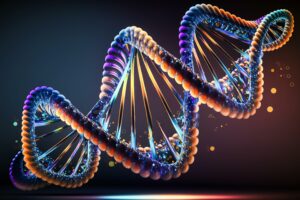
The DNA molecule is composed of nucleotides, each consisting of three main components: a sugar molecule, a phosphate group, and a nitrogenous base. The sugar-phosphate backbone forms the structural framework of DNA, with phosphate groups carrying negative charges due to their oxygen atoms. These negatively charged sites create regions conducive to electron movement, enabling charge transport along the strand. This process is influenced by quantum mechanical principles, where charge migration resembles subtle signal transmission within biological systems.
Key Components Influencing Conductivity
- Sugar-Phosphate Backbone:
Provides a stable scaffold and a pathway for charge movement due to its charged phosphate groups. - Nitrogenous Bases:
While primarily responsible for genetic coding, bases can also participate in charge transfer through stacking interactions.
Factors Affecting Electrical Conductivity in DNA
DNA conductivity is not an isolated phenomenon; it is highly sensitive to environmental conditions. Variables such as solvent type, temperature, and ionic concentration significantly impact the efficiency of charge transport.
- Solvent Effects:
Aqueous environments influence the ionic atmosphere around DNA, modulating charge carrier mobility. - Ion Concentration:
The presence of metal ions like lithium or sodium can enhance conductivity by stabilizing charge carriers and facilitating electron flow. - Temperature:
Thermal fluctuations affect molecular vibrations and electron hopping rates, altering conductive behavior.
Mechanism of Charge Transport in DNA
Charge transfer along DNA occurs through a combination of hopping and tunneling mechanisms. Electrons or holes move between nucleotides, influenced by the molecular structure and surrounding environment. The negatively charged phosphate groups and π-stacking interactions between bases create pathways that enable this movement, governed by principles of quantum mechanics and molecular biophysics.
Applications in Nanotechnology and Biomedicine
The discovery of DNA’s conductive properties has opened new avenues in technology and medicine. DNA-based nanostructures are being engineered to serve as components in biosensors, where their electrical responsiveness allows for rapid detection of pathogens or genetic mutations. This integration of DNA with electronic devices represents a transformative step, turning DNA from a passive genetic blueprint into an active element in technological innovation.
In biomedicine, leveraging DNA conductivity can lead to advanced drug delivery systems and molecular therapies. Conductive DNA strands can be designed to interact selectively with target cells, facilitating molecular recognition and promoting cellular repair. This approach heralds a new era in pharmacotherapy, where electrical properties of biomolecules are harnessed for precise medical interventions.
Evolutionary and Genetic Insights from DNA Conductivity
Variations in DNA conductivity among different species provide valuable information about evolutionary adaptations. Certain organisms exhibit unique nucleotide sequences that enhance charge transport, contributing to their ability to withstand environmental stresses. Studying these differences helps unravel evolutionary pathways and the molecular basis of resilience, offering a novel perspective on the role of electrical properties in biology.
Advanced Techniques for Measuring DNA Conductivity
Modern research employs sophisticated tools to investigate DNA’s electrical characteristics at the nanoscale. Techniques such as single-molecule conductivity measurements, scanning tunneling microscopy (STM), and atomic force microscopy (AFM) allow scientists to observe and quantify charge transport with exceptional precision. These methods reveal not only the intrinsic conductive properties of DNA but also dynamic interactions influenced by molecular and environmental factors.
Common Misconceptions About DNA Conductivity
DNA is solely a genetic information carrier.
Beyond genetics, DNA exhibits electrical properties that enable charge transport along its structure.
DNA conductivity is constant regardless of environment.
Conductivity varies significantly with factors like ion concentration, temperature, and solvent conditions.
Significance of DNA Conductivity
Understanding DNA conductivity bridges the gap between molecular biology and physics, enriching our comprehension of life’s fundamental processes. This knowledge is crucial for advancing nanotechnology, developing innovative medical therapies, and exploring evolutionary biology. By revealing how electrical signals traverse biological molecules, DNA conductivity studies illuminate new dimensions of molecular interaction and functionality, underscoring the intricate harmony between life and the physical forces that govern it.
FAQ
What is DNA conductivity?
DNA conductivity refers to the ability of the DNA molecule to facilitate the flow of electrical charge, revealing insights into molecular behavior beyond genetic coding.
What factors affect DNA conductivity?
Environmental conditions such as solvent type, temperature, and ion concentration significantly impact DNA conductivity.
What are the applications of DNA conductivity?
DNA conductivity is utilized in nanotechnology for biosensors and in biomedicine for advanced drug delivery systems and molecular therapies.



Leave a Reply