

Short Answer
Definition of Piston-Powered DNA
The concept of “Piston-Powered DNA” serves as a metaphorical framework that likens the mechanical precision of pistons in engines to the dynamic molecular processes within DNA. This analogy highlights the intricate and coordinated movements that drive essential biological functions, emphasizing the mechanical nature of molecular interactions that sustain life.
Structural Overview of DNA and Its Mechanical Analogy
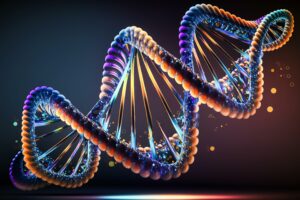
DNA, or deoxyribonucleic acid, is composed of two antiparallel strands twisted into a double helix, with nucleotides connected by hydrogen bonds. This elegant structure functions as a repository and transmitter of genetic information. When viewed through the lens of the piston metaphor, the double helix resembles a finely engineered machine where each twist and conformational change acts like a piston stroke, generating mechanical forces that facilitate critical cellular processes such as replication and transcription.
- Double Helix as a Machine:
The helical structure provides a framework for mechanical movements analogous to piston strokes. - Nucleotide Interactions:
Hydrogen bonds between nucleotides allow for flexibility and force transmission during molecular operations.
Mechanisms of DNA Function Through the Piston Metaphor
At the core of cellular activity, DNA orchestrates the synthesis of RNA, which acts as a messenger translating genetic codes into proteins. This process mirrors the operation of a piston-driven engine, where mechanical motion converts energy from one form to another. During transcription, the unwinding of the DNA helix resembles the upward stroke of a piston, creating space for RNA polymerase to assemble complementary nucleotides into messenger RNA (mRNA). Each nucleotide addition represents a precise mechanical action, reflecting the synchronization of molecular forces and energy transformations.
DNA Transcription as a Mechanical Process
- Unwinding of DNA:
Comparable to a piston’s stroke creating space for molecular machinery. - RNA Polymerase Activity:
Functions like a driven component, assembling nucleotides into mRNA. - Nucleotide Addition:
Represents discrete mechanical steps in the transcription process.
DNA Repair and Chromatin Remodeling: Adaptive Molecular Machinery
DNA repair mechanisms act as responsive pistons that detect and correct damage, maintaining genomic integrity much like pistons in an engine that compensate for wear and tear. These repair systems identify lesions and structural abnormalities, restoring functionality to the genetic material. Similarly, chromatin remodeling involves histones around which DNA is wound, regulating accessibility through compaction and decompaction. This process is akin to piston compression altering cylinder dimensions, enabling selective gene expression and silencing, and demonstrating the adaptability of DNA’s molecular machinery.
- DNA Repair:
Functions as a corrective piston system, ensuring cellular resilience. - Chromatin Remodeling:
Histone-mediated modulation of DNA accessibility parallels piston compression dynamics.
Interplay of Order and Randomness in Molecular Mechanics
The piston-powered DNA metaphor also captures the balance between precision and stochasticity inherent in biological systems. Just as pistons convert stored potential energy into kinetic energy with high efficiency, molecular processes transform genetic information into functional biomolecules. However, unlike purely mechanical systems, biological reactions incorporate an element of randomness essential for biochemical diversity and adaptability, illustrating a unique fusion of order and chaos.
Evolutionary Implications of Molecular Mechanics
Variations in DNA sequences can be compared to mechanical tolerances in pistons, reflecting genetic diversity and adaptability. Natural selection acts on these variations, favoring the most efficient and robust molecular configurations. This evolutionary perspective underscores how the mechanical properties encoded within DNA contribute to the survival and evolution of species, serving as both a historical record and a blueprint for future biological innovation.
Significance of the Piston-Powered DNA Metaphor
By drawing parallels between engineered pistons and molecular DNA processes, this metaphor provides a comprehensive understanding of the dynamic and resilient nature of life at the molecular level. It demystifies complex biochemical phenomena such as transcription, repair, and chromatin remodeling, highlighting the elegance and efficiency of cellular machinery. Ultimately, the piston-powered DNA analogy bridges the disciplines of biology and engineering, offering profound insights into the mechanisms that sustain life.
FAQ
What is Piston-Powered DNA?
Piston-Powered DNA is a metaphor that compares the mechanics of DNA processes to the functioning of pistons in an engine, illustrating the movement and interactions at the molecular level.
How does DNA transcription relate to pistons?
During DNA transcription, the unwinding of the DNA helix is likened to a piston stroke, allowing RNA polymerase to synthesize mRNA from DNA.
What role do molecular motors play in DNA functions?
Molecular motors facilitate various DNA functions, such as transcription and repair, by providing the necessary mechanical force for movement and interaction.



Leave a Reply