
Short Answer
Definition of Dark Field Imaging
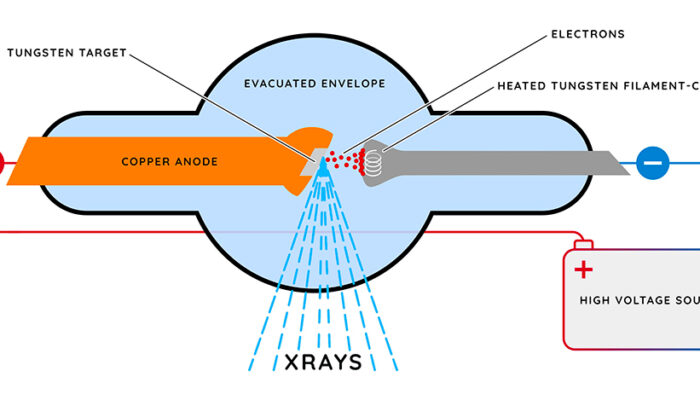
Dark field imaging is an advanced radiographic technique that enhances the visualization of structures by detecting scattered X-rays rather than just the direct transmission. Unlike conventional X-ray imaging, which primarily captures differences in tissue density, dark field imaging reveals microstructural details by analyzing weakly scattered radiation, providing additional diagnostic information that is often invisible in standard radiographs.
- Traditional X-ray Imaging:
Relies on the absorption of X-rays by tissues of varying densities to create contrast in images. - Dark Field Imaging:
Utilizes scattered X-rays to highlight subtle features, especially in soft tissues, improving detection of abnormalities.
Principles Behind Conventional and Dark Field X-ray Techniques
Standard X-ray imaging operates on the principle that X-rays pass through the body and are absorbed differently by various tissues, producing images based on density contrasts. However, this method often struggles to detect fine details in soft tissues or subtle pathological changes.
In contrast, dark field imaging capitalizes on the scattering of X-rays caused by microscopic structures within tissues. By capturing these scattered rays using specialized detectors, it reveals contrasts related to the internal microarchitecture, which are not discernible through traditional transmission-based imaging.
How Dark Field Imaging Works
Dark field imaging employs a detector setup designed to measure X-rays scattered at specific angles beyond a certain threshold. This scattered radiation carries information about the texture and composition of tissues at a microscopic level. By focusing on these scattered signals, the technique enhances the visibility of low-contrast features such as tumors, micro-calcifications, or early pathological changes that conventional X-rays might miss.
Advantages and Clinical Applications
The primary benefit of dark field imaging lies in its superior ability to detect subtle abnormalities within soft tissues. This capability is particularly valuable in:
- Musculoskeletal Imaging:
Identifying fine fractures or anomalies hidden beneath overlapping structures. - Pulmonary Diagnostics:
Early detection of lung diseases by revealing microstructural changes before they become apparent on standard X-rays. - Oncology:
Enhancing visualization of tumors and micro-calcifications that are difficult to detect with traditional methods.
Challenges and Integration into Clinical Practice
Despite its promising advantages, dark field imaging faces hurdles in widespread adoption. The transition from conventional radiography to this sophisticated technique requires:
- Extensive education and training for radiologists to interpret new image types effectively.
- Investment in specialized equipment and infrastructure.
- Addressing skepticism within the medical community accustomed to established imaging protocols.
Moreover, healthcare systems must evaluate the cost-effectiveness of implementing dark field imaging, balancing improved diagnostic accuracy against financial and logistical considerations.
Role of Artificial Intelligence in Enhancing Dark Field Imaging
The integration of artificial intelligence (AI) and machine learning algorithms holds significant potential to augment dark field imaging. AI can assist in interpreting complex scattering patterns, improving diagnostic precision and reducing human error. This synergy may lead to breakthroughs in early disease detection and personalized medicine. However, it also raises ethical questions about reliance on automated systems versus human expertise in clinical decision-making.
Collaborative Efforts for Advancing Dark Field Imaging
Progress in dark field imaging depends on interdisciplinary collaboration among radiologists, physicists, and technologists. Sharing knowledge and addressing technical challenges collectively will accelerate the refinement of this modality and its adaptation to diverse clinical scenarios, ultimately enhancing patient care.
Why Dark Field Imaging is Important
Dark field imaging represents a transformative advancement in diagnostic radiography by unveiling previously hidden biological details. Its ability to detect subtle tissue changes can lead to earlier diagnosis, improved treatment planning, and better patient outcomes. As medical imaging continues to evolve, embracing such innovative techniques is crucial for pushing the boundaries of what is diagnostically possible.
Summary and Future Outlook
The development of dark field imaging marks a forward-looking shift in X-ray technology, emphasizing the value of exploring new imaging frameworks. While challenges related to integration, cost, and acceptance remain, the potential benefits for enhanced diagnostic accuracy are substantial. Moving forward, addressing these issues thoughtfully will be essential to fully harness the capabilities of dark field imaging and illuminate the hidden complexities within the human body.
FAQ
How does dark field imaging differ from traditional X-ray imaging?
Traditional X-ray imaging relies on tissue density, while dark field imaging uses scattered X-rays to reveal hidden details.
What role does AI play in dark field imaging?
AI can enhance image interpretation by analyzing complex scattering patterns, improving diagnostic accuracy.





Leave a Reply