
Short Answer
Definition of Fundamental Forces
The universe operates through a set of four fundamental forces that dictate the interactions of matter and energy at the most basic level. These forces-gravitational, electromagnetic, strong nuclear, and weak nuclear-each have unique properties and roles in shaping the physical world. Understanding these forces is essential to grasping how the cosmos functions from the smallest particles to the largest celestial bodies.
- Gravitational Force:
The attraction between masses, governing planetary orbits and cosmic structures. - Electromagnetic Force:
The interaction between charged particles, responsible for electricity, magnetism, and light. - Strong Nuclear Force:
The powerful force that binds protons and neutrons within atomic nuclei. - Weak Nuclear Force:
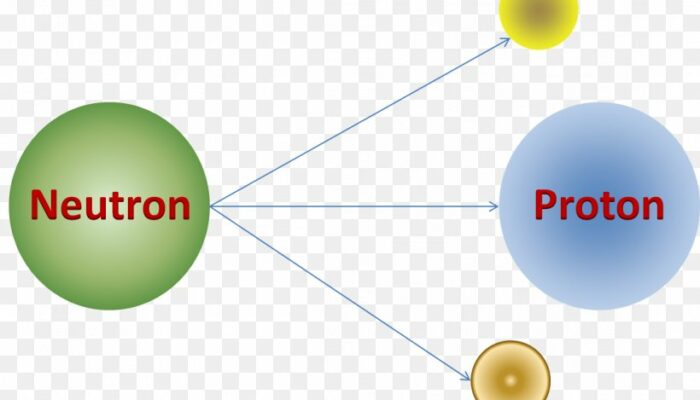
The force responsible for certain types of particle decay and nuclear reactions.
Characteristics and Range of Fundamental Forces
Each fundamental force exhibits distinct characteristics, including its range of influence and relative strength. These differences determine how and where each force operates within the universe.
- Gravitational Force:
Has an infinite range but is the weakest force; it acts over vast cosmic distances, influencing planets, stars, and galaxies. - Electromagnetic Force:
Also has an infinite range and is significantly stronger than gravity; it governs interactions between charged particles and underpins chemical bonding. - Strong Nuclear Force:
Extremely powerful but limited to a very short range (about 1 femtometer or 10-15 meters); it holds the atomic nucleus together. - Weak Nuclear Force:
Operates over a very short range and is weaker than the strong and electromagnetic forces; it facilitates particle transformations such as beta decay.
Speed of Interaction: Which Force is Fastest?
When considering the velocity at which these forces propagate their effects, the electromagnetic force stands out as the fastest. It transmits interactions at the speed of light-approximately 299,792 kilometers per second in a vacuum-allowing near-instantaneous communication between charged particles.
In contrast, gravitational effects also propagate at the speed of light but manifest over much longer timescales due to their weak strength and vast distances. The strong nuclear force acts extremely quickly but only within the confines of the atomic nucleus, while the weak nuclear force operates more slowly in comparison.
Mechanism of Electromagnetic Interaction
The electromagnetic force arises from the exchange of photons, the elementary particles of light, between charged particles. This exchange mediates attraction or repulsion, enabling phenomena such as electric currents, magnetism, and the formation of chemical bonds. The rapid transmission of photons ensures that electromagnetic interactions occur at the speed of light, facilitating swift responses in atomic and molecular systems.
Role of Nuclear Forces in Atomic Stability
Within the atomic nucleus, the strong nuclear force plays a critical role by overcoming the repulsive electromagnetic force between positively charged protons. Despite its short range, this force is immensely powerful, binding protons and neutrons tightly together to maintain nuclear integrity. Meanwhile, the weak nuclear force governs processes like beta decay, which are essential for the transformation of particles and the synthesis of elements in stars.
Practical Implications of Electromagnetic Speed
The rapid nature of electromagnetic interactions has profound effects across various fields:
- Everyday Phenomena:
Lightning, the warmth of sunlight, and the vivid colors of fireworks all result from swift electromagnetic processes. - Technology:
Modern electronics, communication systems, and quantum computing rely on the fast exchange of electromagnetic signals to function efficiently. - Scientific Research:
Advances in quantum physics explore harnessing electromagnetic interactions for applications like quantum entanglement and teleportation, potentially revolutionizing information transfer.
Common Misconceptions About Fundamental Forces
Gravity is the fastest force.
While gravitational effects propagate at the speed of light, electromagnetic interactions occur more rapidly in practical terms due to their stronger influence at smaller scales.
The strong nuclear force is the fastest because it is the most powerful.
The strong force acts over a very short range and, although powerful, does not transmit interactions faster than the electromagnetic force.
Significance of Electromagnetic Interaction Speed
The unparalleled speed of electromagnetic interactions is fundamental to the structure and behavior of matter. It enables the formation of molecules, the transmission of light and information, and the operation of countless technologies that define modern life. This rapid force is not only a cornerstone of physical phenomena but also a driving factor in scientific innovation and technological progress.
FAQ
What is the fastest fundamental force?
The electromagnetic force is the fastest, transmitting interactions at the speed of light.
How does the strong nuclear force compare to the electromagnetic force?
While the strong nuclear force is powerful, it operates over a very short range and does not transmit interactions faster than the electromagnetic force.
What role do nuclear forces play in atomic stability?
The strong nuclear force binds protons and neutrons together in the nucleus, while the weak nuclear force facilitates certain particle transformations.






Leave a Reply