

Short Answer
Understanding Physics Specializations
Deciding on a specific area within physics can be overwhelming due to the field’s vastness and complexity. Each branch not only focuses on distinct phenomena but also employs unique methods and addresses different fundamental questions. Personal passion combined with the societal impact of each specialization often guides this important choice. The following sections provide an overview of key physics disciplines, highlighting their core interests and the reasons they captivate researchers and students alike.
Astrophysics: Unveiling the Universe
Astrophysics integrates physical laws with astronomical data to explore the universe’s grandest mysteries. This specialization investigates cosmic phenomena such as black holes, supernova explosions, and the cosmic microwave background radiation. The appeal of astrophysics lies in its exploration of the universe’s vastness and complexity, inspiring awe and curiosity about the cosmos’ origin, structure, and destiny. Those fascinated by extraterrestrial life or the dynamics of galaxies often find this field particularly compelling.
Quantum Mechanics: The Microcosm of Particles
Quantum mechanics provides the theoretical foundation for understanding matter and energy at the smallest scales. It delves into the peculiar behaviors of subatomic particles, including wave-particle duality and quantum entanglement. This domain challenges classical physics by revealing phenomena that defy everyday intuition, prompting profound philosophical questions about reality. The intricate mathematical frameworks involved attract individuals who enjoy abstract and rigorous reasoning.
Condensed Matter Physics: Exploring Material Properties
Situated at the crossroads of physics, chemistry, and engineering, condensed matter physics examines the characteristics of solids and liquids. It focuses on how atomic interactions give rise to diverse phenomena such as magnetism and superconductivity. This specialization has significant technological implications, influencing the development of semiconductors and other advanced materials. Students often appreciate the blend of theoretical insight and practical application that condensed matter physics offers, as it directly impacts modern technology and everyday life.
Nuclear Physics: Investigating Atomic Nuclei
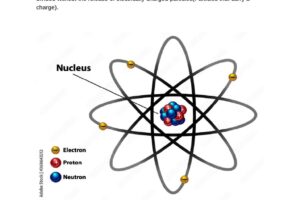
Nuclear physics centers on the components and forces within atomic nuclei. It studies nuclear interactions, radioactivity, fission, and fusion processes. Enthusiasts are drawn to the delicate balance between nuclear stability and the forces that can disrupt it. Beyond theoretical interest, nuclear physics is vital for energy generation and medical technologies, including diagnostic imaging and cancer treatment. This dual role in fundamental science and practical application makes it a highly engaging field.
Particle Physics: Probing Fundamental Matter
Particle physics explores the universe’s most elementary particles and the fundamental forces governing them. Combining experimental research with theoretical models, this field addresses questions about the nature of matter and the origin of mass, exemplified by discoveries like the Higgs boson. The study of particle interactions reveals deep symmetries in nature, attracting those intrigued by the complexities of the Standard Model and beyond. High-energy particle accelerators provide a dynamic environment for groundbreaking discoveries.
Atmospheric Physics: Understanding Earth’s Atmosphere
With growing concerns about climate change and environmental sustainability, atmospheric physics has become increasingly important. This specialization investigates the physical processes shaping the atmosphere, including weather patterns, climate dynamics, and interactions with oceans and land ecosystems. Through mathematical modeling and empirical research, atmospheric physicists contribute essential knowledge for addressing global environmental challenges and promoting sustainable development.
Biophysics: Bridging Physics and Biology
Biophysics applies physical principles to unravel the complexities of biological systems. It studies the mechanics of biomolecules, cellular communication, and physiological functions. Those interested in the fundamental mechanisms of life are often drawn to this interdisciplinary field. By combining quantitative analysis with biological research, biophysicists advance medical science and innovate new technologies, enhancing our understanding of living organisms.
Interdisciplinary Collaboration in Physics
While each physics specialization offers distinct perspectives and expertise, many contemporary scientific challenges demand interdisciplinary approaches. Integrating knowledge across different physics domains can foster innovative solutions in technology, healthcare, and environmental science. Physicists skilled in navigating these interdisciplinary connections are well-positioned to pioneer novel research and applications.
Choosing the Right Physics Specialization
Selecting a physics specialization should be guided by both individual interests and an awareness of each field’s broader societal relevance. Aligning personal curiosity with the potential to contribute meaningfully to scientific progress and human welfare can lead to a rewarding career. Aspiring physicists are encouraged to reflect deeply on their passions and consider how their chosen path can shape the future.
FAQ
What is the importance of condensed matter physics?
Condensed matter physics examines material properties and has significant technological implications, influencing the development of semiconductors and advanced materials.
How does biophysics contribute to medical science?
Biophysics applies physical principles to biological systems, advancing medical science and innovating new technologies for understanding living organisms.




Leave a Reply