

Short Answer
Definition of Medical Physics
Medical physics is an interdisciplinary field that merges the principles of physics with medical science to improve healthcare technologies and patient treatment. It involves applying physical concepts and mathematical techniques to understand, develop, and optimize medical devices and procedures, particularly in diagnostic imaging and radiation therapy.
- Interdisciplinary Nature:
Combines physics, biology, and medicine to address clinical challenges. - Core Focus Areas:
Includes radiation physics, imaging technologies, and therapeutic applications. - Goal:
Enhances patient care through technological innovation and precise treatment planning.
Foundational Knowledge Required
To pursue medical physics, a strong grounding in fundamental physics concepts is essential. This includes understanding mechanics, thermodynamics, electromagnetism, and radiation physics. These areas form the basis for comprehending how physical principles apply to biological systems and medical technologies.
- Physics Principles:
Mechanics explains motion and forces; thermodynamics covers energy transfer; electromagnetism deals with electric and magnetic fields; radiation physics focuses on ionizing radiation interactions. - Mathematical Skills:
Proficiency in calculus, differential equations, and quantitative reasoning is critical for modeling and problem-solving.
Mathematics in Medical Physics
Mathematics serves as the essential language of medical physics, translating theoretical concepts into practical applications. Calculations involving radiation dose distributions, imaging signal processing, and drug kinetics rely heavily on advanced mathematical tools.
- Calculus and Differential Equations:
Used to model dynamic systems such as radiation transport and biological responses. - Vector Fields and Non-linear Dynamics:
Important for understanding complex phenomena like electromagnetic fields and tissue interactions.
Challenges and Intellectual Rewards
While the mathematical and theoretical demands of medical physics can be intimidating, they also offer an intellectually stimulating environment. Students often face complex concepts such as vector calculus and non-linear systems, but these challenges lead to rewarding problem-solving experiences that directly impact patient care.
- Complex Theoretical Frameworks:
Require patience and analytical thinking to master. - Practical Applications:
Enable students to contribute to advancements in diagnostic imaging and cancer treatment.
Integration of Technology and Computational Tools
Modern medical physics education emphasizes the use of computational software and simulation tools. These technologies help students visualize data, perform numerical analyses, and validate theoretical models, making complex mathematical concepts more accessible.
- Simulation Software:
Facilitates modeling of radiation dose distributions and imaging processes. - Numerical Methods:
Complement analytical approaches to solve real-world medical physics problems.
Collaborative and Clinical Aspects
Medical physicists work closely with multidisciplinary teams, including oncologists, radiologists, and other healthcare professionals. This collaboration requires not only scientific expertise but also strong communication skills and an understanding of clinical workflows and patient-centered care.
- Teamwork:
Essential for developing and implementing effective medical technologies. - Clinical Awareness:
Enhances the relevance and impact of physics applications in healthcare settings.
The Role of Mentorship in Medical Physics Education
Guidance from experienced educators and professionals plays a vital role in navigating the complexities of medical physics. Mentors provide support in academic development, research opportunities, and career planning, helping students make informed decisions and overcome challenges.
- Academic Support:
Helps clarify difficult concepts and improve problem-solving skills. - Career Guidance:
Assists in selecting research projects and graduate programs aligned with student interests.
Practical Applications and Impact
Medical physics contributes significantly to healthcare by advancing diagnostic and therapeutic technologies. Innovations in imaging modalities and radiation treatment planning improve patient outcomes and quality of life.
- Diagnostic Imaging:
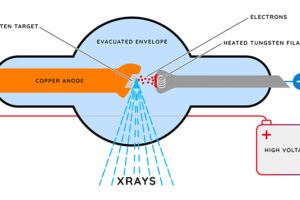
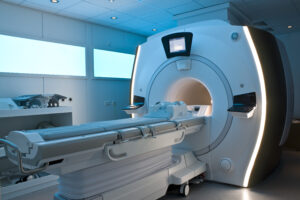
Techniques such as X-rays, MRI, and CT scans rely on physics principles for image acquisition and interpretation. - Cancer Treatment:
Radiation therapy planning uses precise dose calculations to maximize tumor control while minimizing damage to healthy tissue.
Common Misconceptions About Studying Medical Physics
Medical physics is purely theoretical and disconnected from clinical practice.
The field is highly applied, involving direct collaboration with healthcare professionals and patient care.
The mathematical content is too difficult for most students.
While challenging, with dedication and the use of computational tools, students can master the necessary skills.
Why Studying Medical Physics Is Important
Medical physics stands at the forefront of medical innovation, combining rigorous scientific inquiry with practical healthcare applications. Its importance lies in improving diagnostic accuracy, enhancing treatment effectiveness, and ultimately saving lives through technological advancement.
- Scientific Advancement:
Drives the development of new medical technologies and treatment methods. - Healthcare Improvement:
Enhances patient safety and treatment outcomes through precise physical measurements and modeling.
Conclusion: Embracing the Challenge and Opportunity
Studying medical physics demands commitment, resilience, and a passion for both science and medicine. Although the mathematical and conceptual challenges are significant, the field offers unparalleled opportunities to contribute meaningfully to healthcare innovation. For those willing to engage deeply with the subject, medical physics opens a gateway to a career rich with intellectual fulfillment and societal impact.
FAQ
What is medical physics?
Medical physics is an interdisciplinary science applying physics concepts and mathematical methods to develop and optimize medical technologies and treatments.
What mathematical knowledge is required for medical physics?
Proficiency in calculus, differential equations, vector calculus, and quantitative reasoning is essential for medical physics.
Why is studying medical physics considered challenging?
Because it involves mastering complex physics principles, advanced mathematics, and integrating clinical applications.
How do computational tools assist in medical physics education?
They enable visualization, simulation, and numerical analysis of complex medical physics problems, making theoretical concepts more accessible.
What career opportunities does medical physics offer?
Careers in medical physics include roles in diagnostic imaging development, radiation therapy planning, clinical collaboration, and healthcare technology research.




Leave a Reply