
Short Answer
Definition of Mathematics and Computing
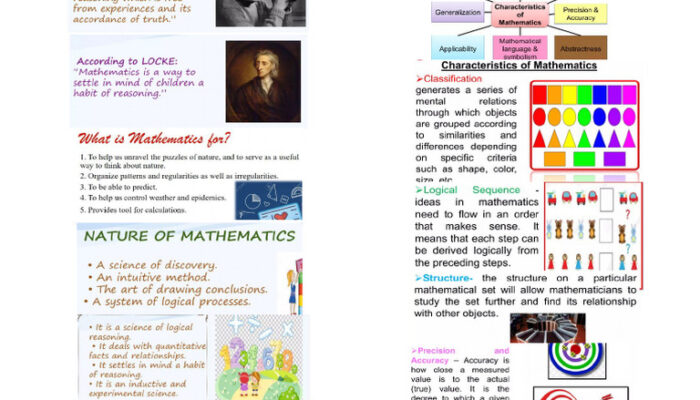
Mathematics and Computing together form a dynamic interdisciplinary field that underpins scientific research and drives technological innovation. This domain integrates mathematical theories with computational techniques to solve complex problems, analyze data, and develop advanced technologies.
- Mathematics:
A discipline focused on abstract structures, logical reasoning, and quantitative analysis, encompassing branches such as algebra, geometry, calculus, and statistics. - Computing:
The study and application of algorithms, data structures, hardware, and software systems that enable the processing and management of information.
Core Branches of Mathematics
Mathematics is structured around several fundamental areas, each contributing unique tools and perspectives for understanding and solving problems.
- Algebra:
Involves the manipulation of symbols and the solving of equations to represent relationships and patterns. - Geometry:
Focuses on the properties and relations of points, lines, surfaces, and solids in space. - Calculus:
Deals with the study of change and motion through concepts like limits, derivatives, and integrals. - Statistics:
Centers on collecting, analyzing, and interpreting data, playing a crucial role in decision-making processes especially in the era of big data.
Fundamentals of Computing
Computing encompasses both the physical components of computers and the abstract principles that govern software development and algorithm design.
- Algorithm Design:
The creation of step-by-step procedures to solve specific problems efficiently. - Data Structures:
Organizational formats such as arrays, lists, and trees that store and manage data effectively. - Computational Theory:
Explores the limits of what can be computed and the complexity of computational problems.
Mathematical Logic and Theoretical Computer Science
This area investigates the foundational aspects of computation, addressing fundamental questions about computability and the theoretical boundaries of algorithms. It blends philosophy with rigorous mathematical frameworks to deepen our understanding of digital systems.
Applications Across Industries
Mathematics and Computing have far-reaching applications in various sectors, driving innovation and efficiency.
- Finance:
Quantitative analysts employ mathematical models, including stochastic calculus and statistical methods, to optimize investment strategies. - Healthcare:
Biostatistics supports medical research by analyzing clinical data to improve patient outcomes. - Aerospace and Engineering:
Computational simulations and numerical methods predict physical behaviors, enhancing design and operational processes.
Role in Artificial Intelligence and Machine Learning
The development of AI and ML technologies is deeply rooted in mathematical concepts such as linear algebra and probability theory. This field involves training algorithms, assessing their performance, and addressing ethical considerations related to AI deployment, highlighting the growing complexity and significance of this synergy.
Cryptography and Security
Mathematics, particularly number theory and discrete mathematics, is essential in securing digital communications. Topics include encryption methods, digital signatures, and emerging quantum cryptography, which leverages quantum mechanics to revolutionize data security.
Educational Perspectives in Mathematics and Computing
Educational resources range from introductory courses to advanced studies, emphasizing problem-solving, logical reasoning, and computational thinking. Diverse learning platforms offer interactive coding environments and comprehensive lectures, catering to various learning preferences and goals.
Interdisciplinary Collaborations
The intersection of Mathematics and Computing with other scientific fields fosters innovation and novel solutions. Examples include mathematical modeling in epidemiology for disease prediction and computational analysis in climate science to understand environmental changes, demonstrating the broad impact of this interdisciplinary approach.
Significance and Future Outlook
The combined study of Mathematics and Computing presents a rich tapestry of theoretical insights and practical applications. As digital technologies continue to evolve, the importance of these disciplines will expand, shaping scientific progress and technological advancements in unprecedented ways.
FAQ
What is Mathematics and Computing?
Mathematics and Computing is an interdisciplinary field that combines mathematical theories and computational techniques to solve complex problems and drive technological innovation.
Why is the integration of mathematics important in computing?
Mathematics provides the theoretical foundations necessary for designing algorithms, understanding computational limits, and ensuring the correctness of computer programs.
How does Mathematics and Computing impact everyday technology?
It enables advancements in software development, data analysis, artificial intelligence, cryptography, and many other technologies integral to modern life.




Leave a Reply