
Short Answer
Overview of the Nancy Grace Roman Space Telescope
Gazing into the night sky reveals an immense and enigmatic universe filled with twinkling stars, glowing nebulae, and spiraling galaxies. Despite these breathtaking sights, humanity’s comprehension of the cosmos remains limited. The Nancy Grace Roman Space Telescope is poised to revolutionize our understanding by introducing groundbreaking observational capabilities that go far beyond incremental improvements. This next-generation space observatory promises to transform how we study and interpret the universe on multiple fronts.
Definition and Mission Objectives
The Nancy Grace Roman Space Telescope, often referred to simply as the Roman Telescope, is a forthcoming flagship space observatory designed to explore fundamental cosmic questions. Unlike previous telescopes that focused primarily on high-resolution imaging of small sky regions, Roman combines a wide field of view with advanced infrared technology to conduct large-scale surveys. Its primary scientific goals include investigating the nature of dark energy, mapping the large-scale structure of the universe, and advancing the search for exoplanets.
- Dark Energy Exploration:
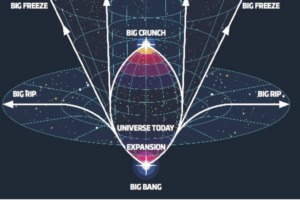
The telescope aims to decode the mysterious force accelerating the universe’s expansion, which constitutes approximately 68% of the cosmos. - Wide-Field Infrared Imaging:
Roman’s instruments will capture vast sky areas with high resolution, enabling comprehensive cosmic surveys. - Exoplanet Discovery:
Utilizing gravitational microlensing, the telescope will detect planets that are otherwise invisible, including free-floating rogue planets.
Technological Innovations and Design Features
The Roman Space Telescope incorporates several cutting-edge technologies that distinguish it from its predecessors. Its 2.4-meter primary mirror matches the size of the Hubble Space Telescope’s but is enhanced with a sophisticated coronagraph. This instrument blocks the overwhelming light from stars, allowing direct imaging of exoplanets and detailed study of their atmospheres, which is crucial for assessing potential habitability.
Additionally, Roman’s highly sensitive infrared detectors enable it to peer through cosmic dust and observe distant epochs unreachable by visible light telescopes. The combination of a wide field of view and advanced infrared capabilities allows the telescope to conduct expansive sky surveys with unprecedented efficiency and depth.
How the Roman Telescope Advances Cosmology
One of the telescope’s most transformative features is its ability to survey enormous portions of the sky at once, capturing hundreds of times more area than previous observatories with similar resolution. This capability is vital for studying gravitational lensing effects caused by dark matter, which in turn helps map the universe’s large-scale structure. By producing detailed cosmic maps, Roman will provide critical data to better understand dark energy’s role in cosmic acceleration.
Exoplanet Research and Gravitational Microlensing
Building on the legacy of missions like Kepler and TESS, the Roman Telescope will uniquely contribute to exoplanet science through gravitational microlensing surveys. This technique detects planets by observing the bending of light from distant stars caused by a planet’s gravitational field. It is especially effective at finding planets that do not orbit stars, known as rogue planets, which are otherwise undetectable by traditional methods. These discoveries will enrich our knowledge of planetary system formation and the diversity of planetary bodies in our galaxy.
Scientific and Philosophical Significance
The Roman Space Telescope embodies a multifaceted approach to astronomical research, simultaneously addressing questions about dark energy, galaxy evolution, and planetary systems. This integrated strategy promises a more comprehensive understanding of universal phenomena than telescopes focused on singular objectives.
Beyond its scientific impact, the mission resonates with humanity’s enduring curiosity about our place in the cosmos. It confronts profound questions about the existence of life beyond Earth and the fundamental nature of the universe’s expansion, offering the potential to reshape philosophical and cultural perspectives.
Potential Societal Impact
Discoveries made by the Roman Telescope could have far-reaching implications beyond astronomy. Unraveling the mysteries of dark energy may lead to new physics theories and inspire technological innovations. Meanwhile, characterizing exoplanets could influence philosophical debates and ethical considerations regarding life beyond our planet, enriching humanity’s collective narrative.
Conclusion: Expanding the Cosmic Horizon
As the Nancy Grace Roman Space Telescope prepares to embark on its mission, it symbolizes the pinnacle of human ingenuity and the relentless quest to decode cosmic mysteries. By vastly expanding the observable universe and addressing fundamental questions about cosmic acceleration, planetary diversity, and universal evolution, Roman is set to redefine our understanding of the cosmos. Its legacy will inspire future generations to explore the night sky with renewed awe and determination, highlighting the boundless potential of discovery that lies beyond.
FAQ
What is the primary mission of the Nancy Grace Roman Space Telescope?
The primary mission is to explore dark energy, conduct wide-field surveys, and discover exoplanets.
How does the Roman Telescope differ from previous telescopes?
It combines a wide field of view with advanced infrared technology for large-scale cosmic surveys.

Leave a Reply