
Short Answer
Definition of the Barycenter
The barycenter is the true gravitational center around which two or more celestial bodies orbit. Unlike the common assumption that planets revolve directly around the sun, they actually orbit this shared center of mass, which shifts depending on the relative masses and positions of the bodies involved. The term “barycenter” originates from the Greek words baros (weight) and kentron (center), reflecting its role as the balance point in gravitational interactions.
Understanding Orbital Dynamics: The Role of the Barycenter
Imagine two dancers spinning hand in hand; neither circles the other exclusively, but both revolve around a mutual midpoint. This analogy illustrates how celestial bodies orbit their barycenter. For example, Earth and the Moon revolve around a point located beneath Earth’s surface but not at its exact center. This shared pivot governs their orbital relationship and causes subtle movements in Earth’s position.
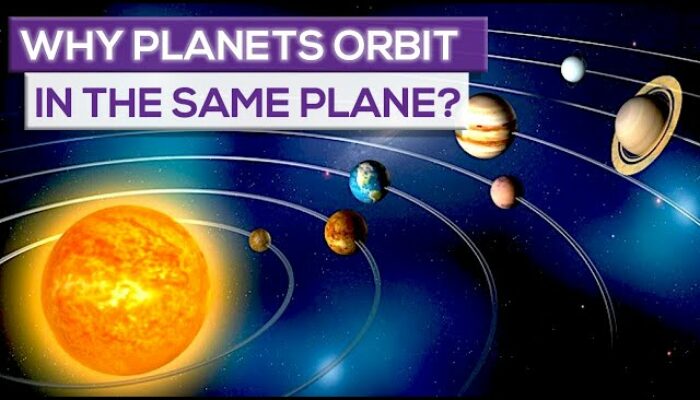
Expanding this concept to the entire solar system, all planets, including Earth, orbit a barycenter influenced by the combined gravitational forces of the sun and the planets themselves. This point is not fixed but continuously shifts as planets move along their elliptical paths, creating a dynamic gravitational balance.
The Sun’s Movement and the Solar System’s Barycenter
Although the sun contains the vast majority of the solar system’s mass, it is not stationary. It participates in the orbital dance by moving around the barycenter, especially due to the gravitational influence of massive planets like Jupiter and Saturn. Jupiter, with a mass exceeding twice that of all other planets combined, can shift the barycenter outside the sun’s visible surface at times. Consequently, the sun traces a subtle, looping trajectory around this gravitational center, performing a slow stellar pirouette.
Mathematical Framework of Orbital Mechanics
Orbital motion around the barycenter is described by Newtonian gravity and refined by Einstein’s general relativity. The classical two-body problem models two masses orbiting their common center of mass under mutual gravitational attraction. However, when more bodies are involved, the system becomes an n-body problem, requiring advanced computational methods to predict the complex gravitational interactions and resulting motions.
Practical Implications in Astronomy and Space Exploration
Recognizing the barycenter’s role is crucial for accurate space navigation. Spacecraft trajectories must account for the shifting center of mass within the solar system to ensure precise targeting of planets, moons, or interstellar destinations. Ignoring these subtle gravitational nuances could lead to significant navigational errors.
Common Misconceptions About Planetary Orbits
Planets orbit the sun at a fixed point.
Planets orbit the barycenter, which moves depending on the positions and masses of all bodies in the system.
The sun is immobile at the center of the solar system.
The sun moves in response to gravitational pulls from planets, especially massive ones like Jupiter, orbiting the barycenter.
Why the Barycenter is Fundamental to Our Understanding of the Cosmos
The barycenter concept reveals the intricate gravitational interplay that governs planetary motion, challenging simplistic heliocentric or geocentric views. It highlights the solar system as a complex, dynamic scale where masses continuously shift the center of gravity. This understanding enriches our comprehension of celestial mechanics and the elegant balance sustaining the cosmic order.
Real-World Examples of Barycenter Effects
- Earth-Moon System:
The barycenter lies beneath Earth’s surface, causing both Earth and Moon to orbit this point, which results in observable phenomena such as tidal forces and slight wobbles in Earth’s motion. - Sun-Jupiter Interaction:
Jupiter’s immense mass shifts the solar system’s barycenter outside the sun’s surface at times, making the sun move in a small orbit around this point rather than remaining fixed.
Conclusion: The Hidden Elegance of Planetary Motion
What appears as a simple revolution of planets around the sun is, in fact, a sophisticated gravitational dance around a moving center of mass. The barycenter serves as the invisible fulcrum of this cosmic ballet, embodying the universe’s subtle complexity and harmony. Understanding this concept deepens our appreciation of the forces shaping planetary orbits and the dynamic nature of our solar system.
FAQ
What is a barycenter?
A barycenter is the true gravitational center around which two or more celestial bodies orbit, shifting based on their masses and positions.
Do planets orbit the Sun directly?
No, planets orbit the barycenter, which moves based on the gravitational influences of all bodies in the system.
How does Jupiter affect the solar system's barycenter?
Jupiter's mass can shift the barycenter outside the Sun's surface, causing the Sun to move in a small orbit around this point.



Leave a Reply