

Short Answer
Definition of Absolute Zero
Absolute zero is defined as the lowest possible temperature, symbolized as 0 Kelvin (K) or equivalently -273.15 degrees Celsius (°C). At this theoretical limit, the classical motion of particles ceases entirely, representing a fundamental boundary in thermodynamics and quantum physics. This temperature marks a critical point where the kinetic energy of particles reaches its minimum, and it serves as a cornerstone for understanding thermal phenomena in the universe.
Understanding Temperature and Particle Motion
Temperature is essentially a measure of the average kinetic energy of particles within a substance. When a system is heated, its particles vibrate and move more vigorously, while cooling slows their motion. Approaching absolute zero, particle movement diminishes drastically, theoretically halting all classical motion. However, this simplistic view is complicated by quantum mechanical effects that prevent particles from becoming completely motionless.
Thermodynamic Principles Governing Absolute Zero
The third law of thermodynamics plays a pivotal role in explaining why absolute zero cannot be reached. It states that as a system approaches absolute zero, the entropy-or disorder-of a perfect crystal approaches zero. However, achieving a perfect crystal is practically impossible due to inherent atomic imperfections and quantum fluctuations. Moreover, any process attempting to remove energy from a system becomes increasingly inefficient near this temperature, making absolute zero unattainable through finite means.
Entropy and the Third Law of Thermodynamics
- Entropy at Absolute Zero:
The entropy of an ideal crystal is zero at absolute zero, indicating a perfectly ordered state. - Practical Limitations:
Real materials contain defects and quantum uncertainties that prevent reaching this ideal state. - Energy Extraction Challenges:
Removing energy becomes progressively harder as temperature decreases, preventing the system from ever fully reaching absolute zero.
Quantum Mechanical Effects Near Absolute Zero
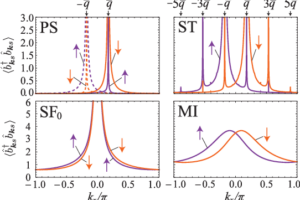
Quantum mechanics introduces unique phenomena at temperatures close to absolute zero. One notable example is Bose-Einstein condensation, where bosons-particles that follow Bose-Einstein statistics-occupy the same quantum state, acting collectively as a single quantum entity. This behavior defies classical expectations about particle motion and energy distribution.
Heisenberg Uncertainty Principle and Residual Motion
According to the Heisenberg Uncertainty Principle, there is a fundamental limit to how precisely one can simultaneously know a particle’s position and momentum. This principle implies that particles retain a minimum amount of residual motion, even at absolute zero, preventing them from being completely stationary. This quantum constraint is a key reason why temperatures below absolute zero are physically impossible in the classical sense.
Exploring Negative Temperatures
In certain specialized systems, the concept of negative temperature arises, which can be counterintuitive. These systems exhibit an inverted population of energy states, where higher energy levels are more populated than lower ones. In such cases, adding energy can decrease entropy, leading to the characterization of negative temperatures.
- Negative Temperature Systems:
These occur in systems with bounded energy spectra and inverted population distributions. - Misinterpretation:
Negative temperatures do not imply temperatures colder than absolute zero but represent a distinct thermodynamic regime. - Thermodynamic Implications:
These states challenge traditional temperature scales but do not violate the fundamental limit set by absolute zero.
Quantum Entanglement and Thermal Boundaries
Quantum entanglement, where particles share correlated properties instantaneously over distances, adds complexity to our understanding of heat and temperature. While entanglement might suggest unconventional energy exchanges, it does not allow for the violation of thermodynamic laws or the crossing of the absolute zero boundary. Energy conservation remains a fundamental principle, reinforcing the impossibility of surpassing absolute zero.
Why Absolute Zero is a Fundamental Limit
The impossibility of reaching temperatures below absolute zero arises from a combination of thermodynamic laws, quantum mechanical principles, and the intrinsic nature of matter and energy. Absolute zero is not merely a temperature value but a profound physical boundary that shapes the behavior of particles and the structure of the universe. It challenges scientists to explore the limits of physics and deepens our understanding of the natural world.
Real-World Significance of Absolute Zero
Research near absolute zero has led to groundbreaking discoveries such as superconductivity and superfluidity, which have practical applications in technology and materials science. Understanding the properties of matter at these extreme conditions continues to drive innovation in quantum computing, cryogenics, and fundamental physics.
Common Misconceptions About Absolute Zero
Absolute zero is a temperature that can be reached with enough cooling.
Absolute zero is theoretically unattainable due to the third law of thermodynamics and quantum mechanical constraints.
Negative temperatures are colder than absolute zero.
Negative temperatures represent a different thermodynamic state and are actually hotter than any positive temperature on the Kelvin scale.
Particles stop moving completely at absolute zero.
Quantum mechanics ensures particles retain zero-point energy, preventing total cessation of motion.
Conclusion: The Enduring Mystery of Absolute Zero
Absolute zero remains a fundamental concept that encapsulates the limits of temperature, energy, and motion. It serves as a boundary that challenges our understanding of physics and inspires ongoing scientific inquiry. As researchers continue to probe the extremes of temperature, absolute zero stands as a symbol of the intricate and often paradoxical nature of the universe.
FAQ
What is absolute zero?
Absolute zero is the theoretical temperature of 0 Kelvin (-273.15°C) at which particles have minimum thermal motion and classical kinetic energy theoretically ceases.
Why can't we reach absolute zero?
According to the third law of thermodynamics, absolute zero cannot be reached by any finite number of processes because removing energy from a system becomes increasingly difficult as temperature approaches zero.
What happens to particles near absolute zero?
Particles exhibit quantum phenomena such as Bose-Einstein condensation and maintain residual motion due to the Heisenberg Uncertainty Principle.
What is negative temperature?
Negative temperature is a concept in certain systems with inverted energy populations where adding energy decreases entropy, but it does not indicate temperatures below absolute zero.
Does quantum entanglement affect absolute zero?
Quantum entanglement does not allow surpassing absolute zero or violate thermodynamic laws.




Leave a Reply