
Short Answer
Definition of Strong Interaction and Particle Decay
The strong interaction, also known as the strong nuclear force, is a fundamental force described by quantum chromodynamics (QCD) that governs the behavior of quarks and gluons. It is the primary force responsible for binding protons and neutrons within atomic nuclei. Particle decay via the strong interaction refers to the process where unstable hadrons transform into lighter particles through this force, often occurring extremely rapidly due to the strength of the interaction.
- Strong Interaction:
A fundamental force that acts between quarks and gluons, responsible for holding atomic nuclei together. - Particle Decay:
The transformation of an unstable particle into lighter, more stable particles, mediated by fundamental forces such as the strong interaction. - Hadronic Particles:
Composite particles made of quarks, including baryons and mesons, which can undergo strong decay.
Classification of Particles Involved in Strong Decay
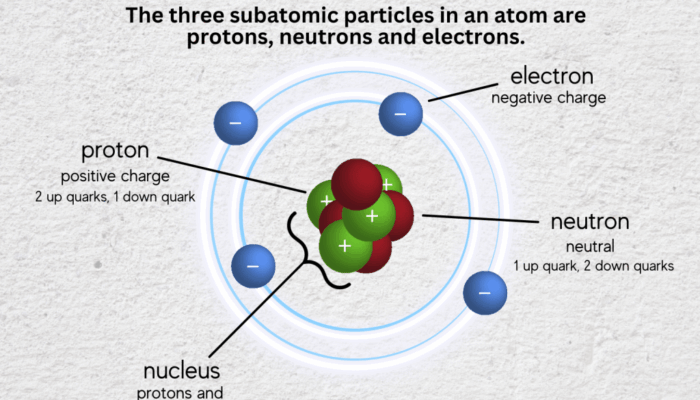
Particles that decay through the strong interaction primarily belong to two categories: baryons and mesons. Baryons consist of three quarks, with protons and neutrons being the most familiar examples. Mesons, on the other hand, are formed from a quark-antiquark pair. Both types of particles can exist in excited states that are unstable and decay rapidly via the strong force.
Baryons and Their Strong Decays
Among baryons, the delta baryons (Δ) are notable for their strong decay processes. The Δ(1232) baryon is an excited nucleon state with a mass significantly higher than that of protons and neutrons. This mass difference enables it to decay swiftly into a nucleon and a pion through the strong interaction, typically within 10-24 seconds. Such rapid decay exemplifies the efficiency and intensity of the strong force in particle transformations.
Mesons and Their Role in Strong Decay
Mesons such as pions (π) and kaons (K) also undergo decay via the strong interaction. Pions, especially charged pions (π±), decay into muons and muon neutrinos, releasing excess mass-energy in the process. Neutral pions (π0) often decay into photons, although this process involves electromagnetic interactions. The strong force is crucial in mediating these decays and plays a significant role in nuclear forces through meson exchange mechanisms.
Gluons and Their Influence on Particle Decay
Gluons, the massless gauge bosons that mediate the strong interaction, do not decay in the conventional sense. Instead, they facilitate the creation of quark-antiquark pairs during high-energy collisions, such as those in particle accelerators. These pairs can form unstable hadronic states that subsequently decay rapidly via the strong force. The study of gluon dynamics is essential for understanding the production and decay of particles in quantum chromodynamics.
Decay of Heavy Quarkonia via Strong Interaction
Heavy quarkonium states, including bottomonium (B mesons) and charmonium (C mesons), are bound states of heavy quark-antiquark pairs. These particles often decay through strong interaction channels, producing lighter mesons. Their decay processes are governed by conservation laws, such as the conservation of quantum numbers, ensuring that particle identities and symmetries are preserved during transitions. These decays provide insight into the interplay between mass, energy, and quantum properties in particle physics.
Resonances and Their Significance in Strong Decay
Resonances are short-lived, unstable particles that exist transiently during certain decay processes. They are characterized by specific masses and decay widths, which reflect their lifetimes and interaction strengths. Resonances often appear as intermediate states in strong decays and provide valuable information about the coupling constants and dynamics within hadronic systems. Studying resonance behavior enhances our understanding of the complex interactions that govern particle transformations.
Mechanism of Strong Interaction Decay
The strong interaction operates by exchanging gluons between quarks, binding them tightly within hadrons. When a hadron is in an excited or unstable state, the strong force facilitates its decay into lighter particles by rearranging quark configurations and emitting mesons such as pions. This process occurs extremely rapidly due to the strong coupling constant, which is significantly larger than those of electromagnetic or weak interactions.
Mathematical Framework and Conservation Laws
Quantum chromodynamics provides the theoretical foundation for understanding strong interaction decays. The decay rates and channels are constrained by conservation laws, including:
- Conservation of Energy and Momentum:
Total energy and momentum remain constant before and after decay. - Conservation of Quantum Numbers:
Quantum properties such as baryon number, strangeness, charm, and isospin are preserved. - Color Charge Conservation:
The color charge carried by quarks and gluons is conserved, ensuring color neutrality of observable particles.
Decay widths (Γ) and lifetimes (τ) are related by the formula:
τ = ℏ / Γ
where ℏ is the reduced Planck constant. Strong decays typically have large decay widths, corresponding to very short lifetimes.
Practical Examples of Strong Interaction Decay
- Delta Baryon Decay:
Δ(1232) → proton + π0 or neutron + π+ - Charged Pion Decay:
π± → muon + muon neutrino (via weak interaction, but produced through strong processes) - Heavy Quarkonium Decay:
Bottomonium states decaying into lighter mesons such as pions and kaons.
Common Misunderstandings About Strong Decay
- Misconception: All particle decays occur via the strong interaction.
Correction: Particle decays can occur through various forces, including weak and electromagnetic interactions; strong decay is specific to hadrons and is characterized by extremely short lifetimes. - Misconception: Gluons themselves decay like other particles.
Correction: Gluons are massless force carriers and do not decay but mediate interactions that lead to particle production and decay.
Importance of Studying Strong Interaction Decay
Understanding particle decay via the strong interaction is vital for comprehending the fundamental structure and stability of matter. It sheds light on the forces that hold atomic nuclei together and explains the transient nature of many subatomic particles. Research into strong decays informs fields such as hadron spectroscopy, nuclear physics, and high-energy particle experiments, contributing to our broader knowledge of the universe’s fundamental constituents and their interactions.
FAQ
What particles decay via strong interaction?
Particles such as delta baryons, mesons like pions and kaons, and heavy quarkonia decay through the strong interaction.
What is the typical timescale for strong interaction decay?
Strong interaction decays typically occur extremely rapidly, on the order of 10^-24 seconds.
Do gluons themselves decay?
Gluons do not decay as they are massless gauge bosons but can generate quark-antiquark pairs that subsequently decay.
Why is studying strong interaction decays important?
It helps understand quark behavior, hadron structure, and fundamental forces that govern matter.






Leave a Reply