
Short Answer
Definition of the Fastest Human Calculator
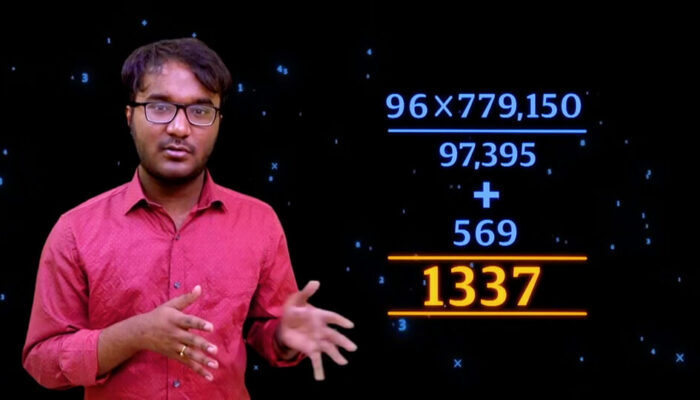
The term “fastest human calculator” refers to an individual who can perform complex mathematical computations mentally at speeds far surpassing the average person. This extraordinary skill showcases the remarkable intellectual capacity of humans to process numerical information rapidly without the aid of electronic devices.
- Exceptional Mental Agility:
These individuals demonstrate an ability to solve intricate arithmetic problems almost instantaneously. - Recognition:
The title is often awarded to those who have achieved world records or gained widespread acclaim for their rapid calculation abilities.
Historical and Notable Figures
Among the pantheon of mental calculation prodigies, Shakuntala Devi stands as a legendary figure. Known as the “Human Computer,” Devi’s mental calculation feats have inspired generations worldwide.
- Shakuntala Devi’s Achievements:
She famously calculated the cube root of a 10-digit number in just 2.5 seconds, a record recognized by Guinness World Records. - Early Talent:
From childhood, Devi exhibited extraordinary numerical skills, captivating audiences with her rapid arithmetic demonstrations.
Techniques and Cognitive Strategies
The prowess of mental calculators is not solely a product of innate talent but also the result of disciplined practice and specialized methods. Their cognitive approach often involves mnemonic devices and visualization techniques that enhance memory and calculation speed.
- Use of Visualization:
Many mental calculators employ mental imagery, such as visualizing an abacus or spatial arrangements of numbers, to facilitate complex computations. - Mnemonic Devices:
These memory aids help in retaining and manipulating numerical data efficiently during calculations. - Multisensory Engagement:
Engaging multiple senses aids in creating a mental framework that supports rapid information processing.
Cognitive Psychology Behind Rapid Calculation
From a psychological perspective, mental calculators leverage the brain’s ability to recognize patterns and form associations. Unlike linear computational methods, these individuals construct mental “mathematical landscapes” that allow for quick retrieval and application of mathematical concepts.
- Pattern Recognition:
The brain’s capacity to identify numerical patterns accelerates problem-solving. - Abstract Manipulation:
Mental calculators manipulate abstract mathematical ideas with precision, enabling swift and accurate results.
Impact of Technology and Cultural Significance
Despite the prevalence of digital calculators and computers, the fascination with human calculators endures. Their abilities challenge the dependence on technology and highlight the untapped potential of the human mind.
- Technological Contrast:
Human calculators serve as a reminder of innate cognitive skills in an era dominated by machines. - Cultural Reverence:
In various cultures, mental calculators are celebrated as intellectual heroes, often participating in competitions that foster community and encourage skill development.
Applications and Educational Implications
The extraordinary capabilities of the fastest human calculators have broader implications for education and cognitive science. Their skills demonstrate that mental calculation can be enhanced through targeted training, offering insights into improving cognitive functions.
- Cognitive Enhancement:
Strategic practice can significantly boost mental calculation abilities and overall brain function. - Educational Strategies:
Incorporating mental math techniques into curricula can promote critical thinking and problem-solving skills.
Common Misconceptions About Mental Calculation
Mental calculators rely solely on natural talent.
While innate ability plays a role, rigorous practice and specialized techniques are crucial to their success.
Technology has made mental calculation obsolete.
Human calculators continue to inspire and demonstrate the brain’s remarkable potential beyond technological tools.
Why the Fastest Human Calculator Matters
The phenomenon of rapid mental calculation embodies the intersection of natural aptitude and cultivated skill. It serves as a powerful metaphor for human mastery over complexity, inspiring ongoing exploration of cognitive limits and educational innovation. Celebrating these individuals honors not only their achievements but also humanity’s enduring quest to understand and manipulate the numerical fabric of our world.
Real-World Examples of Mental Calculation Feats
Beyond Shakuntala Devi, numerous mental calculators have showcased their talents in public competitions and exhibitions, performing tasks such as multiplying large numbers, extracting roots, and solving complex equations within seconds. These demonstrations continue to captivate audiences and motivate learners globally.
FAQ
Who holds the record for the fastest mental calculation?
Shakuntala Devi holds a Guinness World Record for calculating the cube root of a 10-digit number in just 2.5 seconds.
What methods do human calculators use to perform fast calculations?
They often utilize mnemonic devices, visualization, and mental abacus techniques to enhance calculation speed and accuracy.
Why is mental calculation important today?
It demonstrates the cognitive potential of humans, encourages critical thinking, and provides valuable educational insights despite the prevalence of electronic calculators.




Leave a Reply