
Short Answer
Overview of Engineering Disciplines at CERN
CERN, the European Organization for Nuclear Research, stands at the cutting edge of physics, conducting experiments that reshape our comprehension of the universe. The groundbreaking scientific achievements at CERN are made possible through the collaboration of multiple engineering fields. This article explores the various engineering specialties involved at CERN and the complex challenges they address within one of the world’s most advanced research facilities.
Mechanical Engineering: Designing for Extreme Conditions
Mechanical engineering is a cornerstone at CERN, where engineers are responsible for designing, building, and testing a wide array of components and systems. These range from massive particle detectors to sophisticated cooling and vacuum apparatuses essential for experiments. Mechanical engineers utilize advanced materials and innovative design strategies to ensure that equipment can endure the extreme environments typical of high-energy physics, including temperatures approaching absolute zero and rapid thermal fluctuations. The dynamic forces generated by particle acceleration and collisions demand exceptional precision and durability, pushing mechanical design to its limits.
Electrical Engineering: Powering Precision and Control
Electrical engineers at CERN develop critical electronic systems that enable data acquisition, signal processing, and control of experimental apparatus. They design high-precision circuits to track particle trajectories and manage the complex electromagnetic components that steer and focus particle beams. This field requires a deep integration of theoretical physics knowledge with practical engineering skills. As technology advances, electrical engineers continuously incorporate innovations such as superconducting materials and cutting-edge computing hardware to enhance performance and reliability.
Software Engineering: Managing and Analyzing Massive Data Sets
Software engineering plays a vital role in handling the enormous volumes of data generated by particle collisions. Engineers in this domain create sophisticated algorithms and employ machine learning techniques to sift through terabytes of information, identifying rare events that could reveal new physics phenomena. The challenge lies in developing scalable, efficient software solutions that maintain accuracy and responsiveness. Collaboration between software engineers and physicists is essential to translate raw data into meaningful scientific insights.
Civil Engineering: Building the Foundations of Discovery
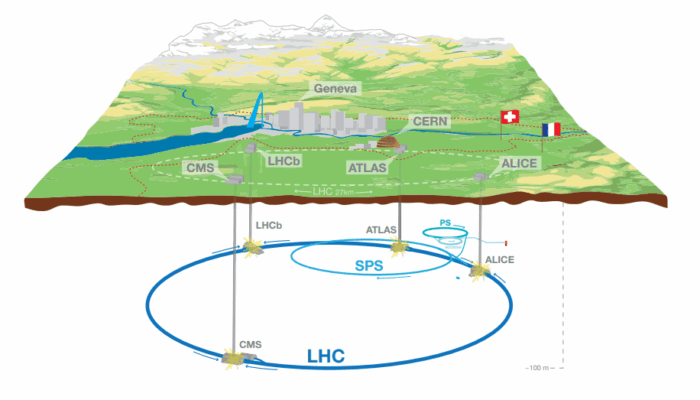
Civil engineers at CERN design and construct the infrastructure necessary to support the vast experimental setups, including the extensive tunnel systems for the Large Hadron Collider (LHC). They must navigate complex geological conditions and address issues such as seismic stability, structural integrity, and environmental impact. Their work ensures that CERN’s facilities remain safe, durable, and adaptable to future technological advancements over many decades of operation.
Industrial Engineering: Streamlining Complex Operations
Industrial engineering focuses on optimizing the logistical and operational processes that underpin CERN’s research activities. This includes managing supply chains for specialized materials and coordinating the assembly of intricate devices. Industrial engineers apply systematic methods to improve efficiency, minimize waste, and synchronize efforts across multiple engineering teams. Their role is crucial in meeting project deadlines and maintaining smooth workflows despite the challenges posed by custom components and evolving project scopes.
Instrumentation Engineering: Developing Sensitive Measurement Tools
Instrumentation engineers design and refine the sensors and measurement systems that detect the smallest particles and phenomena in high-energy collisions. These instruments must be highly sensitive to faint signals while robust enough to operate amid intense radiation and electromagnetic noise. Continuous innovation in this field is essential to push the boundaries of what can be measured, enabling new discoveries in particle physics.
Cryogenic Engineering: Enabling Ultra-Low Temperature Environments
Cryogenic engineering is a specialized discipline critical to CERN’s experiments involving superconducting magnets and other components requiring extremely low temperatures. Cryogenic engineers develop systems that cool equipment to near absolute zero, using advanced insulation and refrigeration technologies. Ensuring the safety, efficiency, and reliability of these cooling systems is paramount, as any failure could jeopardize expensive equipment and ongoing research.
Interdisciplinary Collaboration and Its Significance
The diverse engineering fields at CERN do not operate in isolation; their collaboration is fundamental to the success of the organization’s scientific mission. Mechanical, electrical, software, civil, industrial, instrumentation, and cryogenic engineers work together to overcome the multifaceted challenges posed by cutting-edge physics research. This synergy exemplifies the importance of interdisciplinary teamwork in advancing human knowledge and technological innovation.
Why Engineering at CERN Is Crucial
The engineering efforts at CERN are indispensable for pushing the frontiers of science. By enabling experiments that probe the fundamental nature of matter and the universe, these engineering disciplines contribute to breakthroughs that have far-reaching implications in physics, technology, and beyond. The innovations developed at CERN often find applications in medicine, computing, and industry, demonstrating the broader impact of this extraordinary collaboration between science and engineering.
FAQ
What engineering fields are essential at CERN?
Mechanical, electrical, software, civil, industrial, instrumentation, and cryogenic engineering are essential to CERN's operations.
How does mechanical engineering support CERN's experiments?
Mechanical engineers design and build components like detectors and cooling systems that operate under extreme conditions.
What role does software engineering play at CERN?
Software engineers develop data processing and analysis tools to handle vast datasets from particle collisions.
Why is civil engineering critical at CERN?
Civil engineers design and maintain the infrastructure, including tunnels and facilities, that house CERN's experimental apparatus.
What is the importance of cryogenic engineering at CERN?
Cryogenic engineers maintain ultralow temperatures necessary for superconducting magnets used in particle accelerators.






Leave a Reply