
Short Answer
Understanding Molecular Magnetism
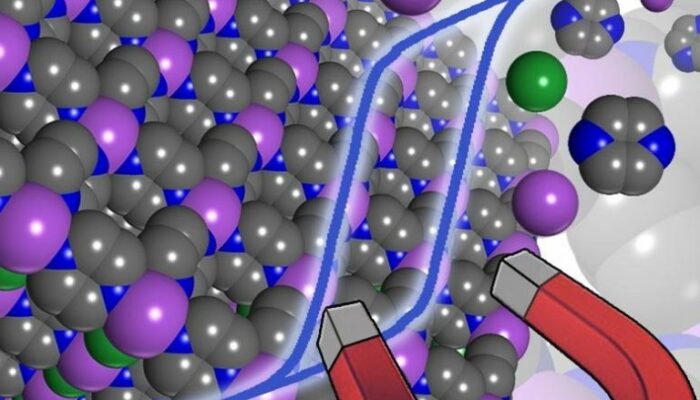
Magnetism is commonly linked to bulk ferromagnetic substances like iron, cobalt, and nickel. However, the scope of magnetism extends well beyond these traditional materials, encompassing the fascinating domain of molecular magnets. But what exactly imparts magnetic properties to a molecule? Investigating this question unveils the fundamental principles and mechanisms that govern magnetism at the molecular scale.
Fundamental Principles of Magnetism
Magnetism fundamentally originates from the behavior of electrons, especially their intrinsic spin and orbital movements. Electron spin is an inherent quantum property, comparable to intrinsic angular momentum, with each electron characterized by a spin quantum number of either +1/2 or -1/2. The collective orientation of these spins within a substance significantly determines its magnetic nature. In classical ferromagnetic materials, the parallel alignment of electron spins enables the material to maintain magnetization even without an external magnetic field.
Magnetism in Molecules: Spin and Orbital Contributions
Unlike bulk ferromagnets, molecular magnets often arise from a nuanced combination of spin and orbital effects. Certain molecules contain unpaired electrons arranged in ways that generate a net magnetic moment, granting the molecule distinctive magnetic characteristics. Achieving molecular magnetism typically involves carefully designing the electronic structure through targeted chemical synthesis.
Role of Unpaired Electrons and Molecular Geometry
A critical requirement for a molecule to exhibit magnetism is the presence of unpaired electrons, which produce a net magnetic moment. In contrast, paired electrons tend to neutralize each other’s magnetic effects. Transition metal complexes are prime candidates for molecular magnets due to their unpaired electrons in d-orbitals. The spatial arrangement and coordination environment around these metals-such as octahedral versus tetrahedral geometries-play a decisive role in shaping their magnetic behavior.
Single-Molecule Magnets (SMMs): A Frontier in Molecular Magnetism
Single-molecule magnets represent a remarkable intersection of molecular chemistry and magnetism. These molecules can retain magnetic information at the individual molecule level, a property that holds promise for cutting-edge data storage technologies. Some SMMs exhibit magnetic hysteresis capable of sustaining magnetization at relatively high temperatures, making them attractive for practical applications. Advances in this area have demonstrated the feasibility of engineering lightweight molecular magnets with exceptional magnetic properties.
Intermolecular Interactions and Their Impact on Magnetism
The magnetic characteristics of molecular materials are not solely determined by individual molecules but are also influenced by interactions between them. Forces such as dipole-dipole interactions, exchange coupling, and van der Waals attractions can significantly modify the overall magnetic response of molecular assemblies. For example, molecular stacking or hydrogen bonding can either enhance or diminish the magnetic behavior of single molecules, thereby affecting their suitability for various applications.
Lanthanide and Actinide Complexes in Molecular Magnetism
The study of lanthanide and actinide complexes adds complexity and opportunity to molecular magnetism. Lanthanides, with their strong spin-orbit coupling and unpaired f-electrons, exhibit pronounced magnetic anisotropy. The unique properties of f-orbitals present both challenges and advantages in molecular design, offering pathways to develop high-performance molecular magnets that function at or near room temperature-a critical milestone for technological deployment.
Organic Molecules as Magnetic Materials
Organic radicals, which often contain unpaired electrons, have emerged as promising molecular magnets. The inherent flexibility and chemical tunability of organic molecules provide a broad platform for exploring magnetic phenomena. Polymers derived from organic radicals have demonstrated notable magnetic properties, paving the way for lightweight, flexible magnetic materials suitable for next-generation technological applications.
Applications and Technological Significance
The exploration of molecular magnetism is deeply intertwined with advancements in materials science and technology. Tailored molecular magnets have significant implications for fields such as spintronics, quantum computing, and medical imaging. Understanding magnetic interactions at the molecular level is crucial for developing innovative applications that could transform how magnetism is harnessed in technology.
Shifting Paradigms in Materials Science
The development of lightweight, molecule-based magnets challenges traditional views that magnetism is confined to heavy, dense materials. Current research is unveiling a future where molecular components serve as functional magnets, revolutionizing material design. This paradigm shift not only promises technological breakthroughs but also invites deeper scientific inquiry into the subtle molecular interactions that govern magnetism.
Summary and Future Outlook
Determining what makes a molecule magnetic involves a complex interplay of electronic structure, molecular geometry, and intermolecular forces. Unpaired electrons, coupling mechanisms, and molecular arrangements collectively create a rich spectrum of magnetic phenomena. As research progresses, the discovery of novel molecular magnets remains a vibrant and promising field, poised to reshape our understanding of magnetism and expand its technological applications.
FAQ
What is molecular magnetism?
Molecular magnetism refers to the magnetic properties exhibited by certain molecules, primarily due to the presence of unpaired electrons and specific molecular arrangements.
Why are unpaired electrons important?
Unpaired electrons contribute to a net magnetic moment, which is essential for a molecule to exhibit magnetism.
What are single-molecule magnets?
Single-molecule magnets are unique molecules that can retain magnetic information at the individual level, with potential applications in advanced data storage technologies.





Leave a Reply