
Short Answer
Definition of the P vs NP Problem
The P vs NP problem stands as one of the most profound and unresolved questions in theoretical computer science. It explores whether every problem whose solution can be quickly verified (NP) can also be quickly solved (P). This question has far-reaching consequences in fields such as mathematics, cryptography, and computational complexity theory, influencing how we understand problem-solving and algorithm efficiency.
Foundational Literature for Understanding P vs NP
To build a solid foundation in the P vs NP problem, it is essential to start with core texts that introduce computational complexity theory. A seminal work in this area is Computers and Intractability: A Guide to the Theory of NP-Completeness by Michael Garey and David Johnson. This book thoroughly explains decision problems, polynomial-time reductions, and the concept of NP-completeness, enriched with numerous examples. It serves as a critical resource for grasping the fundamental principles and the classification of NP-complete problems.
Academic Journals and Research Articles
Peer-reviewed journals are vital for accessing the latest research and theoretical developments related to the P vs NP problem. Publications such as the Journal of the ACM, Theory of Computing, and the SIAM Journal on Computing regularly feature rigorous studies that analyze complexity classes, explore the relationships between P and NP, and investigate the implications of assuming P ≠ NP. Engaging with these articles provides readers with current insights and deepens their understanding of ongoing debates and breakthroughs.
Heuristics and Approximation Algorithms
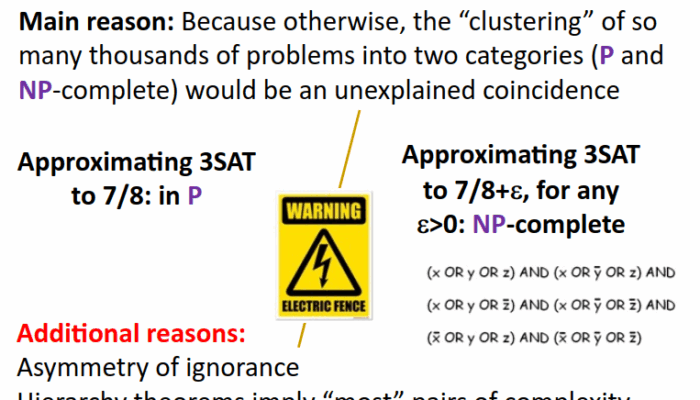
Since many NP problems are believed to be intractable, literature on heuristics and approximation algorithms offers practical approaches to tackling these challenges. Vijay V. Vazirani’s Approximation Algorithms is a foundational text that discusses strategies for finding near-optimal solutions efficiently when exact answers are computationally prohibitive. These works not only provide algorithmic techniques but also shed light on the structural properties of NP problems, indirectly informing the P vs NP discourse.
Historical and Philosophical Perspectives
Exploring the P vs NP problem through historical and philosophical lenses enriches one’s appreciation of its broader significance. Douglas Hofstadter’s Gödel, Escher, Bach: An Eternal Golden Braid interlaces themes from mathematics, art, and music to philosophically examine intelligence, logic, and formal systems. Such narratives offer a meta-contextual understanding of the problem, highlighting its interdisciplinary impact and the conceptual challenges it poses.
Key Papers and Pioneers in NP-Completeness
Studying foundational research papers is crucial for tracing the evolution of the P vs NP problem. Stephen Cook’s landmark paper, “The Complexity of Theorem-Proving Procedures,” introduced the concept of NP-completeness and laid the groundwork for subsequent research. Additionally, the contributions of other influential figures like John Nash and Richard Karp have significantly shaped the field, providing essential insights and problem classifications that continue to influence contemporary studies.
Implications for Cryptography
The relationship between the P vs NP problem and cryptography is of paramount importance. Many cryptographic protocols rely on the assumption that certain problems are hard to solve (i.e., not in P). Should P equal NP, the security foundations of public-key cryptography could be undermined. Texts such as Introduction to Modern Cryptography by Jonathan Katz and Yehuda Lindell elucidate how computational complexity underpins secure communication, emphasizing the critical nature of resolving the P vs NP question for digital security.
Engaging with Contemporary Discussions and Online Resources
Beyond traditional academic sources, online platforms like arXiv provide access to preprints and emerging research, enabling rapid dissemination of new ideas. Participating in forums and discussion groups allows researchers and enthusiasts to exchange perspectives, debate hypotheses, and stay informed about the latest developments. These dynamic environments foster collaboration and innovation, making them invaluable for anyone deeply interested in the P vs NP problem.
Why Studying the P vs NP Problem is Crucial
The extensive and diverse body of literature on the P vs NP problem equips learners with a comprehensive understanding of its theoretical framework and practical implications. Engaging with these resources cultivates analytical skills and a nuanced appreciation of computational complexity. Resolving this problem could revolutionize fields ranging from algorithm design to cybersecurity, underscoring its significance in both scientific inquiry and everyday technology.
FAQ
What foundational textbook is recommended for understanding NP-completeness?
'Computers and Intractability: A Guide to the Theory of NP-Completeness' by Michael Garey and David Johnson is a seminal text.
Who introduced the concept of NP-completeness?
Stephen Cook introduced the concept in his paper 'The Complexity of Theorem-Proving Procedures'.
How does the P vs NP problem impact cryptography?
If P equals NP, many cryptographic protocols could be broken efficiently, undermining digital security.
What role do approximation algorithms play in studying P vs NP?
Approximation algorithms provide practical ways to approach NP-hard problems when exact solutions are infeasible, offering insights into problem structures.
Where can I find the latest research papers on P vs NP?
Preprint servers like arXiv and journals such as the Journal of the ACM publish the latest research on the subject.





Leave a Reply