
Short Answer
Definition of Subatomic Particles
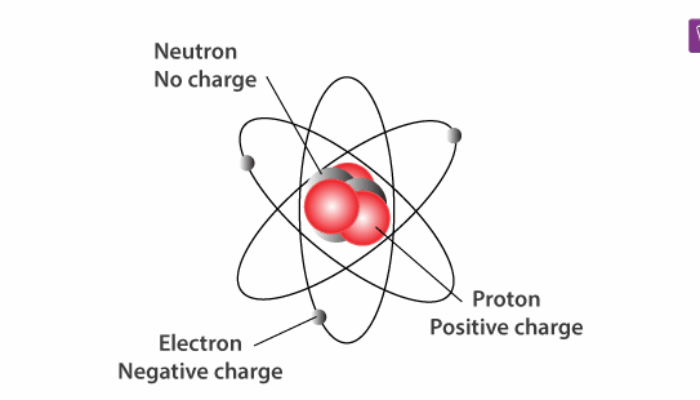
Subatomic particles are the fundamental constituents that form atoms, the basic units of matter. The three principal subatomic particles-protons, neutrons, and electrons-collectively establish the structure and properties of atoms, thereby shaping the material universe.
- Protons:
Positively charged particles residing in the atomic nucleus, defining the element’s identity through their count. - Neutrons:
Electrically neutral particles also located in the nucleus, crucial for nuclear stability and isotopic variation. - Electrons:
Negatively charged particles orbiting the nucleus, responsible for chemical bonding and energy interactions.
Role and Characteristics of Protons
Protons act as the defining pillars of atomic identity. The number of protons in an atom’s nucleus, known as the atomic number, determines the element type and influences its chemical behavior. Their positive charge generates an electromagnetic attraction that binds electrons to the nucleus, enabling the formation of atoms and molecules.
Within the nucleus, protons experience mutual repulsion due to their like charges. This repulsive force is counterbalanced by neutrons, which help maintain nuclear cohesion. Without protons, atoms would lack structure, and the periodic table would lose its foundational basis.
Neutrons: Guardians of Nuclear Stability
Neutrons, though electrically neutral, play a vital role in stabilizing the atomic nucleus. By offsetting the electrostatic repulsion between protons, neutrons ensure the nucleus remains intact. Variations in neutron number give rise to isotopes-atoms of the same element with different masses and nuclear properties.
Isotopes have significant scientific and practical applications. For example, carbon-14, an isotope distinguished by its neutron count, is instrumental in radiocarbon dating, enabling archaeologists and geologists to determine the age of ancient organic materials.
Electrons and Their Dynamic Behavior
Electrons are the agile, negatively charged particles that orbit the nucleus in complex, probabilistic patterns described by quantum mechanics. Their behavior defies classical physics, exhibiting wave-particle duality and uncertainty principles. The arrangement of electrons around the nucleus dictates an atom’s chemical properties and reactivity.
Electrons also facilitate energy transfer within atoms. When electrons absorb energy, they move to higher energy levels; upon returning to lower levels, they emit photons, producing light. This phenomenon underlies technologies such as neon lighting and lasers, highlighting electrons’ role in both molecular interactions and energy transmission.
Interplay Among Protons, Neutrons, and Electrons
The harmonious interaction between these three particles forms the foundation of atomic stability and chemical diversity. Protons define elemental identity and attract electrons, neutrons stabilize the nucleus, and electrons govern chemical bonding and energy exchange. This triadic relationship reflects a broader principle of balance and symmetry found throughout natural systems, from physical forces to ecological networks.
Technological and Scientific Implications
Research into subatomic particles has propelled advancements in both fundamental physics and applied technologies. Particle accelerators and colliders enable scientists to probe the universe’s fundamental forces, leading to discoveries such as the Higgs boson and insights into dark matter and dark energy.
In medicine, understanding subatomic particles has revolutionized diagnostics and treatment. Nuclear medicine utilizes isotopes for targeted cancer therapies and imaging techniques, demonstrating the direct impact of subatomic particle knowledge on healthcare innovations.
Why Understanding Subatomic Particles Is Crucial
Grasping the nature and interactions of protons, neutrons, and electrons is essential for comprehending the structure of matter and the laws governing the universe. Their study bridges the microscopic world of atoms with the vastness of cosmological phenomena, enriching our understanding of existence and enabling technological progress that shapes modern life.
FAQ
What are subatomic particles?
Subatomic particles are the fundamental particles that make up atoms, including protons, neutrons, and electrons.
Why are protons important?
Protons determine the atomic number and identity of an element, and their positive charge attracts electrons.
What is the function of neutrons?
Neutrons help stabilize the nucleus by reducing repulsive forces between protons and create isotopes.
How do electrons affect atoms?
Electrons orbit the nucleus and control chemical bonding and energy transfer processes.
How does knowledge of subatomic particles impact science and technology?
It drives advancements in physics research, medical treatments, energy technology, and understanding of the universe.






Leave a Reply