
Short Answer
Definition of Radiation
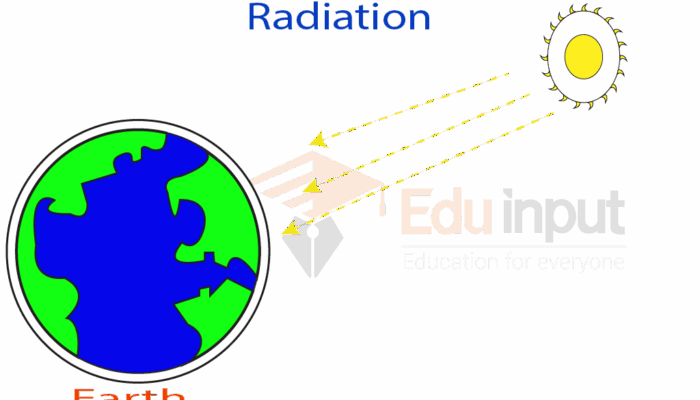
Radiation refers to the process by which energy is emitted and transmitted through space or a material medium. This phenomenon encompasses a wide array of energy forms that are fundamental to various branches of physics. Radiation manifests in many ways, from the comforting heat of sunlight to the intricate behaviors described by quantum theory. Understanding radiation involves exploring its nature, types, and the diverse roles it plays across scientific and practical domains.
Types of Radiation
Radiation is primarily divided into two categories based on the energy of the emitted particles or waves:
- Ionizing Radiation:
This form carries enough energy to remove electrons from atoms, creating ions. Examples include gamma rays, X-rays, and alpha particles. Due to their high energy, ionizing radiations can cause significant biological damage, affecting living tissues and DNA. - Non-Ionizing Radiation:
These electromagnetic waves lack the energy to ionize atoms. This group includes visible light, radio waves, and microwaves. Non-ionizing radiation generally poses less risk to biological systems and is involved in everyday technologies such as communication and heating.
The Electromagnetic Spectrum and Radiation
The electromagnetic spectrum provides a comprehensive framework for categorizing radiation by wavelength and frequency. It ranges from extremely short wavelengths like gamma rays to very long wavelengths such as radio waves. Each segment of the spectrum exhibits distinct characteristics and interacts differently with matter:
- Visible Light:
A narrow band within the spectrum essential for vision and photosynthesis, supporting life on Earth. - Infrared Radiation:
Primarily responsible for heat transfer, playing a vital role in thermal processes. - Ultraviolet Radiation:
Important for biological functions like vitamin D synthesis but requires caution due to its potential to cause skin damage and increase cancer risk.
Quantum Mechanical Perspective on Radiation
Quantum mechanics deepens our understanding of radiation by describing it as both wave and particle. Photons, the elementary particles of light, embody this duality, challenging classical physics. Key quantum phenomena related to radiation include:
- Spontaneous Emission:
The process by which excited atoms release photons without external influence. - Stimulated Emission:
The emission of photons triggered by incoming photons, foundational to laser technology. - Absorption:
The uptake of photons by atoms or molecules, leading to energy transitions.
These interactions underpin modern technologies such as lasers and quantum computing, highlighting radiation’s role beyond mere energy transfer.
Health and Safety Considerations
Exposure to ionizing radiation carries potential health risks, necessitating stringent safety measures. The concept of radiation dose quantifies the biological impact of exposure and is critical in medical fields like radiology and nuclear medicine. Professionals must balance the therapeutic and diagnostic benefits of radiation against its hazards. Models such as the linear no-threshold hypothesis guide understanding of cancer risks associated with low-level exposure, informing safety standards and regulatory policies.
Societal and Historical Context
Public attitudes toward radiation are shaped by historical events and cultural narratives. Incidents like the atomic bombings of Hiroshima and Nagasaki, the Chernobyl nuclear disaster, and the Fukushima Daiichi accident have profoundly influenced perceptions, often instilling fear alongside fascination. These events have sparked ethical debates about nuclear energy, emphasizing the responsibilities of scientists, policymakers, and society at large. Transparency and education are essential to fostering informed public discourse on the benefits and risks of nuclear technologies.
Technological Advances in Radiation Detection
Modern radiation detection and measurement tools have transformed scientific research and safety practices. Devices such as Geiger-Müller counters, scintillation detectors, and dosimeters enable precise monitoring of radiation levels. These instruments are vital for environmental surveillance, nuclear facility management, and healthcare, ensuring compliance with safety regulations and protecting public health.
Radiation in Astrophysics and Space Exploration
Cosmic radiation, originating from sources beyond our galaxy, continuously interacts with Earth’s atmosphere. Studying this radiation enhances our understanding of astrophysical phenomena and informs the challenges of human space travel. Research into cosmic radiation’s effects on biological systems is crucial for planning long-duration missions to destinations like Mars, where exposure risks are significantly higher than on Earth.
Interdisciplinary Impact of Radiation
Radiation research bridges multiple scientific disciplines, fostering collaboration among physicists, biologists, chemists, and social scientists. This interdisciplinary approach enriches our comprehension of radiation’s complexities and its broader implications. Such cooperation is instrumental in addressing global challenges, including climate change mitigation and the development of sustainable energy solutions.
Significance of Radiation in Science and Society
Radiation is more than a scientific phenomenon; it is a vital force that connects diverse fields and societal issues. Its dual capacity to create and destroy underscores the importance of continuous research, education, and responsible management. As we deepen our understanding of radiation, it remains imperative to cultivate a society that embraces scientific curiosity while maintaining vigilance regarding its potential risks. Exploring radiation is not only an academic pursuit but also a journey into the fundamental forces shaping our universe.
FAQ
What are the two main types of radiation?
The two main types of radiation are ionizing radiation, which can remove electrons from atoms, and non-ionizing radiation, which does not have enough energy to ionize atoms.
How does radiation affect human health?
Ionizing radiation can cause biological damage, while non-ionizing radiation generally poses less risk. Safety measures are essential to mitigate health risks from ionizing radiation.
What is the electromagnetic spectrum?
The electromagnetic spectrum categorizes radiation by wavelength and frequency, ranging from gamma rays to radio waves, each with distinct characteristics.






Leave a Reply