
Short Answer
Understanding Atomic Clocks
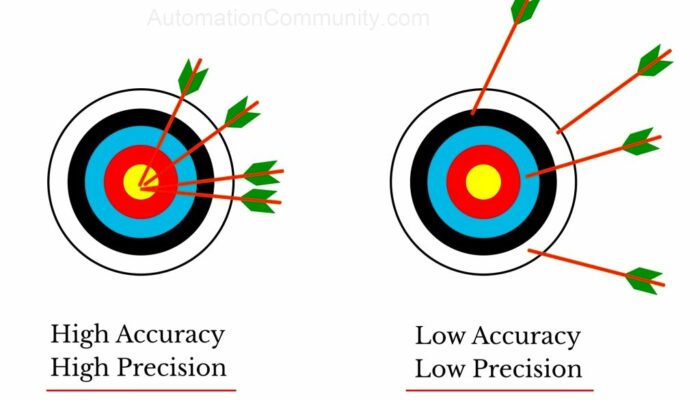
Atomic clocks represent the pinnacle of precision in measuring time, with the National Institute of Standards and Technology (NIST) leading advancements in this field. These sophisticated devices rely on the consistent oscillations of atoms to maintain unparalleled accuracy, revolutionizing how we define and measure time. Their impact spans numerous domains, including telecommunications, navigation systems, and fundamental physics research.
Principles Behind Atomic Clock Accuracy
The core mechanism of NIST atomic clocks is based on atomic resonance, particularly involving cesium-133 atoms. When exposed to microwave radiation, these atoms oscillate at a highly stable frequency. The International System of Units (SI) defines one second as exactly 9,192,631,770 cycles of the radiation corresponding to the transition between two hyperfine energy levels of the cesium-133 atom’s ground state. This precise standardization ensures that atomic clocks maintain extraordinary accuracy, deviating by only a few billionths of a second over extended periods.
Technological Innovations Enhancing Precision
Modern atomic clocks incorporate cutting-edge technologies such as laser cooling and quantum state control to improve their performance. Laser cooling reduces the thermal motion of atoms, confining them to a tiny space and minimizing Doppler broadening, which can otherwise degrade measurement accuracy. Additionally, manipulating atomic quantum states allows for highly sensitive probing of atomic transitions, making the clocks resilient to external disturbances. These advancements enable the fine-tuning of oscillation frequencies, ushering in a new era of time measurement precision.
Extraordinary Accuracy of NIST Atomic Clocks
Current models, including optical lattice clocks, achieve mind-boggling precision, with a drift of only one second over the entire age of the universe-approximately 13.8 billion years. This level of exactness challenges traditional perceptions of time and opens new avenues for scientific exploration and practical applications. Such precision prompts questions about how our understanding of time and its measurement might evolve in the future.
Global Timekeeping and Synchronization
Atomic clocks play a crucial role in maintaining Universal Coordinated Time (UTC), a global time standard upheld by a network of synchronized atomic clocks worldwide. This synchronization is vital for various systems, including internet infrastructure and satellite-based navigation like GPS. The accuracy of these clocks directly influences technologies that depend on precise timing, such as autonomous vehicles, agricultural monitoring, and financial systems reliant on accurate time-stamping.
Atomic Clocks and Fundamental Physics
Beyond practical applications, atomic clocks are instrumental in exploring fundamental physics concepts, such as time dilation predicted by Einstein’s theory of relativity. Experiments comparing the elapsed time between stationary and moving clocks deepen our understanding of space-time and relativistic effects. These studies not only enhance scientific knowledge but also provoke philosophical reflections on the nature of time and our place in the cosmos.
Applications in Astronomy and Space Science
In astronomy, atomic clocks are essential for synchronizing telescopes located around the globe, enabling coordinated observations of cosmic events. Precise timekeeping allows astronomers to compile coherent data sets, improving our comprehension of the universe’s history and evolution. This synchronization is critical for collaborative research efforts and advancing our knowledge of celestial phenomena.
Future Prospects and Emerging Technologies
The future of atomic clock technology is promising, especially with the rise of quantum computing. Quantum clocks, which utilize quantum entanglement for time measurement, hold the potential to surpass current accuracy levels. Researchers are also exploring alternative atomic species such as strontium and ytterbium, which may offer performance advantages over cesium-based clocks. These developments raise intriguing questions about the ultimate limits of time measurement and the fundamental nature of reality.
Significance of Atomic Clocks in Modern Life
The advancements in atomic clock technology have profound implications across science, technology, and everyday life. From enabling precise navigation and communication to facilitating groundbreaking physics experiments, these clocks underpin many aspects of contemporary society. As our ability to measure time with extraordinary precision improves, it reshapes our interaction with the temporal dimension and inspires new inquiries into the mysteries of existence.
Summary
The NIST atomic clock exemplifies a monumental achievement in the quest for temporal precision. Far beyond a mere timekeeping instrument, it serves as a gateway to deeper scientific understanding and philosophical contemplation. As we continue to refine these technologies, our relationship with time will transform, influencing diverse fields and expanding the horizons of human knowledge. The journey to master timekeeping is ongoing, inviting us to reconsider how the fabric of reality itself might be revealed through ever more precise measurements of time.
FAQ
What is an atomic clock?
An atomic clock is a timekeeping device that uses the oscillations of atoms to measure time with high precision.
How does the NIST atomic clock achieve its accuracy?
It achieves its accuracy through atomic resonance, particularly with cesium-133, and by utilizing advanced technologies like laser cooling and quantum state control.
What are the applications of atomic clocks?
Atomic clocks are vital for telecommunications, GPS systems, and fundamental physics research.





Leave a Reply