
Short Answer
Definition of Atomic Spectroscopy
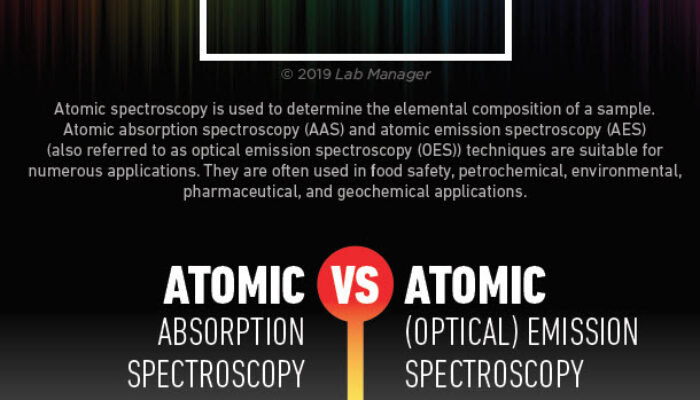
Atomic spectroscopy is a sophisticated analytical technique that explores the structure of atoms and identifies elemental composition by examining the interaction between electromagnetic radiation and matter. This method dissects the electromagnetic spectrum to detect the unique spectral signatures-often called atomic fingerprints-of different elements, providing a window into the microscopic world of atoms.
Fundamental Principles
The core concept behind atomic spectroscopy is the quantization of atomic energy levels. Atoms consist of a nucleus surrounded by electrons that occupy specific, discrete energy states. When energy is supplied-via heat or electromagnetic radiation-electrons can move between these energy levels. This excitation and subsequent relaxation of electrons emit or absorb light at characteristic wavelengths, producing distinct spectral lines. This process is analogous to the vibrant flashes of fireworks, where electrons leap to higher energy states and then return to lower states, releasing energy in the form of light.
Techniques in Atomic Spectroscopy
Atomic spectroscopy encompasses several specialized methods, each tailored to different analytical needs and offering unique advantages. The most widely used techniques include:
- Flame Atomic Absorption Spectroscopy (FAAS):
This method measures the absorption of light by free atoms in a flame. A sample is nebulized and introduced into a flame, where it is atomized. Light from a hollow cathode lamp, tuned to the element of interest, passes through the flame, and the amount of light absorbed correlates with the element’s concentration. - Inductively Coupled Plasma Atomic Emission Spectroscopy (ICP-AES):
Utilizing a high-temperature plasma generated by an inductively coupled radio frequency field, ICP-AES excites atoms and ions in the sample to emit light at characteristic wavelengths. This technique allows for multi-elemental analysis with high sensitivity and precision. - Atomic Fluorescence Spectroscopy (AFS):
In AFS, atoms absorb incident light and then emit fluorescence as they return to lower energy states. This approach often provides greater sensitivity than FAAS and ICP-AES, making it especially useful for detecting trace elements.
How Atomic Spectroscopy Works
Atomic spectroscopy operates by exploiting the unique energy transitions of electrons within atoms. When atoms absorb energy, electrons are promoted to excited states. As these electrons relax back to their ground states, they emit photons at specific wavelengths. By measuring either the absorption or emission of light at these wavelengths, scientists can identify and quantify elements within a sample. The precise wavelengths correspond to the differences between quantized energy levels, serving as elemental identifiers.
Mathematical Framework and Formulas
The relationship between the energy of emitted or absorbed photons and the atomic energy levels is described by the equation:
E = hν = hc/λ
- E: Energy difference between atomic levels (joules)
- h: Planck’s constant (6.626 × 10⁻³⁴ Js)
- ν: Frequency of the emitted or absorbed radiation (Hz)
- c: Speed of light in vacuum (3.00 × 10⁸ m/s)
- λ: Wavelength of the radiation (meters)
This formula links the quantized energy transitions to measurable spectral lines, enabling the identification of elements based on their characteristic wavelengths.
Applications and Real-World Examples
Atomic spectroscopy finds extensive use across various scientific and industrial fields:
- Environmental Monitoring:
Detecting trace metals and pollutants in air, water, and soil to ensure environmental safety and compliance with regulations. - Pharmaceutical Industry:
Characterizing drug compounds and verifying elemental purity to meet stringent quality standards. - Materials Science:
Analyzing the elemental composition of alloys and novel materials to tailor properties for technological applications. - Isotope Analysis:
Techniques like isotope ratio mass spectrometry (IRMS) use atomic spectral data to study isotopic variations, providing insights into geological processes and biological pathways.
Common Misconceptions About Atomic Spectroscopy
Atomic spectroscopy only identifies elements.
Beyond elemental identification, it can analyze isotopic ratios and trace element concentrations, offering deeper insights into material origins and processes.
All atomic spectroscopy techniques have the same sensitivity.
Sensitivity varies significantly among methods; for example, atomic fluorescence spectroscopy often surpasses flame atomic absorption in detecting trace elements.
Significance and Impact
Atomic spectroscopy is pivotal in advancing scientific knowledge and technological innovation. By revealing the elemental and isotopic makeup of substances, it underpins research in chemistry, physics, environmental science, and medicine. Its precision and versatility make it indispensable for quality control, environmental protection, and the development of new materials. Moreover, atomic spectroscopy enriches our philosophical understanding of matter, bridging the gap between empirical analysis and the fundamental nature of reality.
FAQ
What is atomic spectroscopy?
Atomic spectroscopy is a technique that analyzes the composition of elements in a sample by examining the interaction of electromagnetic radiation with atoms.
What are the main techniques used in atomic spectroscopy?
Common techniques include Flame Atomic Absorption Spectroscopy (FAAS), Inductively Coupled Plasma Atomic Emission Spectroscopy (ICP-AES), and Atomic Fluorescence Spectroscopy (AFS).
What are some applications of atomic spectroscopy?
It is used in environmental monitoring, pharmaceuticals, materials science, and isotope analysis.





Leave a Reply