
Short Answer
Overview of CERN and Its Historical Significance
The European Organization for Nuclear Research, widely recognized as CERN, has established itself as a beacon of innovation in the field of particle physics. Celebrating its 70th year, CERN stands at a critical crossroads that could shape the future landscape of high-energy physics for many years ahead. Central to this new era is the urgent pursuit of substantial financial investment to develop the next-generation particle collider. This article delves into the motivations behind CERN’s fundraising efforts, the scientific promise of a new collider, and the broader impact on both the scientific community and society at large.
Definition and Historical Contributions
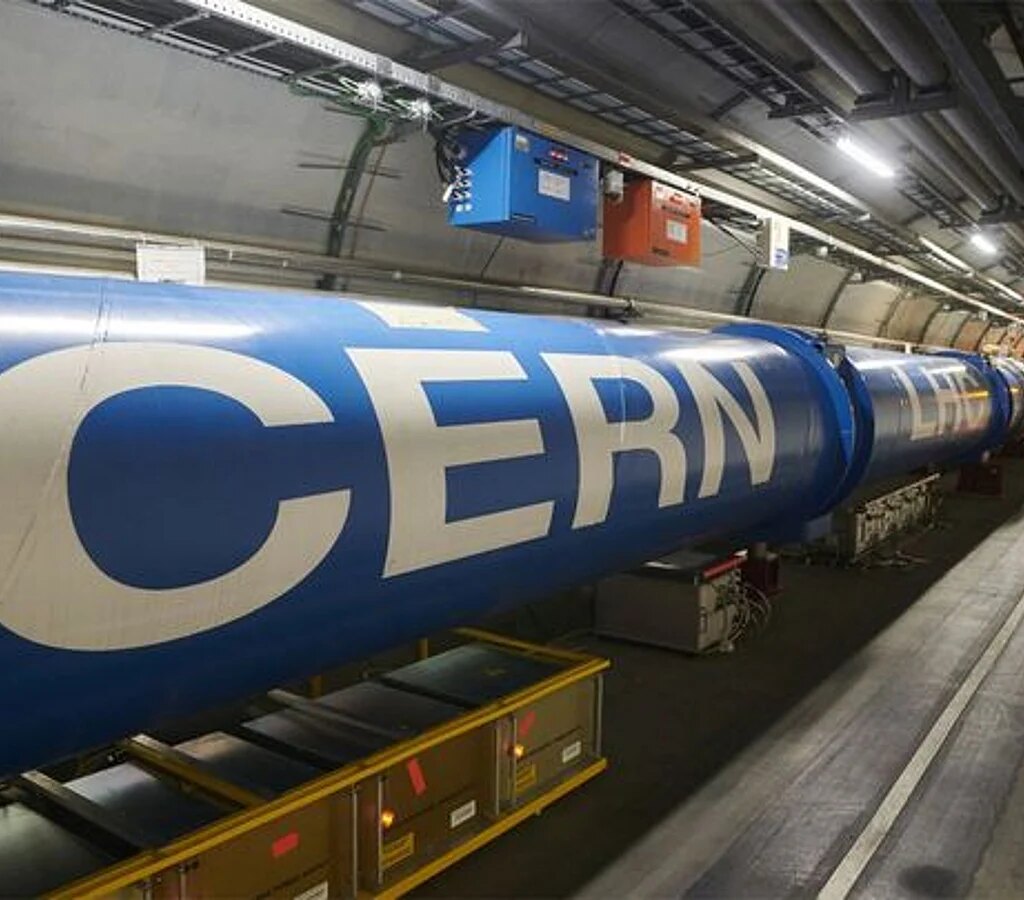
CERN is an international research organization dedicated to exploring the fundamental particles and forces that constitute the universe. Since the inauguration of the Large Hadron Collider (LHC) in 2008, CERN has operated the world’s most powerful particle accelerator, enabling landmark discoveries such as the Higgs boson. Often dubbed the “God Particle,” the Higgs boson discovery was a pivotal breakthrough that enhanced our comprehension of mass and the universe’s underlying framework.
- Large Hadron Collider (LHC):
The LHC is a 27-kilometer circular accelerator that collides protons at extremely high energies to investigate fundamental particles. - Higgs Boson Discovery:
Confirmed in 2012, this particle explained how other particles acquire mass, validating the Standard Model of particle physics.
The Need for a Next-Generation Collider
Despite the LHC’s groundbreaking achievements, its capabilities have inherent limits, prompting the scientific community to advocate for a more advanced accelerator. The proposed Future Circular Collider (FCC) represents this ambition, designed to reach unprecedented energy levels by accelerating protons around a 100-kilometer circumference-significantly larger than the LHC.
- Future Circular Collider (FCC):
Envisioned to explore deeper cosmic mysteries such as dark matter, supersymmetry, and other phenomena beyond the Standard Model. - Scientific Potential:
The FCC could unlock new physics by probing energy scales inaccessible to current technology.
Funding Challenges and International Collaboration
Constructing and operating the FCC involves multi-billion-dollar investments, necessitating extensive international cooperation. CERN’s funding model traditionally relies on contributions from member states, but the scale of this project demands increased financial commitments and the inclusion of new partners, including emerging economies eager to advance their scientific and technological capabilities.
- Member State Contributions:
Existing CERN members are expected to increase their financial support to meet the project’s demands. - New Collaborators:
Engaging additional countries and stakeholders to diversify and expand the funding base.
Role of Public-Private Partnerships
Beyond governmental funding, CERN is exploring collaborations with private industry to secure additional resources and foster innovation. These partnerships can facilitate the commercialization of technologies developed through CERN’s research, creating a mutually beneficial cycle of investment and technological advancement.
- Financial Support:
Private sector involvement can supplement public funds, easing financial burdens. - Technological Innovation:
Industry collaborations can accelerate the development and application of new technologies.
Public Engagement and Science Communication
Effective communication strategies are vital for building public support and enthusiasm for CERN’s projects. By transforming complex scientific concepts into accessible narratives and visually engaging content, CERN can inspire a broad audience, fostering a culture that values scientific inquiry and innovation.
- Outreach Programs:
Educational events and social media campaigns help disseminate knowledge and spark interest. - Public Ownership:
Encouraging community involvement strengthens the societal commitment to fundamental research.
Philosophical and Societal Implications
The pursuit of particle physics extends beyond academic boundaries, influencing cultural and philosophical perspectives. In an age where misinformation challenges scientific authority, large-scale projects like CERN serve as pillars of empirical evidence and rational thought. Supporting such endeavors reinforces the societal value of curiosity-driven research and nurtures future generations of scientists and innovators.
Why Funding CERN’s Next Collider Is Crucial
Investing in the next-generation collider is not merely a financial decision but a commitment to advancing human knowledge and technological progress. The discoveries enabled by such research have the potential to revolutionize our understanding of the universe and drive innovations that impact various sectors, including medicine, computing, and environmental science.
Conclusion: The Path Forward for CERN
CERN’s initiative to secure funding for the Future Circular Collider embodies a broader dedication to scientific exploration and societal advancement. By combining a compelling vision of discovery with strategic financial planning and public engagement, CERN aims to maintain its leadership in particle physics. This endeavor promises to illuminate the fundamental mysteries of existence and inspire a global community united by the quest for knowledge.
FAQ
What is the Future Circular Collider?
The Future Circular Collider (FCC) is a proposed next-generation particle collider that aims to reach unprecedented energy levels to explore deeper cosmic mysteries.
Why is funding important for CERN?
Funding is crucial for CERN to develop new technologies, conduct groundbreaking research, and maintain its leadership in particle physics.
How does CERN engage the public?
CERN engages the public through outreach programs, educational events, and social media campaigns to foster interest in scientific inquiry.






Leave a Reply