

Short Answer
Definition of Instrumentation Diagrams
An instrumentation diagram is a detailed graphical representation that illustrates the instruments, control devices, and associated components used to monitor and regulate industrial processes. Far from being a simple sketch, these diagrams serve as essential blueprints that connect conceptual designs with practical implementations in engineering, automation, and process control. They provide a comprehensive overview of how various instruments interact within a system, using standardized symbols and notations to ensure clarity and universal understanding among professionals.
Types of Instrumentation Diagrams
Instrumentation diagrams come in several forms, each tailored to specific purposes and audiences within industrial settings:
- Functional Block Diagrams (FBD):
These diagrams focus on the operational roles of different system components rather than their physical details. They offer a high-level perspective by illustrating the relationships and data flow between functional units within a process. - Piping and Instrumentation Diagrams (P&IDs):
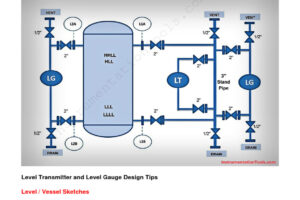
Considered the most comprehensive type, P&IDs depict the physical piping, instrumentation, and control devices in a facility. They include detailed information about pipe types, connections, instrumentation, and regulatory compliance requirements. - Loop Diagrams:
Loop diagrams provide an in-depth look at individual control loops, showing the interaction between input and output devices. These are invaluable for troubleshooting, maintenance, and understanding control logic.
Standard Symbols and Notations in Instrumentation Diagrams
The language of instrumentation diagrams is built upon a set of standardized symbols and annotations that represent various instruments and their functions. Commonly, instruments are depicted using shapes such as circles or squares, with specific variations depending on the adopted standards (e.g., ISA or ISO). Lines indicate connections, signal flows, or piping routes, while additional labels provide context such as measurement units, operational limits, or device tags.
Mastering this symbolic language is crucial, as misinterpretation can lead to operational errors, safety hazards, or costly downtime. Understanding these symbols ensures accurate communication among engineers, operators, and safety personnel.
Role and Importance in Industrial Applications
Instrumentation diagrams are indispensable across numerous industries, including oil and gas, pharmaceuticals, chemical manufacturing, and power generation. They are utilized throughout the lifecycle of a system-from initial design and construction to daily operation and maintenance. Engineers use these diagrams to devise control strategies, while operators rely on them to monitor system performance and conduct repairs.
Moreover, regulatory agencies often mandate the use of standardized instrumentation diagrams to verify compliance with safety and operational standards. Accurate documentation helps prevent accidents, environmental damage, and financial losses by ensuring that all stakeholders have a clear understanding of system configurations.
How Instrumentation Diagrams Facilitate System Understanding
By visually mapping out the relationships between instruments and control elements, instrumentation diagrams enable a holistic understanding of complex processes. For example, in an oil refinery, these diagrams help coordinate the monitoring of flow rates, pressure, and temperature to maintain safe and efficient operations. They serve as a communication bridge, translating abstract engineering concepts into actionable information for technicians and operators.
Challenges in Reading and Using Instrumentation Diagrams
Despite their critical role, interpreting instrumentation diagrams can be challenging due to the increasing complexity of modern control systems and the diversity of symbols used. Variations in familiarity among personnel-ranging from engineers to operators-can lead to misunderstandings or errors. Continuous training and education are essential to ensure that all users can accurately read and apply the information contained in these diagrams, thereby enhancing safety and operational effectiveness.
Common Misconceptions About Instrumentation Diagrams
Instrumentation diagrams are only useful for engineers.
While engineers heavily rely on these diagrams, operators, maintenance staff, and safety inspectors also depend on them for effective system management and troubleshooting.
All instrumentation diagrams look the same.
Different types of diagrams (FBDs, P&IDs, loop diagrams) serve distinct purposes and vary in detail and focus.
Learning the symbols is optional.
Understanding standardized symbols is essential to avoid misinterpretation that could compromise safety and efficiency.
Why Instrumentation Diagrams Are Essential
Instrumentation diagrams are foundational tools that underpin the safe, efficient, and reliable operation of industrial processes. They translate complex control systems into understandable visual formats, facilitating communication among diverse teams and ensuring regulatory compliance. Mastery of these diagrams enhances operational safety, reduces downtime, and supports effective maintenance and troubleshooting, making them indispensable in modern engineering and process control environments.
FAQ
What is an instrumentation diagram?
It is a detailed graphical representation illustrating instruments and control devices used in industrial processes to monitor and regulate operations.
What types of instrumentation diagrams exist?
Types include Functional Block Diagrams, Piping and Instrumentation Diagrams (P&IDs), and Loop Diagrams, each serving different purposes.
Why are instrumentation diagrams important?
They ensure safe, efficient operation and maintenance of industrial processes by providing a clear visual map of control systems.
Who uses instrumentation diagrams?
Engineers, operators, maintenance staff, and safety inspectors all utilize these diagrams for various operational tasks.



Leave a Reply