
Short Answer
Definition of Qubits
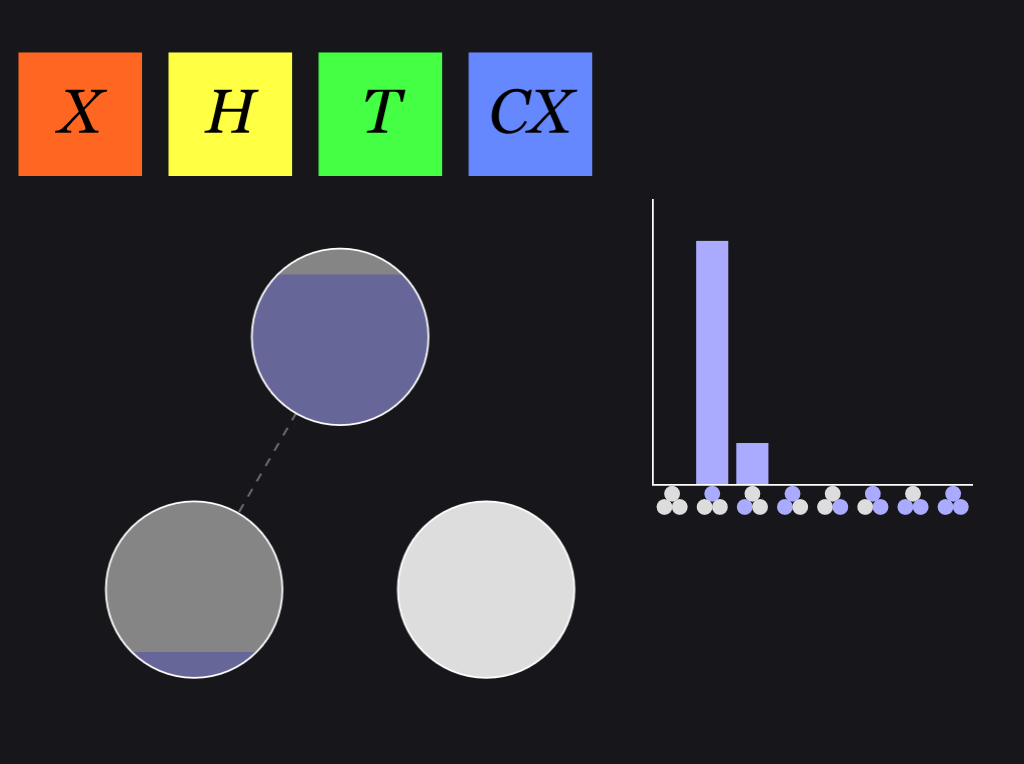
A qubit, or quantum bit, is the essential unit of information in quantum computing, analogous to the classical bit used in traditional computing. Unlike classical bits, which exist strictly as either 0 or 1, qubits harness the principles of quantum mechanics to exist in a superposition of both states simultaneously. This unique characteristic allows qubits to represent a complex blend of 0 and 1, governed by probability amplitudes that determine the likelihood of measuring each state.
- Classical Bit:
Represents a binary state of either 0 or 1. - Quantum Bit (Qubit):
Can exist in a superposition of 0 and 1 simultaneously, enabling more complex information encoding.
Fundamental Quantum Properties of Qubits
Superposition
Superposition is the phenomenon where a qubit can be in multiple states at once, rather than being confined to a single binary value. This property allows quantum computers to process a vast number of possibilities simultaneously, vastly increasing computational power compared to classical systems.
Entanglement
Entanglement is a uniquely quantum mechanical effect where two or more qubits become interconnected such that the state of one qubit instantaneously influences the state of another, regardless of the distance between them. This interdependence is crucial for quantum communication, cryptography, and distributed quantum computing.
Physical Implementations of Qubits
Qubits can be physically realized through various technologies, each with distinct advantages and challenges:
- Superconducting Circuits:
Utilize Josephson junctions to create qubits with relatively long coherence times, allowing them to maintain quantum states longer. - Trapped Ions:
Employ electromagnetic fields to trap ions, which are manipulated using lasers to perform quantum operations. - Photonic Systems:
Use photons as qubits, leveraging their speed and low interaction with the environment, though with challenges in scalability.
One of the main challenges in these implementations is reducing error rates and improving scalability to build larger, more reliable quantum processors.
Quantum Algorithms and Applications
Qubits enable quantum algorithms that exploit superposition and entanglement to solve problems more efficiently than classical algorithms. For example, Shor’s algorithm dramatically accelerates integer factorization, a task that is computationally intensive for classical computers. This capability has profound implications for cryptography and data security.
Quantum parallelism allows quantum computers to evaluate many possibilities simultaneously, offering exponential speedups for certain classes of problems. However, designing algorithms that fully utilize qubit properties remains an ongoing research challenge.
Challenges in Qubit Technology
Maintaining qubit coherence and minimizing errors caused by environmental interference (decoherence) are significant obstacles. Quantum error correction codes, which use entanglement among multiple qubits, are being developed to address these issues and improve the reliability of quantum computations.
Scaling up from a few qubits to thousands or millions while preserving fidelity is a critical goal for advancing quantum computing technology.
Ethical and Societal Considerations
The advent of quantum computing raises important ethical questions regarding data security, privacy, and equitable access. Quantum computers have the potential to break many current cryptographic protocols, necessitating the development of new security frameworks and policies.
Preparing society for the implications of quantum supremacy involves not only scientific and technological advancements but also thoughtful ethical deliberation to ensure responsible use.
Why Qubits Are Transformative
Qubits represent a fundamental shift in how information is processed, moving beyond the binary constraints of classical computing. Their ability to exist in superposition and become entangled enables computational possibilities that were previously unimaginable, promising breakthroughs in fields ranging from cryptography to materials science.
As research progresses, the full potential of qubits could revolutionize technology and reshape our understanding of computation, while also posing new challenges that require interdisciplinary collaboration and ethical foresight.
FAQ
What is a qubit?
A qubit is the quantum analog of a classical bit, capable of existing in a superposition of 0 and 1 states simultaneously.
How does entanglement work in qubits?
Entanglement links the states of two or more qubits so that the state of one instantly affects the other, regardless of distance.
What technologies are used to create qubits?
Common technologies include superconducting circuits, trapped ions, and photons.
What is the biggest hurdle in scaling quantum computers?
Maintaining qubit coherence and minimizing errors while increasing the number of qubits.
How do qubits impact cryptography?
Qubits enable quantum algorithms that can break many classical cryptographic protocols, prompting the need for quantum-resistant encryption.






Leave a Reply