

Short Answer
Understanding Sound Measurement Instruments
Sound waves permeate our surroundings, delivering a diverse range of auditory sensations-from the gentle whisper of leaves to the powerful roar of wild animals. But how do we quantify these intangible vibrations? What devices allow scientists, audio professionals, and enthusiasts to explore the complexities of sound? This article delves into three essential tools used to measure sound: the sound level meter, the oscilloscope, and the spectrum analyzer.
Definition and Purpose of Sound Measurement Tools
Each instrument serves a distinct role in capturing and analyzing sound:
- Sound Level Meter:
Measures sound pressure levels (SPL) in decibels (dB), providing a numerical value that represents the loudness of sound in an environment. - Oscilloscope:
Offers a visual display of sound waveforms over time, enabling detailed examination of sound characteristics such as amplitude and frequency. - Spectrum Analyzer:
Breaks down sound into its frequency components, illustrating the distribution of energy across the audible spectrum.
How Sound Level Meters Function
Sound level meters are widely used across environmental monitoring, engineering, and acoustic research. They operate by capturing sound waves through a sensitive microphone that converts these waves into electrical signals. These signals vary in frequency and amplitude, reflecting the sound’s properties. Internal electronics process the signals, applying filters to isolate specific frequency bands, and then calculate an equivalent decibel level. This measurement helps users assess the intensity of sound in a given space.
Applications in Occupational Safety
One critical use of sound level meters is in workplace noise monitoring. Prolonged exposure to high noise levels can cause hearing damage, making it essential for employers to measure and control sound exposure. By using sound level meters, organizations can identify hazardous noise environments and implement protective measures to ensure employee health and safety.
Visualizing Sound with Oscilloscopes
Unlike sound level meters that provide numerical data, oscilloscopes graphically represent sound waves, plotting voltage (which corresponds to sound intensity) against time. When connected to a microphone, the oscilloscope displays waveforms that reveal the amplitude, frequency, and phase of sounds. This visualization allows users to analyze complex sound features such as harmonics, distortions, and transient events.
Role in Audio Engineering and Music
Oscilloscopes are invaluable in fields like audio production and electronic instrument design. For example, sound engineers use oscilloscopes to inspect audio signals before processing them with effects like equalizers or compressors. This insight helps optimize sound quality, ensuring clarity and balance in recordings and live performances.
Frequency Analysis Using Spectrum Analyzers
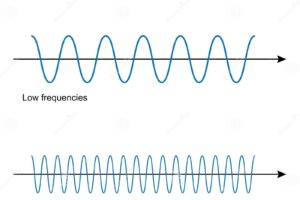
Spectrum analyzers provide a detailed breakdown of sound by displaying frequency on the horizontal axis and amplitude on the vertical axis. This frequency-domain analysis reveals the presence and strength of individual frequency components within a sound signal, ranging from low bass tones to high treble notes. Real-time operation allows immediate feedback, which is crucial for fine-tuning sound systems and acoustic environments.
Importance in Acoustic Engineering
In venue design, spectrum analyzers help acoustical engineers evaluate how sound behaves within a space. By analyzing frequency responses, they can adjust architectural elements and materials to enhance sound distribution in concert halls, theaters, and studios. This precision ensures audiences experience optimal sound quality during performances.
Limitations and Challenges of Sound Measurement Devices
- Sound Level Meters:
May have difficulty accurately capturing transient or very brief sounds due to averaging methods used in measurement. - Oscilloscopes:
While excellent for time-domain visualization, they often lack the frequency resolution needed for detailed spectral analysis, especially at higher frequencies. - Spectrum Analyzers:
Accuracy can be affected by filter bandwidth and resolution settings, which may influence the precision of frequency measurements.
Why Measuring Sound Is Essential
Understanding and quantifying sound is vital across numerous domains. In science, it aids in studying acoustic phenomena and human hearing. In technology, it supports the development of audio equipment and noise control solutions. In everyday life, sound measurement ensures safe noise levels in workplaces and enhances the quality of entertainment experiences. These instruments collectively deepen our comprehension of sound, transforming invisible vibrations into measurable data that enrich our auditory world.
Summary
The sound level meter, oscilloscope, and spectrum analyzer each provide unique perspectives on sound measurement. From quantifying loudness to visualizing waveforms and dissecting frequency content, these tools empower us to analyze and appreciate the complex nature of sound. By leveraging their capabilities, we gain valuable insights that influence safety, engineering, and the art of sound itself.
FAQ
What is a sound level meter?
A sound level meter measures sound pressure levels in decibels, providing a numerical value that represents the loudness of sound in an environment.
How does an oscilloscope help in sound measurement?
An oscilloscope visually represents sound waveforms over time, allowing detailed examination of sound characteristics such as amplitude and frequency.
What does a spectrum analyzer do?
A spectrum analyzer breaks down sound into its frequency components, illustrating the energy distribution across the audible spectrum.

Leave a Reply