
Short Answer
Definition of Environmental Ethics
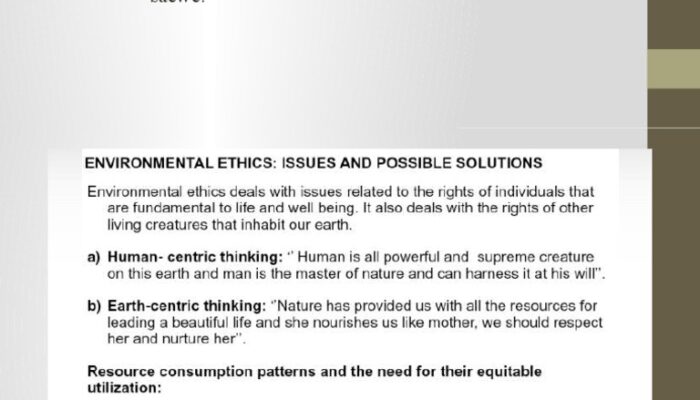
Environmental ethics is a branch of philosophy that examines the moral relationship between humans and the natural environment. It integrates perspectives from ecology, social justice, and philosophy to address how society should interact with the natural world. This field has gained prominence in response to escalating ecological crises, prompting a reevaluation of humanity’s role and responsibilities toward nature.
Core Philosophical Perspectives
Anthropocentrism vs. Ecocentrism
At the heart of environmental ethics lies a fundamental debate between two contrasting viewpoints:
- Anthropocentrism:
This perspective places humans at the center of moral concern, viewing nature primarily as a resource to serve human needs and interests. - Ecocentrism:
In contrast, ecocentrism assigns inherent value to all living and non-living components of the ecosystem, advocating for ethical consideration that extends beyond human beings to encompass the entire biosphere.
This ideological divide influences discussions on conservation priorities, resource management, and ethical duties toward non-human entities. The dilemma can be likened to navigating a vast ocean: one must choose between steering a course focused solely on individual benefit or charting a path that sustains the entire marine ecosystem.
Environmental Justice and Social Equity
Climate Justice and Inequality
Climate change presents not only an environmental challenge but also a profound social justice issue. Marginalized and vulnerable communities disproportionately suffer the consequences of environmental degradation, despite contributing minimally to the causes of climate change. This disparity has given rise to the principle of climate justice, which calls for equitable recognition and remediation of these injustices. Society can be compared to an orchestra where the silencing or mis-tuning of some instruments disrupts the harmony of the whole, underscoring the need for inclusive and fair environmental policies.
Preservation of Biodiversity
Biodiversity Loss and Species Extinction
Human activities are accelerating the sixth mass extinction, threatening countless species and destabilizing ecosystems. Ethical debates focus on whether conservation efforts should prioritize charismatic species or extend protection to all forms of life. The interconnectedness of ecosystems means that the loss of a single species can trigger cascading effects, similar to ripples spreading across a pond after a stone is thrown. This highlights the urgent ethical responsibility to protect biodiversity as a vital component of Earth’s life-support system.
Ethics Across Generations
Intergenerational Justice
Intergenerational justice emphasizes the moral duty of the current generation to safeguard the environment for future inhabitants of the planet. This concept challenges present-day consumption patterns and waste production, advocating for sustainable stewardship akin to preserving a family heirloom for descendants. It calls for reducing ecological footprints and implementing adaptive strategies that ensure the long-term health and viability of Earth’s ecosystems.
Technological Innovations and Ethical Considerations
Balancing Benefits and Risks
Technological advancements such as renewable energy, genetic modification, and geoengineering offer promising solutions to environmental problems. However, these innovations carry ethical concerns including potential ecological harm, social inequities, and moral questions about human intervention in natural processes. The metaphor of a double-edged sword aptly captures this duality: technology can provide illumination but also cause unintended damage if misapplied. Therefore, ethical frameworks are essential to guide responsible development and deployment of environmental technologies.
Incorporating Indigenous Perspectives
Indigenous Knowledge and Rights
Indigenous peoples possess extensive ecological knowledge and sustainable land management practices developed over thousands of years. Recognizing and integrating these perspectives into environmental ethics addresses historical injustices such as colonization, land dispossession, and cultural appropriation. The image of a tapestry woven from diverse threads symbolizes the richness that inclusivity brings to understanding and solving ecological challenges. Elevating indigenous rights and wisdom is both an ethical necessity and a pathway to more comprehensive environmental stewardship.
Education and Advocacy in Environmental Ethics
Fostering Awareness and Action
Education and advocacy play pivotal roles in advancing environmental ethics by raising awareness and encouraging critical engagement with ecological issues. Educational institutions serve as incubators for ethical reflection, nurturing informed citizens and future leaders. The metaphor of a garden illustrates this process: cultivating seeds of knowledge and responsibility leads to a thriving community of advocates ready to address environmental injustices. Through sustained educational efforts and grassroots activism, society can develop a collective ethic of care for the planet.
Why Environmental Ethics Is Crucial
The challenges faced in environmental ethics represent a complex interplay of philosophical, ecological, and social factors. Addressing these issues requires a holistic and integrative approach to ensure a sustainable and equitable future for all Earth’s inhabitants. Environmental ethics weaves together the threads of collective responsibility, urging humanity to engage thoughtfully and respectfully with the natural world to preserve its integrity for present and future generations.
FAQ
What is environmental ethics?
Environmental ethics is a branch of philosophy that examines the moral relationship between humans and the natural environment, integrating ecological and social justice perspectives.
Why is climate justice important?
Climate justice addresses the disproportionate impacts of climate change on marginalized communities, advocating for equitable recognition and remediation of these injustices.




Leave a Reply