
Short Answer
Understanding Quantum Computing Software Frameworks
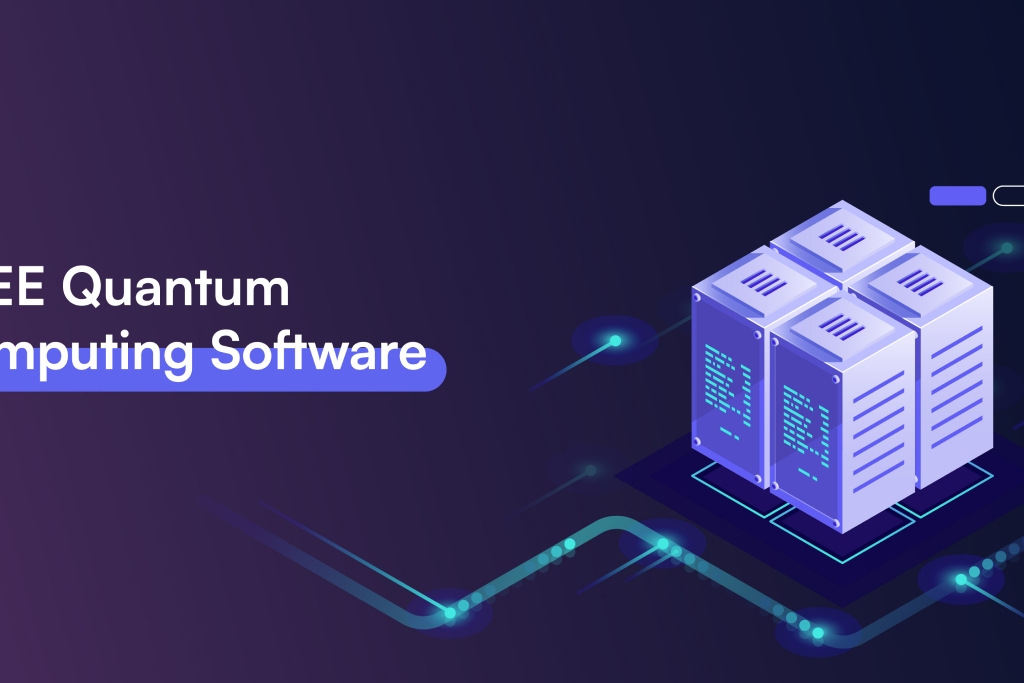
Quantum computing stands on the brink of transforming information processing by leveraging the principles of quantum mechanics. To fully exploit this revolutionary potential, specialized software frameworks are essential. These platforms are designed to navigate the unique challenges posed by quantum phenomena such as superposition and entanglement, enabling the development and execution of quantum algorithms. This article provides an overview of key quantum computing software, highlighting their distinctive features and the challenges they address.
Definition and Core Concepts
Quantum computing software refers to the collection of programming tools, libraries, and environments that facilitate the creation, simulation, and execution of quantum algorithms. Unlike classical software, these frameworks must handle quantum bits (qubits), which can exist in multiple states simultaneously, and manage quantum entanglement, a phenomenon where qubits become interdependent regardless of distance.
- Qubits:
The fundamental units of quantum information, capable of representing both 0 and 1 simultaneously through superposition. - Quantum Entanglement:
A unique quantum property where qubits become linked, such that the state of one instantly influences the state of another. - Quantum Algorithms:
Procedures designed to run on quantum computers, exploiting quantum mechanics to solve problems more efficiently than classical algorithms.
Key Quantum Computing Software Platforms
IBM’s Qiskit
Qiskit is an open-source quantum computing framework developed by IBM, offering a comprehensive toolkit for quantum programming primarily through Python. It supports the construction of quantum circuits and hybrid quantum-classical algorithms. Qiskit is modular, comprising components such as Terra (circuit creation), Aer (simulation), Ignis (error correction), and Aqua (quantum applications in machine learning and optimization). While powerful, its extensive feature set can present a steep learning curve for beginners.
Google’s Cirq
Cirq is a Python library created by Google, designed to build and simulate quantum algorithms with a focus on near-term quantum devices, particularly noisy intermediate-scale quantum (NISQ) hardware. It integrates closely with Google’s quantum processors and emphasizes modular circuit design. Users must balance the flexibility of Cirq’s architecture with the practical limitations of current quantum hardware, making optimization a critical challenge.
Rigetti Forest
Forest, developed by Rigetti Computing, combines cloud-based quantum computing with classical resources. Its core programming language, Quil (Quantum Instruction Language), allows high-level quantum programming and testing via quantum virtual machines. The platform requires users to adeptly synchronize classical and quantum operations, demanding a deep understanding of both computational paradigms to optimize performance.
Microsoft Quantum Development Kit (QDK)
Microsoft’s QDK includes the Q# programming language, tailored specifically for quantum algorithm development. It provides libraries and simulators that facilitate exploration of quantum concepts. The abstraction level of Q# necessitates a paradigm shift for traditional programmers, as it redefines computation within a quantum context rather than merely solving classical problems.
Xanadu’s PennyLane
PennyLane focuses on quantum machine learning by integrating classical and quantum computations. It enables the construction of quantum neural networks and supports hybrid quantum-classical workflows. A notable challenge is its use of quantum differentiable programming, a relatively novel concept that is crucial for advancing AI applications incorporating quantum technologies.
D-Wave’s Ocean
Ocean is a software suite designed for quantum annealing, a specialized quantum computing approach optimized for solving complex optimization problems. It allows developers to formulate applications that leverage D-Wave’s quantum annealers. Users must translate classical optimization problems into forms compatible with quantum annealing, which differs significantly from traditional quantum circuit programming.
ProjectQ
ProjectQ is an open-source framework emphasizing modular and comprehensive quantum algorithm development. It compiles high-level quantum code into executable instructions for various quantum hardware platforms. The platform encourages experimentation across all stages of quantum computation, requiring users to navigate between intuitive circuit visualizations and the complexities of the compilation process.
How Quantum Software Facilitates Computation
Quantum software frameworks serve as the bridge between abstract quantum algorithms and physical quantum hardware. They provide tools to design quantum circuits, simulate their behavior on classical computers, and execute them on quantum processors. These platforms manage qubit states, control quantum gates, and implement error correction techniques to mitigate the fragile nature of quantum information. By integrating classical computing resources, many frameworks enable hybrid algorithms that combine the strengths of both paradigms.
Mathematical Foundations and Programming Models
Quantum computing software relies on mathematical constructs such as linear algebra and complex vector spaces to represent qubit states and operations. Quantum gates are modeled as unitary matrices acting on qubit vectors. For example, a single-qubit gate U transforms a qubit state |ψ⟩ as:
|ψ’⟩ = U |ψ⟩
where:
- |ψ⟩: Initial qubit state vector
- U: Unitary matrix representing the quantum gate
- |ψ’⟩: Resulting qubit state after gate application
Programming languages like Q# and Quil abstract these operations, allowing developers to compose complex quantum circuits without manually handling matrix operations.
Practical Applications and Use Cases
Quantum software platforms are instrumental in advancing research and practical applications across various fields:
- Optimization: Using quantum annealing (e.g., D-Wave’s Ocean) to solve complex optimization problems in logistics and finance.
- Machine Learning: Employing hybrid quantum-classical models (e.g., PennyLane) to enhance AI algorithms.
- Cryptography: Developing quantum-resistant encryption methods and exploring quantum key distribution.
- Simulation: Modeling quantum systems in chemistry and materials science using simulators like Qiskit Aer.
Common Misunderstandings About Quantum Software
- Misconception: Quantum software is just like classical software.
Correction: Quantum software must handle fundamentally different principles such as superposition and entanglement, requiring specialized programming models and error correction techniques. - Misconception: All quantum software works on any quantum hardware.
Correction: Many frameworks are tailored to specific hardware architectures, and compatibility varies depending on the quantum processor and its capabilities. - Misconception: Quantum programming is only for physicists.
Correction: While understanding quantum mechanics helps, many platforms use high-level languages and abstractions accessible to computer scientists and engineers.
Significance of Quantum Software in the Technological Landscape
Quantum computing software is pivotal in transforming theoretical quantum mechanics into practical computational tools. As quantum hardware evolves, these frameworks enable researchers and developers to design, test, and optimize algorithms that could outperform classical counterparts in specific tasks. The development of robust quantum software accelerates innovation in fields such as cryptography, drug discovery, and artificial intelligence, marking a critical step toward realizing the full potential of quantum technologies in science and industry.
FAQ
What are the main software platforms for quantum computing?
Key platforms include IBM’s Qiskit, Google’s Cirq, Rigetti Forest, Microsoft’s Quantum Development Kit, Xanadu’s PennyLane, and D-Wave’s Ocean.
How does quantum computing software differ from classical software?
Quantum computing software must handle quantum properties like superposition and entanglement, requiring specialized programming models and error correction techniques.
Can anyone learn quantum programming?
Yes, while a background in quantum mechanics is beneficial, many quantum programming platforms use high-level languages that are accessible to those with programming experience.





Leave a Reply