
Short Answer
Definition of States of Matter
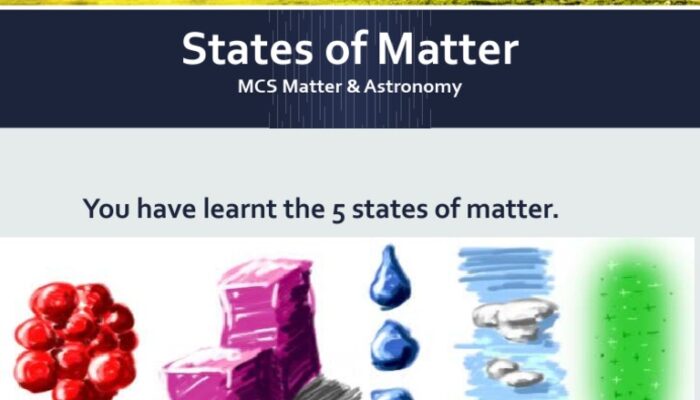
States of matter refer to the distinct forms that different phases of matter take on based on their physical properties and particle arrangements. These states describe how matter behaves and interacts in various environments, shaping the world around us. There are five primary states of matter, each with unique characteristics that influence their shape, volume, and particle movement.
The Five Fundamental States of Matter
Solids
Solids are materials that maintain a fixed shape and volume. Their particles are tightly packed in a structured arrangement, allowing very little movement. This rigidity gives solids their firm and stable form. Examples include everyday objects like ice cubes, rocks, and crayons. Solids can vary greatly in size, from tiny grains of sand to massive mountains, but they consistently retain their shape unless acted upon by an external force.
Liquids
Liquids have a definite volume but no fixed shape, adapting to the contours of their containers. The particles in liquids are less tightly bound than in solids, allowing them to flow and move past one another. This fluidity is why liquids like water, juice, or syrup spread out when poured or spilled. Liquids can range from light substances like alcohol to denser fluids such as honey.
Gases
Gases are characterized by particles that are widely spaced and move rapidly in all directions. Unlike solids and liquids, gases have neither a fixed shape nor a fixed volume, expanding to fill any available space. Air inside a balloon or the invisible atmosphere around us are common examples. Gases are highly compressible and can escape from containers easily, as seen when opening a bag of chips and the air rushes out.
Plasma
Plasma is an energized state of matter similar to gas but with charged particles called ions and electrons. These particles move extremely fast and emit light, making plasma highly energetic and luminous. Examples include the glowing colors in fireworks, neon signs, and the sun’s core. Plasma is the most abundant state of matter in the universe, found in stars and lightning, though it is less common in everyday Earth conditions.
Bose-Einstein Condensate (BEC)
Bose-Einstein Condensate is a rare and fascinating state that occurs at temperatures close to absolute zero, far colder than any natural environment on Earth. At these ultra-low temperatures, certain particles clump together and behave as a single quantum entity, moving in unison. This state provides valuable insights into quantum mechanics and the fundamental nature of matter, making it a significant focus of scientific research.
Transitions Between States of Matter
Matter can shift from one state to another through various physical processes driven by changes in temperature or pressure. These transformations are common in everyday life and are essential to many natural and industrial phenomena.
- Melting:
The process where a solid absorbs heat and changes into a liquid, such as ice turning into water on a warm day. - Freezing:
When a liquid loses heat and solidifies, like water becoming ice in a freezer. - Evaporation:
The change from liquid to gas, observed when water dries up from a wet surface under the sun. - Condensation:
The conversion of gas back into liquid, seen as droplets forming on a cold glass of water.
Scientific Importance and Everyday Relevance
Understanding the states of matter is fundamental to science and technology, influencing fields from chemistry and physics to engineering and environmental science. These states explain how materials behave under different conditions, enabling innovations in manufacturing, energy production, and even space exploration. In daily life, recognizing these states helps us comprehend natural processes like weather patterns, cooking, and the behavior of household materials.
Common Misunderstandings About States of Matter
- Misconception: There are only three states of matter.
Correction: While solids, liquids, and gases are the most familiar, plasma and Bose-Einstein condensates are also fundamental states with unique properties. - Misconception: Gases have no mass.
Correction: Gases do have mass; their particles are just spread out and moving rapidly, which makes them less dense than solids or liquids.
Real-Life Illustrations of States of Matter
Everyday experiences provide clear examples of the different states of matter:
- Solid: Holding a toy block or a rock demonstrates the fixed shape and volume of solids.
- Liquid: Pouring juice into a glass shows how liquids conform to container shapes.
- Gas: Inflating a balloon with air illustrates how gases expand to fill spaces.
- Plasma: Observing neon lights or lightning reveals the glowing nature of plasma.
- Bose-Einstein Condensate: Though not visible in daily life, BECs are created in laboratories to study quantum phenomena.
FAQ
What are the five states of matter?
The five states of matter are solid, liquid, gas, plasma, and Bose-Einstein condensate.
How does matter change from one state to another?
Matter changes state through heating or cooling processes like melting (solid to liquid) and evaporation (liquid to gas).
Is plasma common on Earth?
Plasma occurs naturally in lightning and man-made neon signs, though it is more common in stars.
What is unique about Bose-Einstein condensates?
They occur at extremely low temperatures where particles act as a single quantum entity.




Leave a Reply