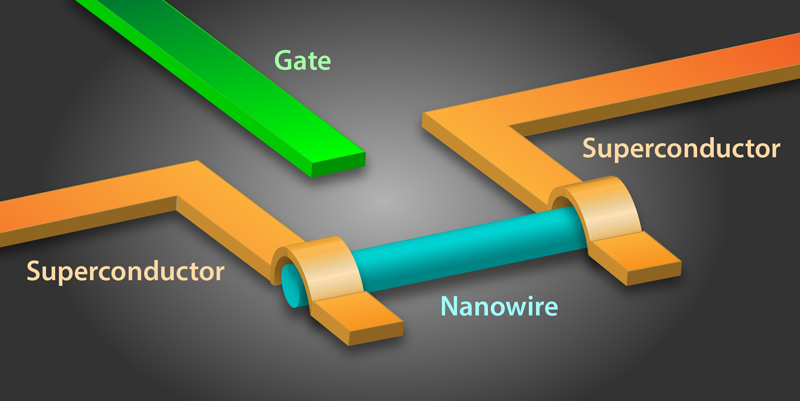
The superconducting quasicharge qubit – The Science Space?

In the realm of quantum computing, the superconducting quasicharge qubit has emerged as a pivotal element, intertwining the principles of superconductivity with quantum mechanics. This remarkable construct not only addresses fundamental questions regarding coherence and information processing but also stirs intrigue among researchers and enthusiasts alike. The qubit’s design, functionality, and the complex underlying physics […]

Read More →

How does topological quantum computation work?

Topological quantum computation represents a paradigm shift in the quest for robust quantum information processing. At its core, this innovative approach leverages the unique properties of topology—a branch of mathematics concerned with the qualities of space that remain invariant under continuous transformations—thereby engendering an interconnected realm where quantum mechanics and abstract mathematical concepts converge. This […]

Read More →

based quantum information/computation?

Quantum information and computation occupy a profound realm that transcends the conventional paradigms of classical computing. Imagine embarking on a voyage through the uncharted waters of quantum mechanics, plunging into a domain where particles exist in superposition, entangled states defy classical logic, and the very fabric of reality appears malleable. Within this enigmatic landscape, quantum […]

Read More →

Can a quantum computer produce a brain?

The intersection of quantum computing and neurological science evokes profound curiosity. Within contemporary discussions, one often observes the question: “Can a quantum computer produce a brain?” This inquiry is not only a tantalizing thought experiment but also hints at deeper philosophical and scientific implications regarding consciousness, computation, and the essence of cognition. To delve into […]

Read More →

How to contribute to the development of quantum computing?

Quantum computing stands as a transformative frontier in the realm of technology, promising to revolutionize various sectors including cryptography, material science, and pharmaceuticals. With its potential to solve complex problems far beyond the capabilities of classical computers, the development of quantum computing relies not only on elite researchers but also on the contributions of a […]

Read More →

Why is it so hard to make a quantum computer?

Quantum computing stands at the frontier of modern physics and computer science, promising to revolutionize our understanding of computation. However, the realization of a quantum computer remains an elusive goal. This difficulty arises not only from the intricate and abstract nature of quantum mechanics but also from numerous practical challenges. Understanding these challenges not only […]

Read More →

Quantum Computing for Drug Discovery: Molecules in Superposition

In the realm of computational science, quantum computing emerges as a harbinger of transformative potential, particularly within the purview of drug discovery. The complex latticework of molecular interactions and biochemical pathways serves as an immense canvas where quantum mechanics can apply its unique characteristics, notably the principles of superposition and entanglement. This exploration invites a […]

Read More →

Will quantum computing be a good industry in 10 years?

Quantum computing stands on the precipice of revolutionizing industries and redefining the very fabric of computational paradigms. Envision a cog in the grand wheel of technological advancement, an intricate interplay of quantum bits, or qubits, that dance along the principles of superposition and entanglement. Such is the alluring nature of quantum computing, which promises not […]

Read More →