
Short Answer
Definition of Superconducting Quasicharge Qubits
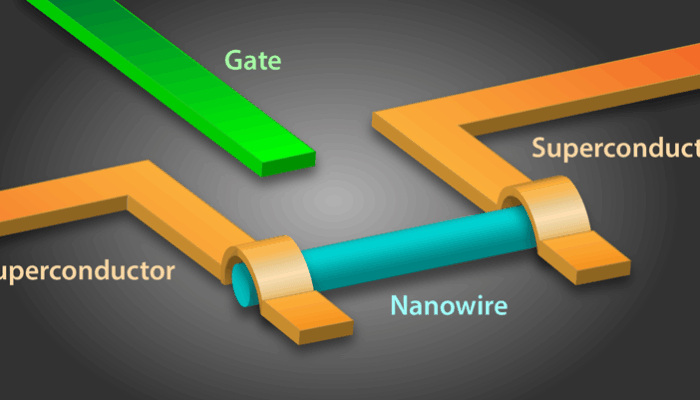
Superconducting quasicharge qubits represent a crucial innovation in quantum computing, merging the principles of superconductivity with quantum mechanics to create a powerful quantum information processing element. These qubits leverage the unique properties of superconducting materials to encode and manipulate quantum information, distinguishing themselves from classical bits by their ability to exist in superpositions of states.
- Superconductivity:
A phenomenon where certain materials exhibit zero electrical resistance below a critical temperature, enabling lossless current flow. - Quasicharge:
An effective charge degree of freedom in superconducting circuits, used to define the quantum state of the qubit. - Josephson Junctions:
Thin insulating barriers between superconductors that allow tunneling of Cooper pairs, fundamental to qubit operation.
Fundamental Principles Behind Superconducting Qubits
At the core of superconducting qubits lies the exploitation of superconductivity’s zero-resistance state, which facilitates the coherent manipulation of quantum states. Unlike classical bits restricted to binary values (0 or 1), qubits can exist simultaneously in multiple states due to quantum superposition, vastly increasing computational potential. The quasicharge qubit specifically harnesses charge quantization effects within superconducting circuits, enabling precise control over its quantum state by adjusting the potential landscape through Josephson junctions.
Mechanism of Operation
The superconducting quasicharge qubit operates by controlling the charge states within a superconducting circuit. Josephson junctions create potential wells where the qubit’s state can be localized or delocalized, allowing transitions between discrete charge states. By tuning external parameters such as gate voltages and magnetic flux, researchers can manipulate the qubit’s wavefunction, encoding quantum information in the quasicharge degree of freedom. This tunability is essential for implementing quantum gates and algorithms.
Quantum Coherence and Decoherence Challenges
Coherence time-the duration a qubit maintains its quantum state-is a critical metric for quantum computing. Superconducting quasicharge qubits exhibit relatively long coherence times, but they remain vulnerable to decoherence caused by environmental interactions. Factors such as thermal fluctuations, electromagnetic noise, and frequency instability disrupt the delicate quantum states, leading to information loss. To mitigate these effects, advanced error correction techniques and noise filtering strategies are employed, aiming to preserve qubit fidelity during computation.
Measurement and Quantum State Collapse
Measuring a superconducting quasicharge qubit involves collapsing its superposition into a definite classical state, a process inherently probabilistic and central to quantum mechanics. This measurement-induced collapse poses challenges for quantum algorithm implementation, as it requires balancing the extraction of information with the preservation of coherence. The interface between classical measurement devices and quantum systems also raises philosophical questions about the observer’s role and the nature of quantum reality.
Non-Classical Phenomena: Quantum Tunneling
One of the remarkable features of superconducting quasicharge qubits is their ability to exhibit quantum tunneling, where the qubit transitions between potential wells despite classical energy barriers. This phenomenon highlights the fundamental differences between classical and quantum physics, illustrating how quantum uncertainty allows particles to traverse forbidden regions. Studying tunneling in these qubits provides insights into macroscopic quantum effects and deepens understanding of quantum dynamics in engineered systems.
Interdisciplinary Connections and Topological Implications
The investigation of quasicharge dynamics extends beyond quantum computing, intersecting with condensed matter physics and the study of topological phases of matter. These topological properties offer pathways to developing qubits that are inherently protected from certain types of errors, known as topologically protected qubits. This interdisciplinary approach fosters collaboration across physics and engineering disciplines, driving progress toward fault-tolerant quantum computation.
Applications and Technological Impact
Superconducting quasicharge qubits are at the forefront of quantum technology development, with significant investments from both startups and established companies. Their potential applications span quantum algorithms, secure quantum communication, and enhancements in artificial intelligence. As these qubits transition from laboratory experiments to practical devices, they promise to revolutionize computational paradigms and influence various sectors, including cryptography, materials science, and complex system simulations.
Challenges and Future Directions
Despite their promise, superconducting quasicharge qubits face hurdles related to scalability, integration with other quantum systems, and error rates. Developing hybrid quantum architectures that combine different qubit types is a promising strategy to overcome these limitations by leveraging complementary strengths. Additionally, ongoing discussions address the ethical considerations and societal impacts of widespread quantum computing adoption, emphasizing responsible innovation.
Summary and Outlook
The superconducting quasicharge qubit embodies a sophisticated fusion of quantum physics and advanced technology, showcasing principles such as superposition, entanglement, and quantum tunneling. Its study not only advances the frontier of quantum computation but also enriches our understanding of quantum phenomena at macroscopic scales. Continued research into these qubits is poised to unlock new computational capabilities and deepen insights into the fundamental nature of reality.
FAQ
What is a superconducting quasicharge qubit?
It is a quantum bit implemented using superconducting circuits that exploit charge quantization and Josephson junctions to encode and manipulate quantum information.
How does a quasicharge qubit differ from other superconducting qubits?
Unlike other superconducting qubits that may focus on flux or phase degrees of freedom, the quasicharge qubit utilizes charge states, enabling different control and coherence characteristics.
What challenges affect the performance of superconducting quasicharge qubits?
Challenges include decoherence from environmental noise, frequency fluctuations, thermal excitations, and scalability issues that require advanced error correction and hybrid architectures.
What are potential applications of superconducting quasicharge qubits?
They are key components in quantum computing, quantum communication, quantum cryptography, and are being explored for integration into hybrid quantum systems and AI computational frameworks.
Why is coherence important in superconducting quasicharge qubits?
Coherence determines how long a qubit can maintain its quantum state, directly impacting the reliability and effectiveness of quantum computations.






Leave a Reply