
Short Answer
Definition of Quantum Information and Computation
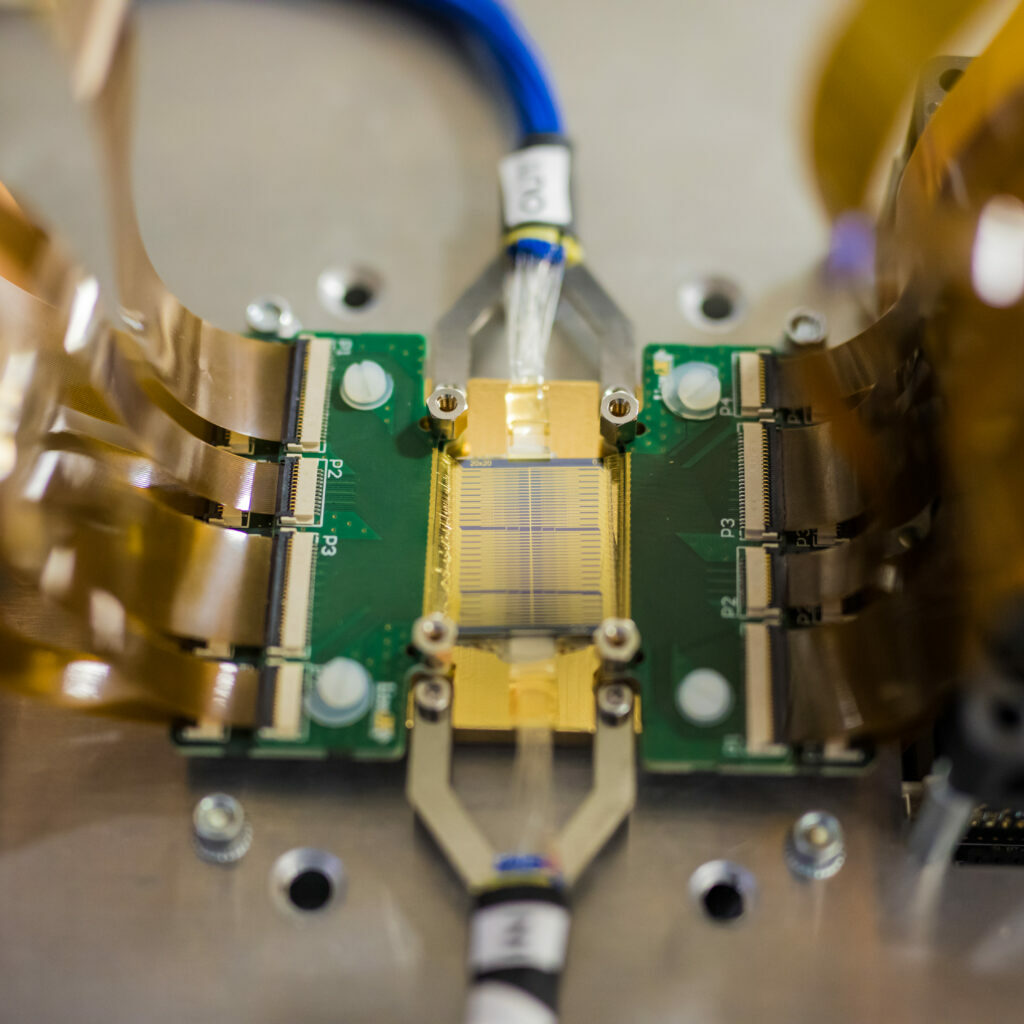
Quantum information and computation represent a groundbreaking field that extends beyond the limits of traditional classical computing. This domain explores the principles of quantum mechanics, where particles can exist in multiple states simultaneously, and entangled particles exhibit correlations that defy classical intuition. At the heart of this field are quantum bits, or qubits, which serve as the fundamental units of quantum information, enabling a novel approach to processing and storing data.
Fundamental Concepts in Quantum Computing
Superposition
Superposition is a core principle that allows qubits to exist in a combination of states at once, unlike classical bits which are restricted to either 0 or 1. This phenomenon can be likened to a spinning coin that is neither heads nor tails while in motion, embodying both possibilities simultaneously. Due to superposition, a quantum computer can perform many calculations at the same time, exponentially increasing its computational power compared to classical systems.
Entanglement
Entanglement is another distinctive quantum feature where two or more qubits become interconnected such that the state of one instantly influences the state of the other, regardless of the distance between them. This quantum correlation enables the processing of information across multiple channels simultaneously, enhancing data efficiency and enabling innovative quantum algorithms.
How Quantum Algorithms Transform Computation
Quantum algorithms exploit superposition and entanglement to solve problems that are intractable for classical computers. A prominent example is Shor’s algorithm, which efficiently factors large prime numbers in polynomial time-a task that classical algorithms perform exponentially slower. This capability poses significant implications for cryptography, as many encryption methods rely on the difficulty of prime factorization.
Challenges in Realizing Quantum Computing
Despite its promise, building practical quantum computers faces significant obstacles. Maintaining quantum coherence-the delicate state in which qubits retain their quantum properties-is essential but difficult due to environmental disturbances causing decoherence. To address this, researchers develop quantum error correction techniques and fault-tolerant designs, akin to engineering robust bridges over turbulent waters. Emerging technologies such as topological qubits and quantum annealers offer potential pathways to stabilize qubits and advance toward scalable quantum machines.
Applications Beyond Cryptography
Quantum Machine Learning
Quantum machine learning merges quantum computing with data science, aiming to enhance pattern recognition and data analysis. By leveraging quantum phenomena, these algorithms can uncover complex structures within large datasets more efficiently than classical methods, promising breakthroughs in diverse fields including healthcare, finance, and artificial intelligence.
Quantum Communication and Security
Quantum communication introduces revolutionary methods for secure information transfer, notably through quantum key distribution (QKD). This technique uses quantum states to encode messages such that any interception attempt alters the quantum state, alerting the communicating parties to potential eavesdropping. This property ensures an unprecedented level of security, crucial for safeguarding data in an increasingly connected world.
Philosophical and Scientific Implications
The intersection of quantum physics and information theory raises profound questions about the nature of information itself-how it is represented, transmitted, and manipulated. The concept of “quantum supremacy” marks the milestone when a quantum computer outperforms classical counterparts on specific tasks, highlighting the fundamental differences between classical and quantum paradigms and challenging our understanding of computation.
Why Quantum Information and Computation Matter
The study and development of quantum information and computation hold transformative potential for technology, security, and scientific discovery. By harnessing the unique properties of qubits, superposition, and entanglement, quantum computing promises to revolutionize problem-solving capabilities, enhance secure communication, and deepen our comprehension of the universe’s underlying principles. As research progresses, this field continues to inspire a new era of innovation and exploration.
Summary: Navigating the Quantum Frontier
Embarking on the journey into quantum information and computation is akin to exploring uncharted seas filled with both challenges and opportunities. Each advancement acts as a guiding star, illuminating the path toward a future where quantum technologies reshape computing, security, and our fundamental understanding of reality. Embracing this quantum voyage is essential for unlocking the next generation of technological breakthroughs and scientific insights.
FAQ
What is the principle of superposition in quantum computing?
Superposition allows a qubit to be in multiple states simultaneously, enabling quantum computers to process a vast number of possibilities at once.
How does quantum decoherence affect quantum computers?
Decoherence causes qubits to lose their quantum properties due to environmental interference, which disrupts computations and must be mitigated with error correction.
What is quantum key distribution (QKD)?
QKD is a secure communication method that uses quantum mechanics to detect eavesdropping by ensuring any interception alters the quantum state and is thus noticeable.


Leave a Reply