
Short Answer
Definition of Quantum Computing
Quantum computing represents a cutting-edge domain at the intersection of physics and technology, leveraging the principles of quantum mechanics to revolutionize computational methods. Unlike traditional computing, which relies on binary bits, quantum computing utilizes quantum bits or qubits that can exist in multiple states simultaneously. This unique capability opens avenues for solving complex problems that are currently intractable for classical computers.
- Qubits:
Fundamental units of quantum information that can represent both 0 and 1 simultaneously through superposition. - Quantum Superposition:
A phenomenon allowing qubits to be in multiple states at once, vastly increasing computational possibilities. - Entanglement:
A quantum correlation between qubits enabling them to be interconnected in ways that classical bits cannot replicate.
Fundamental Principles Behind Quantum Computing
At the heart of quantum computing lie two pivotal quantum phenomena: superposition and entanglement. Superposition allows qubits to hold multiple states concurrently, enabling parallel computation on an unprecedented scale. Entanglement creates strong correlations between qubits, allowing the state of one qubit to instantaneously influence another, regardless of distance. These properties empower quantum algorithms to perform certain calculations exponentially faster than their classical counterparts.
Quantum Computing Architectures
The current quantum computing landscape is characterized by diverse hardware approaches, each with unique operational principles and advantages:
- Superconducting Qubits:
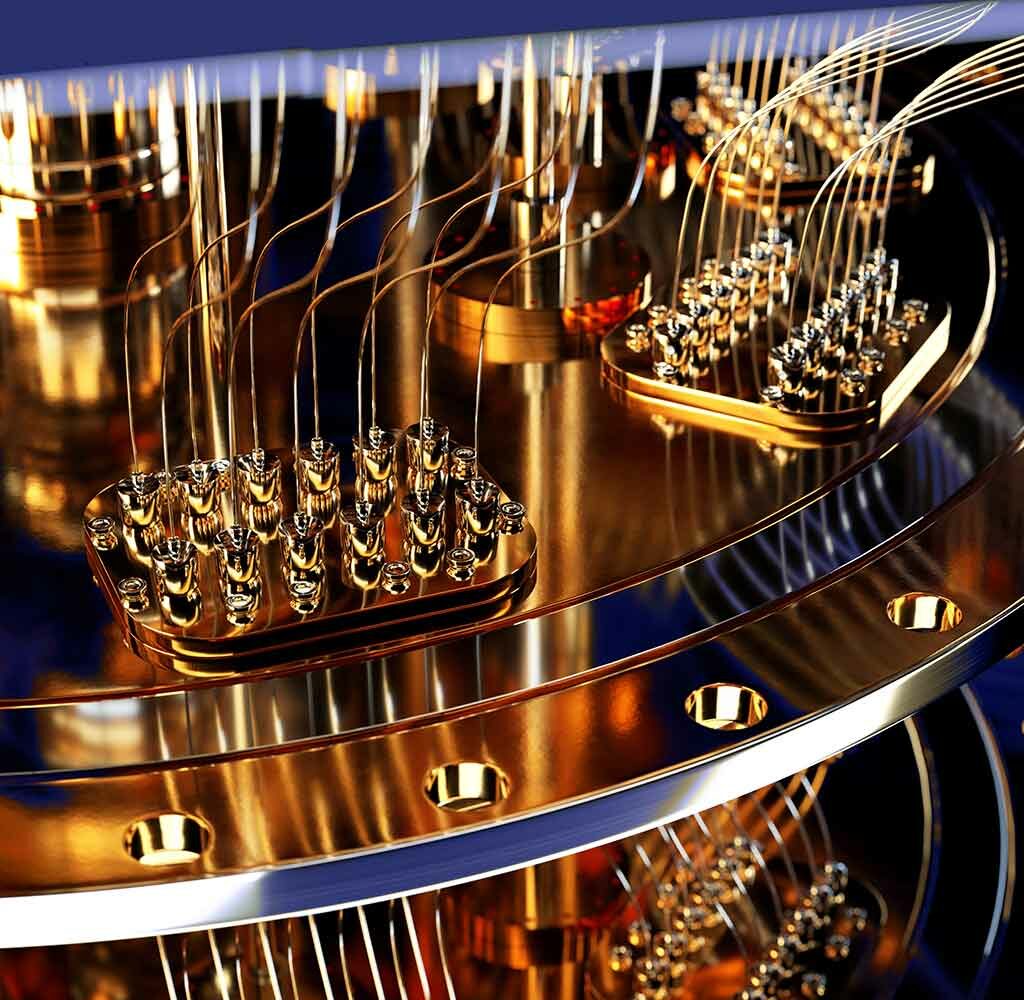
Utilized by industry leaders such as IBM and Google, these qubits exploit superconductivity to maintain quantum states with relatively long coherence times. - Trapped Ion Qubits:
Employ electromagnetic fields to confine ions, enabling precise quantum state manipulation through laser interactions. - Topological Qubits:
A theoretical model that aims to achieve inherent error resistance by manipulating quasi-particles in braided configurations.
Technological Milestones and Challenges
Significant progress has been made in quantum hardware development, highlighted by Google’s 2019 demonstration of quantum supremacy-where a quantum processor performed a task beyond the reach of classical supercomputers. Efforts continue to enhance qubit quantity and fidelity, the latter indicating the accuracy with which qubits maintain their intended states during operations. Despite these advances, practical, large-scale quantum computers remain elusive due to persistent challenges such as qubit decoherence and error rates.
Quantum Algorithms and Their Impact
Quantum algorithms are specially crafted to exploit quantum mechanical properties for superior computational efficiency. Notable examples include:
- Shor’s Algorithm:
Enables efficient integer factorization, posing a threat to classical cryptographic systems. - Grover’s Algorithm:
Provides a quadratic speedup for searching unsorted databases.
These algorithms highlight the transformative potential of quantum computing but also emphasize the critical need for effective quantum error correction to mitigate the effects of environmental noise and decoherence.
Quantum Software and Programming Ecosystem
The evolution of quantum software platforms is integral to advancing the field. Tools like IBM’s Qiskit and Google’s Cirq facilitate the design, simulation, and execution of quantum circuits, making quantum programming more accessible to researchers and developers. Additionally, hybrid computing models that combine classical and quantum resources are emerging, enabling practical applications while fully functional quantum hardware continues to mature.
Current Research Directions and Scientific Exploration
Beyond hardware and software, ongoing research delves into foundational questions about quantum system scalability, quantum networking, and the integration of quantum mechanics with artificial intelligence. These investigations not only deepen our understanding of quantum phenomena but also explore their potential applications across sectors such as finance, healthcare, and materials science.
Market Trends and Industry Involvement
The commercial landscape of quantum computing is rapidly expanding, with venture capital and corporate investments fueling innovation. Companies like Rigetti Computing, IonQ, and D-Wave are pioneering unique quantum technologies. Collaborative efforts between academia and industry are increasingly vital, accelerating breakthroughs that could lead to optimized quantum algorithms and novel practical uses.
Obstacles and Ethical Considerations
Despite promising advancements, quantum computing faces significant technical hurdles, including maintaining qubit coherence, reducing error rates, and scaling systems effectively. Ethical concerns also arise, particularly regarding the potential misuse of quantum capabilities in cyberattacks, which could compromise data security. Proactive strategies are essential to address these risks and ensure responsible development.
Future Prospects and Global Implications
The future of quantum computing is poised for remarkable growth, with expectations of hardware scaling to thousands of qubits capable of complex computations. The development of quantum networks promises enhanced communication security and distributed quantum processing power. International cooperation is anticipated to intensify as nations recognize the strategic importance of quantum supremacy in technological and geopolitical arenas.
Significance of Quantum Computing
Quantum computing stands at the forefront of scientific and technological innovation, offering the potential to revolutionize problem-solving across numerous disciplines. Its ability to tackle challenges beyond classical computing’s reach could transform industries, enhance scientific discovery, and redefine computational paradigms, marking a pivotal advancement in human knowledge and capability.
FAQ
What is quantum computing?
Quantum computing is a field of computing focused on developing computer technology based on the principles of quantum theory, which explains the nature and behavior of energy and matter on the quantum (atomic and subatomic) level.
How do qubits differ from classical bits?
Unlike classical bits that represent either 0 or 1, qubits can exist in multiple states simultaneously thanks to quantum superposition, enabling quantum computers to process complex computations more efficiently.
What are the main challenges facing quantum computing development?
Key challenges include qubit decoherence, error rates, scalability, and the need for effective quantum error correction to maintain reliable computations.
What are some practical applications of quantum computing?
Potential applications span cryptography, optimization problems, drug discovery, material science, artificial intelligence, and financial modeling.
What is quantum supremacy?
Quantum supremacy refers to the point where a quantum computer performs a calculation that classical supercomputers practically cannot achieve within a reasonable time frame.






Leave a Reply