What is the Hadron Collider

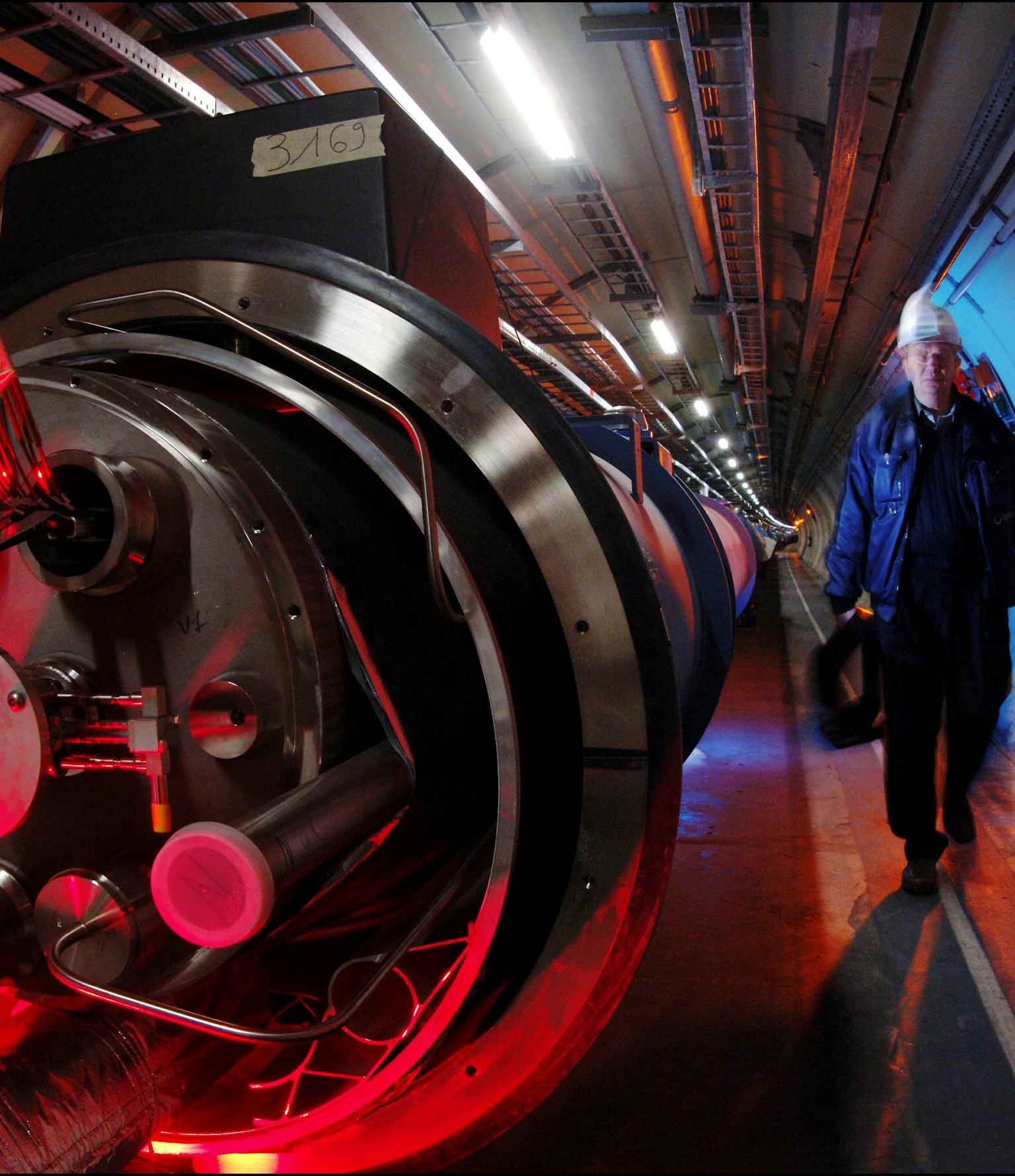
The Large Hadron Collider (LHC), a marvel of modern physics, stands as the most powerful particle accelerator in existence. But, what exactly is the Hadron Collider? And more intriguingly, what mysteries does it invite us to explore? This exploratory article delves deep into the architecture, functionality, and scientific significance of the LHC, while playfully posing […]

Read More →

What are the benefits of the large hadron collider?

The Large Hadron Collider (LHC) serves as a monumental achievement in the realm of particle physics, representing the largest and most sophisticated particle accelerator ever constructed. Located at CERN, the European Organization for Nuclear Research, it operates on a scale not previously achieved, exploring the fundamental constituents of matter and the forces at play in […]

Read More →

What is the composition of the elementary particle?

Elementary particles represent the fundamental building blocks of matter and the most basic constituents of the universe. Unlike composite particles, which are formed from the combination of smaller constituents, elementary particles are not known to be made of anything else. This article delves into the composition of elementary particles, investigating the various classes, their interactions, […]

Read More →

How many neutrinos do we ‘catch’ per day?

Neutrinos are elusive subatomic particles that are generated from a variety of cosmic and terrestrial sources, including the nuclear reactions within stars, supernovae, and even human-made nuclear reactors. Their interaction with matter is exceedingly weak, allowing them to traverse vast distances without impediment. This characteristic poses a challenge in neutrino detection, leading to questions about […]

Read More →

How do we know that neutrinos exist?

Neutrinos, elusive subatomic particles that barely interact with matter, have intrigued physicists for decades. The existence of neutrinos was first posited in the 1930s by Wolfgang Pauli as a solution to the puzzle of beta decay. Despite their low mass and neutral charge, which renders them virtually undetectable, a series of groundbreaking experiments have afforded […]

Read More →

What is a neutrino? Is there anything smaller?

Neutrinos are among the most enigmatic particles in the universe, eluding detection for decades and challenging our understanding of fundamental physics. These elusive subatomic particles, which belong to the category of fermions, have intrigued scientists ever since their theoretical inception in the early 20th century. In this discussion, we will delve into the nuanced properties […]

Read More →

What are the subatomic particles and their roles?

Subatomic particles are the fundamental constituents of matter, serving as the building blocks for atoms and, by extension, the myriad forms of matter that encompass the universe. Understanding these particles, along with their roles and interactions, is crucial for comprehending the underlying principles of physics and the nature of reality itself. This discussion delves into […]

Read More →

Which subatomic particle will help atoms to bind together?

The nucleus of an atom is an intricate amalgamation of protons and neutrons, encased by a cloud of electrons that orbit in predefined energy levels. Understanding which subatomic particle facilitates the binding of atoms requires delving into the fundamental nature of atomic interactions, particularly the roles of electrons in chemical bonding. These interactions are not […]

Read More →

How do CERN and Fermilab compare?

In the realm of particle physics, the European Organization for Nuclear Research (CERN) and the Fermi National Accelerator Laboratory (Fermilab) stand as monumental institutions, each contributing uniquely to our understanding of the universe’s fundamental constituents. By examining their goals, facilities, types of experiments, and collaborations, we gleam a clearer picture of how these two giants […]

Read More →