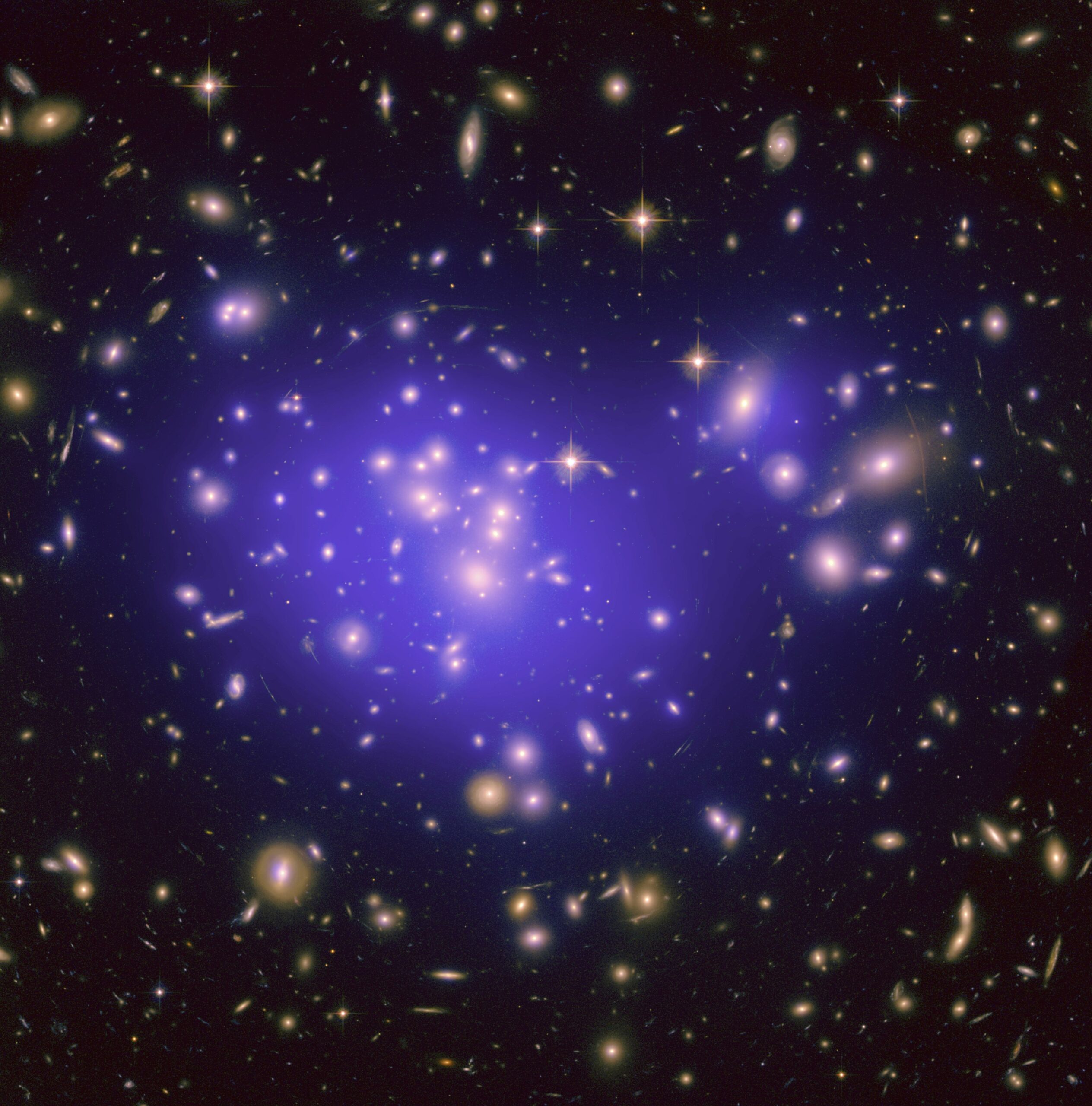
Is there a dark matter connected with elementary particles?

Definition of Dark Matter Dark matter is a mysterious form of matter that constitutes approximately 27% of the universe’s total mass-energy composition. Unlike ordinary matter, it neither emits nor interacts with electromagnetic radiation, making it invisible to conventional telescopes and detectors. Its presence is inferred primarily through gravitational effects on visible matter, radiation, and the […]

Read More →

What do dark matter and energy have in common?

Understanding Dark Matter and Dark Energy Within the expansive and mysterious field of cosmology, dark matter and dark energy stand out as two of the most intriguing and challenging subjects. Despite their distinct characteristics, these two components share significant similarities that warrant detailed exploration. Investigating these phenomena not only reveals common observational features but also […]

Read More →

What is the difference between dark energy and dark matter?

Definition Dark matter and dark energy are two fundamental yet mysterious constituents of the universe that profoundly influence its structure and evolution. Despite sharing the prefix “dark,” they differ significantly in nature, behavior, and cosmic roles. Dark Matter: A type of matter that neither emits nor absorbs light, making it invisible to conventional telescopes. Its […]

Read More →

What is the source or origin of dark matter and dark energy?

Understanding Dark Matter and Dark Energy Dark matter and dark energy stand as two of the most perplexing and significant subjects in modern astrophysics. Their investigation challenges existing cosmic paradigms and suggests the presence of phenomena beyond the observable universe. While dark matter constitutes nearly 85% of the universe’s total mass, dark energy accounts for […]

Read More →

How is dark matter not made up of atoms?

Definition of Dark Matter Dark matter is a mysterious form of matter that constitutes about 27% of the total mass-energy content of the universe. Unlike ordinary matter, which is made up of atoms, dark matter does not emit, absorb, or reflect light, making it invisible to current electromagnetic detection methods. Its existence is inferred primarily […]

Read More →

Are Dark Matter and Energy derived from the same particle?

Understanding the Universe’s Hidden Components The universe presents an immense and mysterious expanse that challenges our comprehension with its unseen elements. Among these enigmatic constituents, dark matter and dark energy stand out as two of the most fascinating. Together, they constitute nearly 95% of the total content of the cosmos. This raises a compelling question: […]

Read More →

What are the origins and causes of dark matter?

Understanding Dark Matter: A Comprehensive Overview Definition and Significance Dark matter is a mysterious form of matter that constitutes roughly 27% of the universe’s total mass-energy composition. Unlike ordinary matter, it neither emits nor absorbs light, making it invisible and detectable only through its gravitational effects. This elusive substance has intrigued scientists for decades, as […]

Read More →

Can we turn Dark Matter into energy?

Understanding Dark Matter Dark matter constitutes a mysterious and largely invisible component of the universe, accounting for roughly 27% of its total mass-energy composition. Unlike ordinary matter, it neither emits nor interacts with electromagnetic radiation, rendering it undetectable through conventional telescopic observations. Its presence is inferred primarily through gravitational effects on visible celestial bodies such […]

Read More →