
Short Answer
Definition
The modern exploration of the cosmos has entered a revolutionary phase, driven by advanced observational technologies that allow humanity to examine the universe with remarkable precision and depth. This transformation transcends traditional stargazing, offering a comprehensive and dynamic understanding of celestial phenomena through diverse and sophisticated content forms.
Types of Astronomical Content
Various forms of content now enrich our cosmic knowledge, each contributing unique insights into the universe’s structure and behavior.
- High-Resolution Imagery:
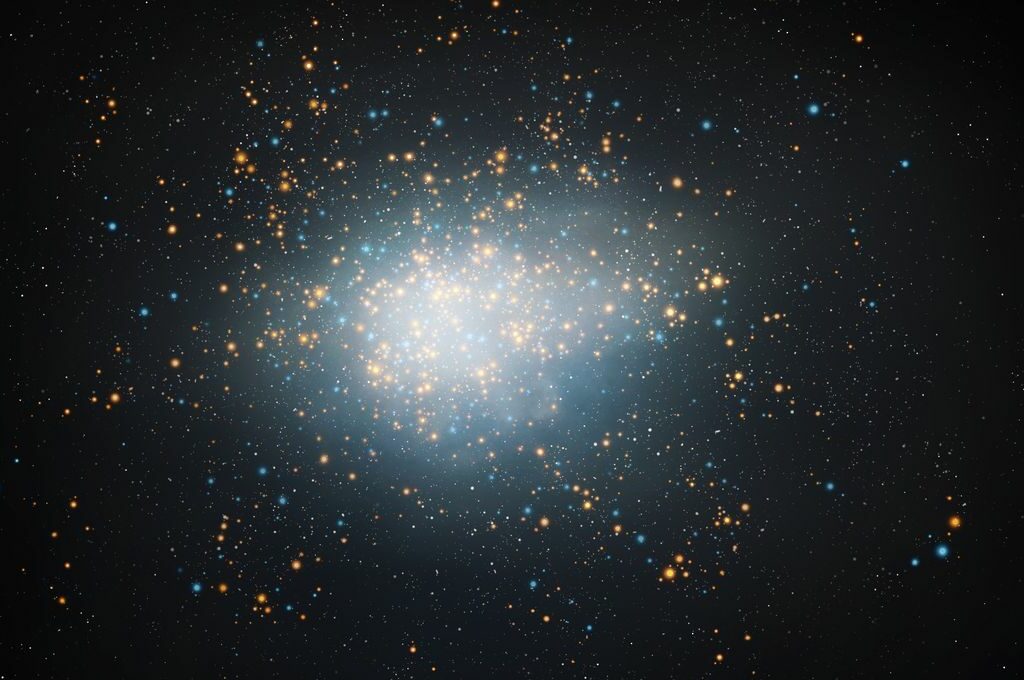
These images capture celestial objects with extraordinary detail, revealing intricate textures and formations that were once invisible. Beyond aesthetic appeal, they serve as rich data sources for studying star formation, galactic interactions, and gravitational influences. - Immersive Videos and Time-Lapse Sequences:
Dynamic visualizations depict evolving nebulae, colliding galaxies, and matter consumption by black holes, translating vast cosmic timescales into observable motion and enhancing the connection between viewers and astrophysical events. - Spectrographic Analysis:
Spectroscopy deciphers the light emitted or absorbed by celestial bodies, revealing their chemical composition, velocity, and physical states. This technique helps reconstruct stellar histories, measure cosmic expansion, and detect exoplanet atmospheres. - Multi-Wavelength Observations:
By combining data across the electromagnetic spectrum-from radio waves to gamma rays-astronomers gain a comprehensive view of cosmic phenomena, such as hydrogen gas distributions, star formation hidden by dust, and energetic cosmic explosions. - Interactive 3D Models:
Digital platforms allow users to explore galaxies, star clusters, and cosmic filaments interactively, transforming passive observation into active discovery and making complex spatial relationships accessible to a broad audience. - Theoretical Simulations:
Computer-generated models simulate cosmic structures and events, including dark matter distribution and gravitational waves, providing predictive frameworks that complement observational data and advance theoretical understanding. - Collaborative Multi-Telescope Campaigns:
Coordinated observations from Earth-based and space telescopes capture transient phenomena like supernovae and gamma-ray bursts across multiple wavelengths, creating detailed temporal and spectral datasets. - Citizen Science Contributions:
Public participation in data analysis and discovery fosters a collaborative scientific environment, expanding the scope and impact of astronomical research.
How Modern Cosmic Observation Works
Contemporary cosmic observation integrates multiple technologies and methodologies to create a layered understanding of the universe. High-resolution imaging provides detailed snapshots, while time-lapse videos reveal dynamic processes. Spectroscopy translates light into chemical and physical information, and multi-wavelength data combine to form a holistic picture of celestial mechanics. Interactive tools and simulations further enhance comprehension by allowing users to visualize and manipulate cosmic structures. Collaborative efforts among telescopes ensure comprehensive coverage of transient events, and citizen science initiatives broaden participation and data analysis.
Scientific and Philosophical Significance
The advancements in cosmic observation extend beyond scientific discovery, influencing philosophical perspectives and inspiring curiosity about humanity’s place in the universe. By unveiling the complex interplay of matter, energy, and time, these technologies challenge existing paradigms and stimulate imagination about extraterrestrial life and cosmic origins. The multidimensional access to the universe fosters a deeper appreciation of its vastness and intricacy.
Real-World Applications and Examples
Practical applications of these observational advancements include:
- Mapping Galactic Structures:
Radio telescopes chart neutral hydrogen gas, revealing the large-scale architecture of galaxies. - Star Formation Studies:
Infrared observations penetrate cosmic dust to identify nascent stars within stellar nurseries. - Transient Event Monitoring:
Coordinated telescope networks capture supernovae and gamma-ray bursts in real time, providing comprehensive data for analysis. - Exoplanet Atmosphere Detection:
Spectroscopic techniques infer the presence and composition of atmospheres around distant planets. - Public Engagement:
Citizen science platforms enable enthusiasts to assist in identifying new celestial objects and anomalies, contributing to ongoing research.
Common Misconceptions About Cosmic Observation
Astronomical images are purely artistic and lack scientific value.
While visually stunning, these images contain critical data that inform our understanding of cosmic phenomena.
The universe can only be studied through visible light.
Observations across the electromagnetic spectrum, including radio, infrared, ultraviolet, and gamma rays, reveal diverse and complementary information.
Cosmic events occur too slowly to be observed dynamically.
Time-lapse videos and simulations compress vast timescales, making dynamic processes perceptible and understandable.
Future Prospects in Cosmic Exploration
As technology continues to advance, the clarity and depth of cosmic observation will improve, enabling even more detailed and comprehensive studies of the universe. Emerging tools and methodologies promise to unlock further mysteries, inviting both scientists and the public to engage with the cosmos in unprecedented ways. This ongoing evolution heralds a new epoch of discovery, knowledge, and inspiration.


Leave a Reply