Quantum Drip in Zero-G: Condensate Created in Freefall

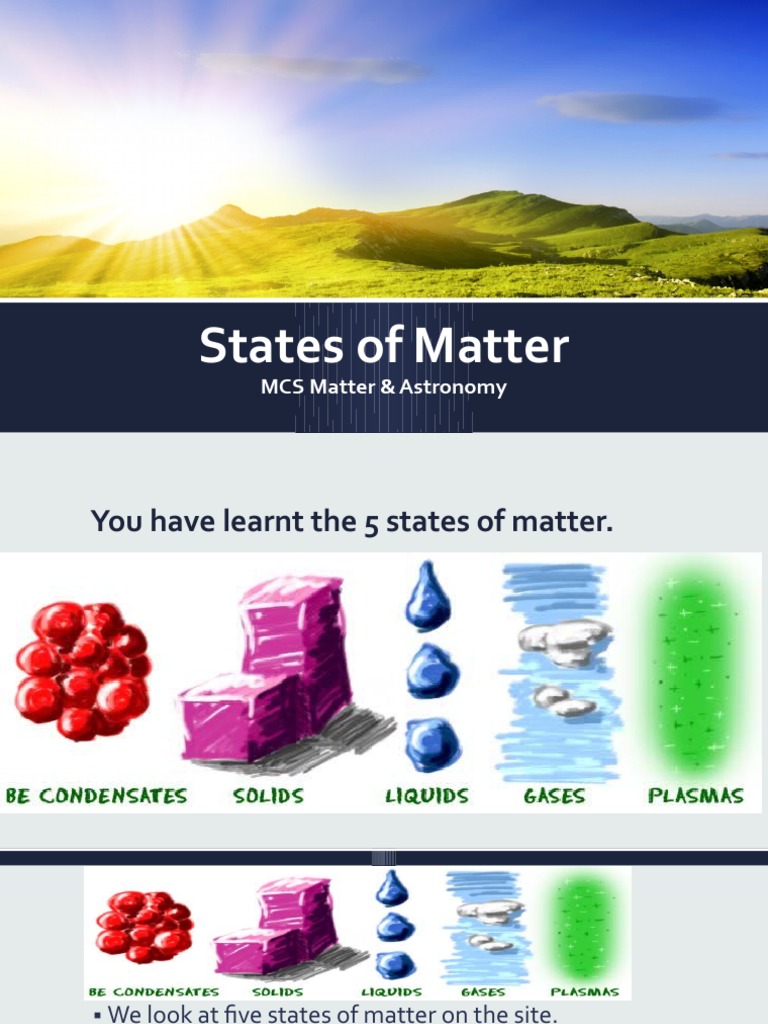
Definition of Bose-Einstein Condensates Bose-Einstein condensates (BECs) represent a distinct state of matter that emerges when a collection of bosons is cooled to temperatures approaching absolute zero. Under these extreme conditions, the particles coalesce into a single quantum state, exhibiting collective quantum phenomena on a macroscopic scale. This state defies classical physics by allowing a […]

Read More →

What does particle physics deals with?

Definition of Particle Physics Particle physics is a specialized field within physics that investigates the most basic building blocks of matter and radiation. It focuses on understanding the fundamental particles that constitute the universe and the forces that govern their interactions. This discipline seeks to answer profound questions about the nature of reality by examining […]

Read More →

A Giant Leap for Nanodroplets: Tiny Liquids Big Impact

Definition of Nanodroplets Nanodroplets are extremely small liquid particles, typically measuring from a few nanometers up to several micrometers in diameter. These tiny droplets exhibit unique physical and chemical properties due to their minuscule size and high surface area relative to volume. Nanodroplets have garnered significant attention for their potential to revolutionize various scientific and […]

Read More →

A Gathering for Gardner: Puzzles Paradoxes and the Playful Side of Math

Understanding Mathematical Gatherings Within the expansive field of mathematics, often characterized by strict rules and formalism, there exists a captivating niche dedicated to puzzles, paradoxes, and recreational mathematics. This domain offers a refreshing contrast to conventional mathematical study, emphasizing curiosity and enjoyment. Central to this movement is Martin Gardner, whose unique talent for simplifying complex […]

Read More →

How is a hole a quasiparticle in condensed matter physics?

Definition of a Hole as a Quasiparticle In condensed matter physics, a hole is a conceptual quasiparticle that represents the absence of an electron within an atomic lattice. Although it might initially appear counterintuitive to treat a missing electron as a physical entity, holes behave as positively charged particles with distinct properties. This abstraction provides […]

Read More →

Can heat be generated from light?

Definition The conversion of light into heat represents a fundamental interaction between electromagnetic radiation and matter, where the energy carried by light is transformed into thermal energy. This process is grounded in the principles of thermodynamics and the behavior of electromagnetic waves, encompassing a wide range of natural and engineered phenomena. Light as Electromagnetic Radiation: […]

Read More →

Criticisms of Systems Biology: Are We Oversimplifying Complexity?

Understanding Systems Biology Systems biology marks a transformative approach in the study of living organisms, emphasizing the integration of computational modeling with experimental data to decode the complex networks of biological interactions. This interdisciplinary field seeks to move beyond isolated components, aiming to understand how various parts of a biological system function collectively. However, as […]

Read More →

Is a quantum computer just a fast computer?

Understanding Quantum Computing At first glance, quantum computers might appear to be simply faster versions of traditional classical computers. However, this superficial comparison overlooks the profound differences that define these two computational frameworks. To truly grasp the essence of quantum computing and how it contrasts with classical computing, it is essential to delve into their […]

Read More →

If matter has three states then what is a semi-solid?

Definition of Semi-Solids Semi-solids represent a unique category of matter that exhibit characteristics intermediate between solids and liquids. Unlike the classical states of matter-solid, liquid, and gas-semi-solids display a combination of rigidity and fluidity, making them distinct in their physical behavior. Common examples include gels, pastes, and colloidal suspensions, which maintain a certain shape yet […]

Read More →

What are the practical applications of quantum computing?

Definition of Quantum Computing Quantum computing represents a revolutionary advancement in computational science, leveraging the fundamental principles of quantum mechanics to process information in ways unattainable by classical computers. Unlike traditional systems that handle data sequentially, quantum computers operate by exploring multiple possibilities simultaneously, akin to having access to an immense library containing every conceivable […]

Read More →