What are some unsolved problems in medical physics?

Definition of Medical Physics Medical physics is a multidisciplinary field that merges principles of physics with medical science to improve healthcare outcomes. It involves the application of physical concepts and technologies to diagnose, treat, and understand diseases. This domain spans a wide array of specialties, including medical imaging, radiation therapy, dosimetry, and the integration of […]

Read More →

What is a quantum material?

Definition of Quantum Materials Quantum materials encompass a broad spectrum of substances distinguished by their extraordinary properties arising from the principles of quantum mechanics. Unlike classical materials, which adhere to traditional physical laws, quantum materials exhibit phenomena such as superposition, entanglement, and quantized states. These unique behaviors stem from intricate interactions at the atomic and […]

Read More →

What is fracking

Definition of Hydraulic Fracturing Hydraulic fracturing, often referred to as fracking, is a specialized extraction technique used to obtain oil and natural gas from deep underground rock formations, especially shale. This method enables access to hydrocarbon reserves that are otherwise difficult or uneconomical to retrieve through conventional drilling methods. Purpose: To increase the permeability of […]

Read More →

How were quantum algorithms developed?

Definition of Quantum Algorithms Quantum algorithms are specialized computational procedures designed to run on quantum computers, leveraging the principles of quantum mechanics to solve problems more efficiently than classical algorithms. These algorithms exploit phenomena such as superposition and entanglement to perform complex calculations that are often infeasible for traditional computers. Superposition: The ability of quantum […]

Read More →

Is it possible to have graphene reinforced titanium?

Definition of Graphene-Reinforced Titanium Composites Graphene-reinforced titanium composites are advanced materials engineered by integrating graphene-a single layer of carbon atoms arranged in a two-dimensional hexagonal lattice-with titanium, a lightweight and strong metal. This fusion aims to combine the exceptional mechanical, electrical, and thermal properties of graphene with titanium’s renowned strength, corrosion resistance, and biocompatibility, resulting […]

Read More →

Are there more than 61 subatomic particles?

Understanding Subatomic Particles Subatomic particles constitute the fundamental building blocks of matter, existing at scales far smaller than atoms. This microscopic realm captivates scientists and enthusiasts alike, as it challenges our understanding of the universe’s most basic components. A central question arises: are there more than 61 subatomic particles? This inquiry not only sparks intellectual […]

Read More →

Does Schrödinger’s atomic model answer all the questions?

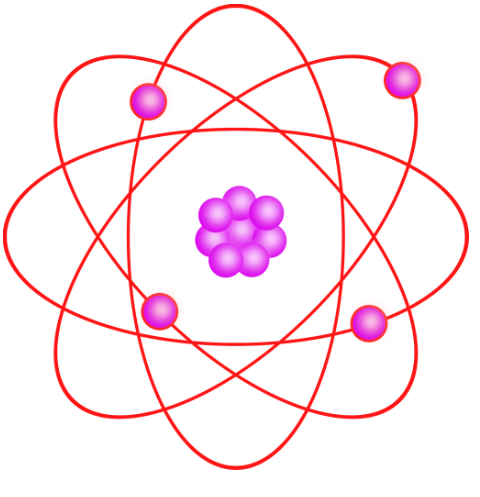
Definition of Schrödinger’s Atomic Model Schrödinger’s atomic model, introduced by physicist Erwin Schrödinger in 1926, revolutionized atomic theory by replacing classical deterministic orbits with a probabilistic description of electron behavior. This model employs wave mechanics to describe electrons not as particles moving in fixed paths, but as wave functions that define the likelihood of finding […]

Read More →

What will happen when quantum computers are tied to AI?

Understanding Quantum Computing and Artificial Intelligence The intersection of quantum computing and artificial intelligence (AI) represents a groundbreaking advancement in technology. Much like an orchestra where each instrument contributes to a harmonious performance, the fusion of these two fields creates a powerful synergy that promises to redefine computational capabilities. This article explores the essence of […]

Read More →

Why is quantum chemistry important?

Definition of Quantum Chemistry Quantum chemistry is a specialized branch of science that integrates the principles of quantum mechanics with chemical phenomena to analyze and predict the behavior of molecules and atoms. It serves as a fundamental framework for understanding matter at its most basic level, revealing the complex interactions and properties that govern chemical […]

Read More →

Should I Major in Biophysics? The Quantum Side of Life

Understanding Biophysics: An Interdisciplinary Science Biophysics represents a unique scientific discipline that merges the principles of biology with the laws of physics to unravel the complexities of living systems. By applying physical theories and methods, biophysics seeks to explain biological phenomena at various scales-from molecular interactions to organismal behavior. This integrative approach enables a deeper […]

Read More →