Are electrons still considered fundamental particles?

Definition of Fundamental Particles and Electrons In particle physics, fundamental particles are defined as the most basic constituents of matter, entities that are not composed of smaller parts. These particles serve as the foundational building blocks from which all matter is constructed. Among these, the electron has traditionally been recognized as a fundamental particle, characterized […]

Read More →

How do we know that the ‘strong force’ in atoms exists?

Definition of the Strong Force The strong force, also known as the strong nuclear force, is a fundamental interaction responsible for binding protons and neutrons-collectively called nucleons-within an atom’s nucleus. It acts as a powerful adhesive that overcomes the electromagnetic repulsion between positively charged protons, ensuring the nucleus remains stable. This force is a cornerstone […]

Read More →

Why does MRI take so long time when compared to CT?

Understanding MRI and CT Scans Magnetic Resonance Imaging (MRI) and Computed Tomography (CT) scans have transformed medical diagnostics by providing detailed internal images of the human body. Despite their shared goal of visualizing anatomy and pathology, these two imaging modalities differ significantly in their operational principles, resulting in notable differences in scan duration. Patients and […]

Read More →

European Dreams: Can the EU Lead Global Science?

Definition of European Scientific Leadership European scientific leadership refers to the European Union’s (EU) capacity to influence and drive global scientific progress through collaborative research, innovation, and policy coordination among its member states. This concept embodies the EU’s ambition to harness its diverse intellectual and cultural heritage to address worldwide scientific challenges and shape the […]

Read More →

Laser Cooling Demystified: How Light Slows Atoms Down

Definition of Laser Cooling Laser cooling is a sophisticated technique at the crossroads of optical physics and atomic science, designed to reduce the motion of atoms by harnessing the properties of light waves. Unlike conventional cooling methods that rely on lowering temperature through physical means, laser cooling targets the kinetic energy of atoms, effectively slowing […]

Read More →

What role will quantum computing play in the future of AI?

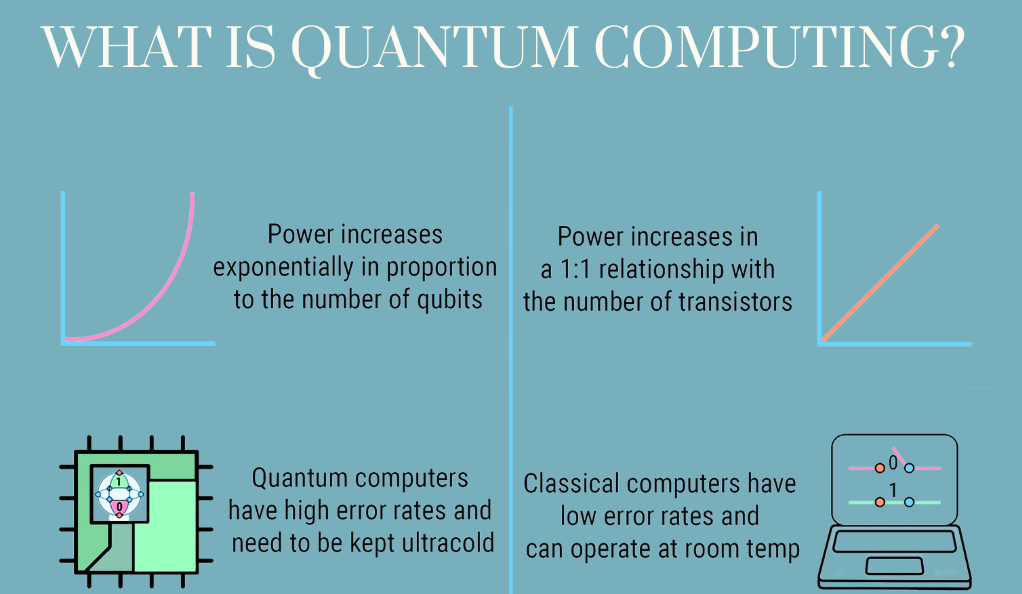
Definition of Quantum Computing in Artificial Intelligence Quantum computing represents a groundbreaking advancement in computational technology, leveraging the principles of quantum mechanics to process information in fundamentally new ways. When integrated with artificial intelligence (AI), quantum computing promises to revolutionize AI capabilities by enabling faster data processing, enhanced algorithmic efficiency, and novel problem-solving approaches. This […]

Read More →

What happens in a nuclear reaction?

Definition of Nuclear Reactions Nuclear reactions refer to processes that alter the composition or structure of an atomic nucleus. These transformations can occur through various mechanisms such as the absorption of particles like neutrons or the collision of nuclei at high energies. The outcomes of these reactions include the fusion of nuclei, their splitting (fission), […]

Read More →

Why do different elements have different properties?

Definition of Elemental Properties Elements, the fundamental building blocks of matter, exhibit a wide range of properties that distinguish one from another. These differences arise from intrinsic atomic characteristics and interactions at the subatomic level. Understanding why elements possess unique properties involves examining atomic structure, electron arrangements, atomic mass, and chemical behavior. Atomic Structure and […]

Read More →

How to change chemical energy into nuclear energy?

Understanding Energy Forms: Chemical vs. Nuclear Energy Energy transformation is a captivating field that probes the fundamental principles governing physical and chemical phenomena. A particularly intriguing question arises: is it possible to convert the chemical energy stored within molecules into the far more powerful nuclear energy? This inquiry invites a deep dive into the nature […]

Read More →