

Short Answer
Overview of Medical and Theoretical Physics
Within the broad discipline of physics, two distinct specializations stand out: medical physics and theoretical physics. Each field presents its own unique set of intellectual challenges, practical applications, and societal contributions. Exploring these domains reveals differences in educational requirements, problem-solving strategies, and the nature of their impact on science and humanity.
Definition and Scope
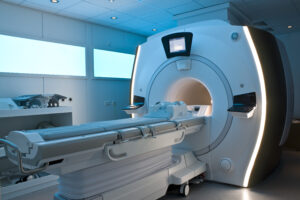
Medical Physics: This branch integrates physics principles with medical science, focusing on the application of physical concepts to healthcare. It involves the use of advanced technologies such as radiation therapy, medical imaging, and nuclear medicine to diagnose and treat diseases.
Theoretical Physics: This field is concerned with understanding the fundamental laws governing the universe. It employs abstract mathematical models and conceptual reasoning to explore phenomena ranging from quantum mechanics to cosmology, often without immediate experimental verification.
Educational Pathways and Training
The journey to becoming a professional in either medical or theoretical physics involves extensive education, but the nature of training differs markedly:
- Medical Physics Education:
Typically requires a master’s or doctoral degree in medical physics, followed by clinical residencies that provide hands-on experience in healthcare settings. This path emphasizes both theoretical knowledge and practical skills essential for patient-centered applications. - Theoretical Physics Education:
Usually involves doctoral studies focused on developing and analyzing theoretical frameworks. Training is heavily mathematical and abstract, with less emphasis on experimental work, preparing students for research that may not have immediate empirical outcomes.
Approaches to Problem Solving
The methodologies employed in these fields highlight their distinct challenges:
- Medical Physics:
Requires a multidisciplinary approach, collaborating closely with medical professionals to optimize patient care. Challenges include fine-tuning radiation doses for cancer treatment and enhancing imaging techniques for accurate diagnosis, demanding the practical application of physics in clinical environments. - Theoretical Physics:
Centers on abstract reasoning and mathematical modeling to explain phenomena that are often counterintuitive or not yet observed, such as dark matter or multiverse theories. Theoretical physicists must develop coherent frameworks that reconcile existing empirical data with new hypotheses.
Intellectual Demands and Creativity
Both fields demand high levels of intellectual rigor but differ in the type of creativity and mental engagement required:
- Medical Physics:
Combines knowledge of engineering, biology, and physics to devise innovative solutions tailored to individual patient needs. Creativity is essential in adapting technologies and methodologies to diverse clinical scenarios, often requiring empathy and collaboration. - Theoretical Physics:
Involves imaginative exploration of uncharted scientific territories, often without immediate experimental feedback. Theorists must tolerate uncertainty and potential failure while pushing the boundaries of human understanding through abstract thought and mathematical innovation.
Impact and Contributions to Society
The societal benefits of these disciplines manifest differently:
- Medical Physics:
Directly improves patient outcomes by advancing diagnostic and therapeutic technologies, making its impact tangible and immediate. This field plays a crucial role in enhancing healthcare quality and safety. - Theoretical Physics:
Although its benefits may appear abstract or long-term, theoretical physics drives technological innovations that influence various industries, including telecommunications and renewable energy. Its pursuit of fundamental knowledge lays the groundwork for future scientific breakthroughs.
Common Misconceptions
Medical physics is less intellectually demanding than theoretical physics.
Medical physics requires complex problem-solving skills, multidisciplinary knowledge, and practical application, making it equally challenging in its own right.
Theoretical physics lacks practical relevance.
Theoretical physics underpins many technological advances and deepens our understanding of the universe, which can lead to transformative applications over time.
Why Understanding These Fields Matters
Recognizing the distinct challenges and contributions of medical and theoretical physics enriches our appreciation of the diverse nature of scientific inquiry. Medical physics exemplifies the application of science to improve human health directly, while theoretical physics expands the horizons of knowledge, inspiring innovation and technological progress. Both fields are vital to advancing science and enhancing quality of life.
Summary: Diverse Challenges, Unified Purpose
In summary, the question of which field is more challenging-medical physics or theoretical physics-depends on the criteria used to define difficulty. Each discipline demands unique intellectual strengths, educational commitments, and problem-solving approaches. Together, they illustrate the multifaceted nature of physics, highlighting how different paths contribute to the collective pursuit of knowledge and societal advancement.
FAQ
What educational background is needed for medical physics?
Medical physics typically requires a master’s or doctoral degree followed by clinical residencies focused on practical healthcare applications.
How does theoretical physics differ from medical physics in problem-solving?
Theoretical physics relies on abstract mathematical models and conceptual reasoning, while medical physics applies physics principles in clinical settings for patient care.
Is medical physics less intellectually demanding than theoretical physics?
No, both fields require high intellectual rigor but differ in focus; medical physics integrates multidisciplinary practical skills, while theoretical physics emphasizes abstract reasoning.
What societal impacts do medical and theoretical physics have?
Medical physics directly improves healthcare with diagnostic and therapeutic technologies, while theoretical physics drives long-term scientific innovation and technology development.



Leave a Reply