
Short Answer
Definition of Matter and Quantum Energy
The question of whether matter is simply a phase transition of quantum energy invites a profound reconsideration of fundamental physical concepts. Traditionally, matter is defined as any substance that occupies space and has mass, forming the tangible components of the universe. In contrast, energy is understood as the capacity to perform work, manifesting in diverse forms such as kinetic, thermal, and electromagnetic energy. Modern physics, particularly through Einstein’s equation E=mc², reveals a deep equivalence between mass and energy, suggesting that matter and energy are interchangeable aspects of the same underlying reality.
- Matter:
Physical substance characterized by mass and volume. - Energy:
The ability to cause change or perform work, existing in multiple forms. - Mass-Energy Equivalence:
The principle that mass can be converted into energy and vice versa, as expressed by E=mc².
Quantum Mechanics and the Nature of Particles
Quantum mechanics introduces a paradigm where particles are not simply discrete objects but exhibit dual wave-particle behavior. According to quantum field theory, particles are excitations or disturbances in pervasive quantum fields that fill the universe. This framework opens the possibility that matter, in its various states-solid, liquid, gas-may be understood as different configurations or phase states of quantum energy interacting with these fields under specific environmental conditions.
Phase Transitions: Bridging Matter and Energy
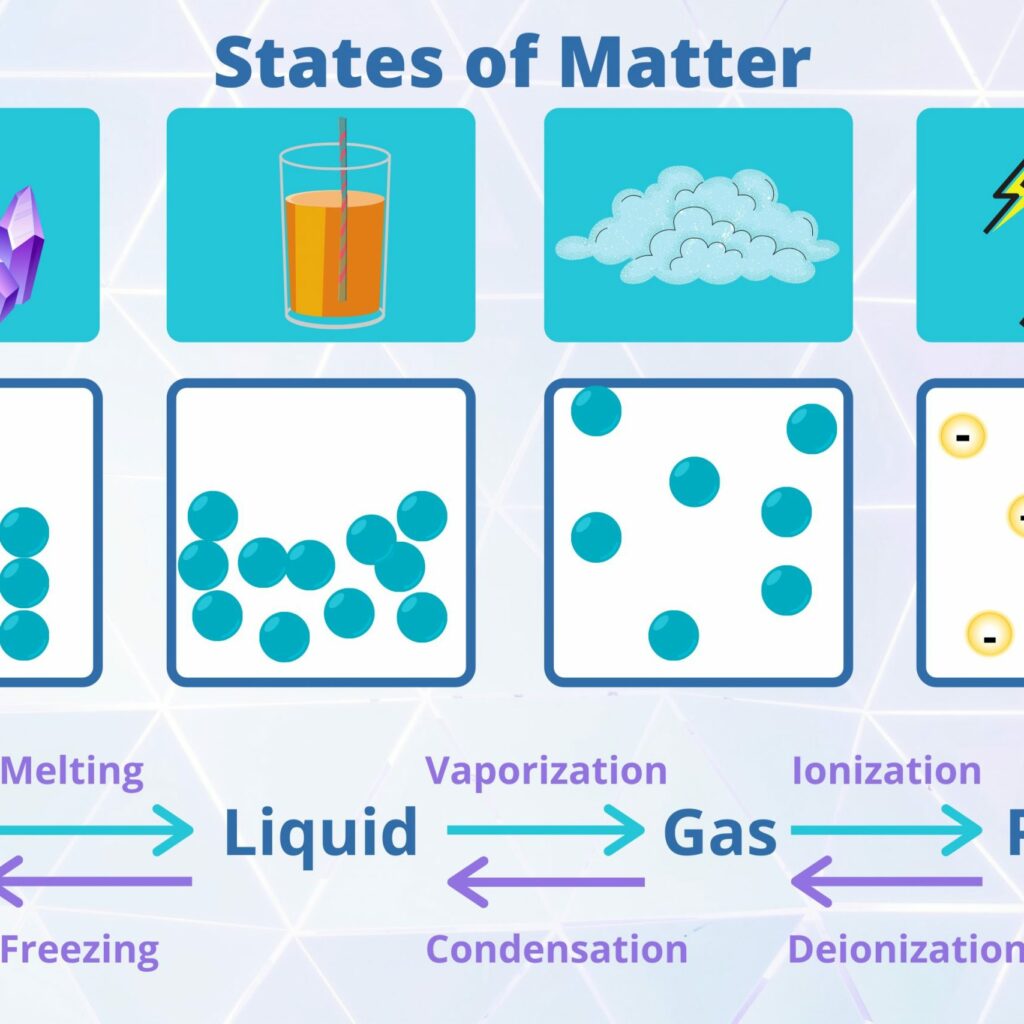
Phase transitions describe the transformation of substances between different states, such as ice melting into water or water vaporizing into steam, driven by changes in temperature and pressure. These transitions are well-studied in thermodynamics and statistical mechanics. Analogously, the concept of matter as a phase transition of quantum energy suggests that matter itself could be a transient state emerging from shifts in quantum conditions, much like classical phase changes observed in everyday materials.
- Classical Phase Transitions:
Changes between solid, liquid, and gas states due to environmental factors. - Quantum Phase Transitions:
Hypothetical shifts in the state of quantum fields that could give rise to matter.
Philosophical Implications of Matter as Quantum Energy
Viewing matter as a temporary phase of quantum energy challenges traditional ontological views about the permanence and solidity of the material world. This perspective suggests a universe in constant flux, where what we perceive as stable matter is actually a dynamic expression of deeper quantum processes. Such a viewpoint raises questions about identity, permanence, and the nature of reality itself, inviting a synthesis of physics with metaphysical inquiry.
Reevaluating Classical Worldviews
Historically, matter has been regarded as the fundamental substrate of existence, with energy considered a secondary attribute. Reinterpreting matter as a phase transition of quantum energy reverses this hierarchy, proposing that the universe is fundamentally energetic. Our experience of material objects then becomes a consequence of interactions with quantum fields, reshaping philosophical and scientific understandings of substance and existence.
Consciousness and Quantum Energy
The hypothesis extends into the realm of consciousness, proposing that cognitive processes might also be manifestations of quantum phenomena. If the brain’s neural activity involves quantum interactions, then thoughts and perceptions could be viewed as phase transitions of energy, translating quantum information into subjective experience. This idea aligns with emerging theories in quantum cognition and neurophysics, suggesting a profound link between mind and quantum reality.
Technological and Scientific Prospects
Exploring matter as a phase of quantum energy has practical implications, particularly in advancing quantum technologies. Quantum computing exemplifies how manipulating quantum states can revolutionize information processing, potentially surpassing classical computational limits. Understanding and controlling energy states at the quantum level could unlock new methods to harness fundamental energy, opening pathways to innovations in materials science, energy storage, and beyond.
Challenges and Scientific Considerations
Despite its conceptual appeal, the proposition that matter is a phase transition of quantum energy faces significant scientific hurdles. Critics argue that the leap from quantum phenomena to macroscopic matter is speculative and lacks direct empirical validation. Scientific methods rely on measurable and observable data, and establishing a definitive equivalence between quantum energy phases and material existence remains an ongoing challenge at the frontier of physics.
Terminology and Conceptual Nuances
Engaging with this topic requires careful use of specialized quantum mechanical terms such as decoherence and superposition. These concepts describe how quantum systems interact with their environment and how multiple quantum states can coexist, respectively. A nuanced understanding of these principles is essential to appreciate the complex relationship between quantum energy and matter, as well as the role of the observer in shaping physical reality.
Conclusion: The Ongoing Inquiry into Reality
The question of whether matter is merely a phase transition of quantum energy transcends academic debate, touching on the core of how we understand existence. It challenges entrenched ontological and epistemological frameworks, encouraging interdisciplinary dialogue between physics, philosophy, and consciousness studies. While definitive answers remain elusive, this inquiry enriches our comprehension of the universe, highlighting the intricate interplay between the tangible and the ephemeral.
FAQ
What is the relationship between matter and quantum energy?
Matter may be viewed as a phase transition of quantum energy, indicating that our understanding of physical substances could be fundamentally energetic.
How does quantum mechanics challenge traditional views of matter?
Quantum mechanics suggests that particles are not discrete entities but rather excitations in quantum fields, leading to a reevaluation of matter as dynamic and transient.



Leave a Reply