
Short Answer
Definition of Hydrogen
Hydrogen is the simplest and most abundant chemical element in the universe. It is fundamental to the composition of matter and plays a crucial role in both cosmic and terrestrial phenomena. As an element, hydrogen is defined by its atomic number, which is one, indicating it contains a single proton in its nucleus. This minimalistic atomic structure makes hydrogen unique among all elements.
Understanding Elements and Atoms
Elements are pure substances that cannot be decomposed into simpler substances by chemical means. Each element is distinguished by the number of protons in its nucleus, known as the atomic number. Atoms are the smallest units of elements, consisting of a nucleus made up of protons and neutrons, surrounded by electrons.
- Element:
A fundamental substance characterized by a specific atomic number. - Atom:
The basic unit of an element, composed of a nucleus and electrons.
Hydrogen’s Atomic Structure
Hydrogen’s atom is the most straightforward atomic model, containing only one proton in its nucleus and one electron orbiting it. Unlike many other elements, hydrogen’s atomic simplicity belies its vast chemical significance. This dual identity as both an element and a singular atom places hydrogen at a unique crossroads in chemistry.
The Cosmic Significance of Hydrogen
Hydrogen dominates the universe, making up roughly 75% of its elemental mass. This prevalence is not only numerical but also foundational, as hydrogen serves as the primary building block for the synthesis of heavier elements within stars through nuclear fusion processes. In this way, hydrogen acts as the cosmic seed from which stars, planets, and ultimately life emerge.
Molecular Hydrogen: Beyond the Element
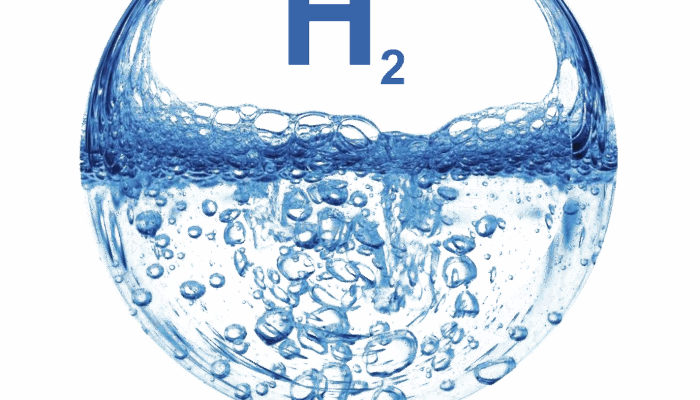
In nature, hydrogen rarely exists as isolated atoms. Instead, it predominantly forms diatomic molecules (H2), where two hydrogen atoms share electrons through a covalent bond. This molecular form illustrates how elemental hydrogen can combine to create more complex structures, enabling diverse chemical reactions and properties that differ from the individual atom.
Applications of Hydrogen in the Universe and Daily Life
Hydrogen’s role extends from the vastness of space to everyday human experience. In astrophysics, it fuels stars and drives the processes that shape galaxies. On Earth, hydrogen is found in water and organic compounds and is increasingly important as a clean energy source in the form of hydrogen fuel cells, highlighting its potential in sustainable technology.
Philosophical Reflections on Hydrogen’s Identity
The question of whether hydrogen is primarily an element or an atom invites deeper philosophical inquiry into scientific classification and identity. While the element represents a category defined by the periodic table, the atom reveals the internal structure and interactions that give rise to chemical behavior. This dual perspective enriches our understanding of matter and challenges simplistic definitions.
Summary: The Harmonious Complexity of Hydrogen
Hydrogen exemplifies a harmonious blend of simplicity and complexity. As the most basic element and atom, it underpins the vast diversity of matter and energy in the universe. Its singular proton is the cornerstone of chemical and cosmic phenomena, making hydrogen a symbol of both elemental purity and atomic intricacy. Exploring hydrogen’s nature offers profound insights into the fundamental workings of the natural world.
FAQ
What is hydrogen?
Hydrogen is the simplest and most abundant chemical element, consisting of one proton and one electron.
How does hydrogen exist in nature?
Hydrogen primarily exists as diatomic molecules (H2) in nature.




Leave a Reply