
Short Answer
Definition of Atomic Hydrogen
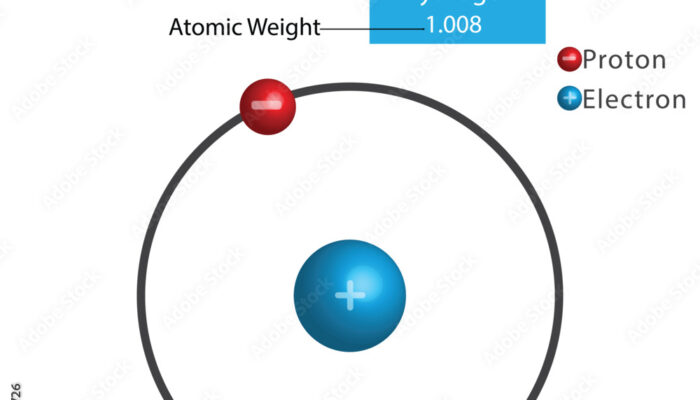
Atomic hydrogen refers to the simplest form of hydrogen consisting of a single proton and one electron. Unlike molecular hydrogen (H2), atomic hydrogen exists as individual atoms rather than bonded pairs. This fundamental species holds significant importance in both theoretical physics and practical applications due to its unique properties and reactivity.
Methods for Producing Atomic Hydrogen
Generating atomic hydrogen involves breaking the strong covalent bond in molecular hydrogen. Several techniques have been developed to achieve this, each with distinct mechanisms, benefits, and challenges.
Electron Impact Dissociation
This traditional method involves bombarding molecular hydrogen with high-energy electrons inside a vacuum chamber. The collisions provide enough energy to sever the H-H bond, resulting in two separate hydrogen atoms. Precise control over electron energy is crucial; excessive energy can trigger unwanted secondary reactions, producing impurities. Maintaining a stable vacuum environment is also essential to prevent recombination of atomic hydrogen back into molecular form.
Thermal Dissociation
Thermal dissociation relies on heating molecular hydrogen to temperatures sufficient to overcome the bond dissociation energy, approximately 436 kJ/mol. At these elevated temperatures, H2 molecules split into atomic hydrogen. This approach can yield highly pure atomic hydrogen but demands materials capable of withstanding extreme heat. Additionally, balancing temperature is critical to avoid generating other reactive species that may complicate the process.
Photodissociation Using Light Energy
Photodissociation employs ultraviolet (UV) light or laser radiation to excite molecular hydrogen, causing it to dissociate into atomic hydrogen. This technique offers precise control over energy input, enabling selective bond cleavage. However, it requires sophisticated light sources and controlled environments to prevent side reactions, such as ozone formation from UV interaction with atmospheric oxygen. Consequently, photodissociation is predominantly used in controlled laboratory settings.
Catalytic Hydrogen Dissociation
Catalytic methods utilize metals like platinum or palladium to facilitate the cleavage of molecular hydrogen at relatively low temperatures and pressures. These catalysts adsorb H2 molecules onto their surfaces, weakening the bonds and promoting dissociation. While this method enhances efficiency and operates under milder conditions, catalyst poisoning by impurities and challenges in catalyst recovery and reuse present ongoing obstacles, especially in industrial contexts.
Scientific Principles Behind Atomic Hydrogen Generation
The core principle in producing atomic hydrogen is overcoming the molecular hydrogen bond energy to separate H2 into individual atoms. This can be achieved through:
- Energy Transfer:
Electron collisions or photon absorption provide the necessary energy to break bonds. - Thermal Energy:
High temperatures supply kinetic energy to disrupt molecular bonds. - Catalytic Surface Interaction:
Catalysts lower the activation energy required for dissociation by adsorbing and weakening bonds.
Applications and Importance of Atomic Hydrogen
Atomic hydrogen plays a vital role across various scientific and technological fields:
- Laser Technology:
Acts as a medium for generating high-energy photons, advancing precision measurement and communication. - Semiconductor Manufacturing:
Used in processes requiring reactive hydrogen species for surface treatments and doping. - Materials Science and Astrochemistry:
Participates in recombination reactions critical to chemical synthesis and understanding interstellar chemistry.
Its high reactivity also necessitates stringent safety protocols, as atomic hydrogen can explosively react with oxygen to form water, posing risks during handling and storage.
Challenges and Safety Considerations
Working with atomic hydrogen involves managing its inherent instability and reactivity. Key challenges include:
- Recombination Risk:
Atomic hydrogen readily recombines into molecular hydrogen, requiring controlled environments to maintain atomic form. - Explosive Potential:
Its reaction with oxygen is highly exothermic, demanding rigorous safety measures. - Material Constraints:
Equipment must withstand high temperatures or corrosive conditions depending on the production method.
Common Misconceptions About Atomic Hydrogen Preparation
Atomic hydrogen can be easily produced and stored.
Due to its high reactivity, atomic hydrogen is difficult to isolate and maintain without recombination or reaction with other substances.
All methods of atomic hydrogen production yield pure atomic hydrogen.
Each technique has limitations and may produce impurities or require specific conditions to optimize purity.
Future Perspectives and Innovations
Ongoing research aims to refine atomic hydrogen production by developing more efficient, safer, and cost-effective methods. Innovations include advanced catalyst designs resistant to poisoning, improved photodissociation techniques with minimized side reactions, and novel materials capable of enduring extreme conditions. These advancements promise to expand the practical applications of atomic hydrogen in science and industry.
Summary
The preparation of atomic hydrogen is a multifaceted process involving various physical and chemical techniques, each with unique advantages and challenges. From electron impact and thermal dissociation to photodissociation and catalytic methods, the generation of atomic hydrogen requires careful control of energy input and environmental conditions. Its significance spans numerous technological fields, underscoring the importance of continued innovation and safety in its production and application.
FAQ
What is atomic hydrogen?
Atomic hydrogen is hydrogen in its atomic form, produced by breaking molecular hydrogen (H2) into individual atoms.
How is atomic hydrogen commonly prepared?
It is prepared through methods like electron impact dissociation, thermal disassociation, photodissociation, and catalytic processes.
Why is atomic hydrogen preparation important?
Because atomic hydrogen is used in scientific experiments, laser technology, and material processing, its preparation is key to these applications.
What safety measures are necessary when handling atomic hydrogen?
Strict safety protocols are necessary due to its high reactivity and risk of explosive reactions with oxygen.






Leave a Reply