
Short Answer
Understanding Bose-Einstein Condensates in Quantum Computing
Bose-Einstein condensates (BECs) represent a unique state of matter formed when bosonic particles are cooled to temperatures near absolute zero. At these ultra-low temperatures, a large number of bosons occupy the same quantum state, causing the condensate to behave as a single coherent quantum entity. This remarkable property makes BECs a subject of intense interest in the realm of quantum computing, where they are explored as potential carriers of quantum information, or qubits.
Definition and Role of Qubits
Qubits, or quantum bits, are the fundamental units of information in quantum computing. Unlike classical bits that exist strictly as 0 or 1, qubits can exist in superpositions, simultaneously representing multiple states. This capability enables quantum computers to perform complex computations more efficiently than classical counterparts. BECs, due to their collective quantum nature, offer a promising platform for realizing qubits through precise external control.
- Superposition:
Qubits can exist in multiple states at once, unlike classical bits. - Collective Quantum State:
BECs act as a unified quantum system, facilitating qubit formation.
Coherence Time: A Key Metric for Qubit Efficiency
One of the most critical parameters in assessing the suitability of BECs as qubits is coherence time-the interval during which a quantum system preserves its quantum state without degradation. BECs benefit from their low-energy, near-zero temperature environments, which naturally extend coherence times. However, external disturbances such as thermal fluctuations and environmental noise can induce decoherence, disrupting quantum information.
To address these challenges, researchers employ strategies like isolating BECs from thermal noise and integrating quantum error correction techniques, aiming to prolong coherence and maintain qubit fidelity.
Scalability and Entanglement in BEC-Based Quantum Systems
For quantum computing to be practical, it must support the coherent manipulation of many qubits simultaneously. BECs offer distinct advantages in this regard, notably their capacity to entangle large numbers of particles efficiently. This high entanglement potential could enable the execution of sophisticated quantum algorithms beyond the reach of traditional qubit systems.
Despite these benefits, scaling BEC systems presents significant technical obstacles, including precise control over individual qubits and accurate measurement methods. Overcoming these hurdles is essential for integrating BECs into scalable quantum networks.
Manipulating Bose-Einstein Condensates with Electromagnetic Fields
The interaction between BECs and electromagnetic fields is fundamental to their operation as qubits. Techniques such as laser irradiation and radiofrequency fields allow scientists to control the quantum states within a condensate. For example, Rabi oscillations-coherent transitions between energy levels induced by electromagnetic fields-enable the creation and manipulation of qubits within BECs.
However, these manipulations must be carefully managed to avoid unwanted heating or other effects that could compromise the condensate’s coherence and stability.
Quantum Spin and Multilevel Qubit Structures in BECs
Beyond simple binary qubit states, BECs exhibit quantum spin properties that can be exploited to develop multilevel qubits. The spin degrees of freedom provide a rich structure for encoding quantum information, potentially surpassing the limitations of traditional two-level systems.
Nevertheless, interactions among multiple BECs can lead to complex collective spin dynamics, which may complicate qubit operations and require sophisticated control techniques to harness effectively.
Non-Equilibrium Dynamics and Quantum Simulations
BECs also offer a platform for simulating complex quantum many-body systems through their non-equilibrium dynamics. This capability is valuable for exploring fundamental quantum phenomena and could revolutionize computational approaches in physics and materials science.
However, leveraging these dynamics for efficient qubit operation demands precise modeling to mitigate errors from spontaneous emissions and nonlinear interactions.
Advancements and Multidisciplinary Approaches
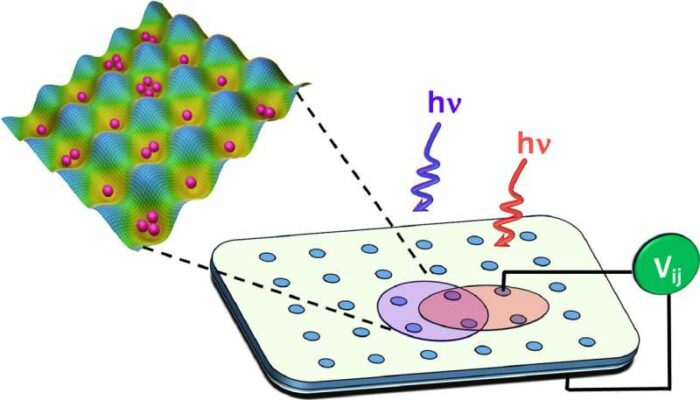
The efficiency of BECs as qubits depends not only on their intrinsic properties but also on progress in experimental and theoretical methods. Innovations such as miniaturized optical lattices and advanced trap geometries enhance the precision of BEC control and measurement.
Success in this field requires collaboration across condensed matter physics, atomic physics, and quantum information science, fostering new technologies that push the boundaries of BEC-based quantum computation.
Challenges and Future Prospects
While BECs hold significant promise for quantum computing, several challenges remain. These include maintaining long coherence times, achieving scalable qubit architectures, and managing complex spin interactions. Ongoing research aims to address these issues through improved isolation techniques, error correction, and refined control mechanisms.
The interplay between theoretical insights and experimental breakthroughs will be crucial in determining whether BECs can fulfill their potential as efficient qubits in future quantum computers.
Conclusion: The Potential of Bose-Einstein Condensates in Quantum Technology
Bose-Einstein condensates present a compelling avenue for advancing quantum information technology due to their unique quantum coherence and entanglement capabilities. Despite the technical and theoretical challenges involved, continued interdisciplinary research promises to unlock their full potential. As the quantum computing landscape evolves, BECs may emerge as vital components in the development of powerful, efficient quantum processors.
FAQ
What are Bose-Einstein Condensates?
Bose-Einstein Condensates (BECs) are a state of matter formed when bosonic particles are cooled to temperatures near absolute zero, allowing them to occupy the same quantum state.
How do BECs function as qubits?
BECs function as qubits by utilizing their collective quantum nature, allowing them to exist in superpositions and entangle large numbers of particles.
What are the challenges in using BECs as qubits?
Challenges include maintaining long coherence times, achieving scalability in qubit architectures, and managing complex interactions among particles.




Leave a Reply